Key Takeaways:
What is FEA in Engineering?
Finite Element Analysis (FEA) is an engineering simulation technique used to predict how components and structures respond to real-world conditions such as forces, pressure, temperature, vibration, and deformation. It enables engineers to evaluate and optimize designs before manufacturing, improving safety, performance, and reliability.
Importance of FEA in Engineering:
FEA helps engineers identify design weaknesses, reduce the need for physical prototypes, improve product quality, shorten development time, lower production costs, and ensure compliance with engineering standards.
Applications of FEA in Engineering:
FEA is widely used in mechanical, civil, automotive, aerospace, biomedical, marine, energy, and manufacturing engineering for structural analysis, thermal analysis, vibration analysis, fatigue analysis, crash simulation, and product optimization.
Engineering Analysis Using FEA:
FEA is used to perform stress analysis, strain analysis, deformation analysis, thermal analysis, modal analysis, fatigue analysis, buckling analysis, and dynamic analysis, helping engineers make informed design decisions.
Benefits of FEA in Engineering:
FEA improves design accuracy, enhances product safety, reduces material usage, minimizes manufacturing defects, accelerates product development, and increases overall engineering efficiency.
Industries Using FEA:
FEA is extensively used in the automotive, aerospace, construction, power generation, oil and gas, consumer products, electronics, and medical device industries to develop high-performance and reliable engineering products.
In this article:
- What is FEA in Engineering?
- FEA in Engineering (Finite Element Analysis in Engineering)
- What is FEA in Engineering?
- Importance of FEA in Engineering
- Engineering Analysis Using FEA
- Applications of FEA in Engineering
- Benefits of FEA in Engineering
- Industries Using FEA
- Frequently Asked Questions (FAQs)
- Conclusion
FEA in Engineering (Finite Element Analysis in Engineering)
Introduction
Finite Element Analysis (FEA) is one of the most important computational tools in modern engineering. It is a numerical simulation technique used to predict how components, machines, and structures will behave when subjected to real-world conditions such as forces, pressure, temperature, vibration, impact, and fluid flow. FEA is based on the Finite Element Method (FEM), where a complex object is divided into many smaller, simpler elements connected at points called nodes. Mathematical equations are then solved for each element, allowing engineers to accurately predict the behavior of the entire structure.
FEA has become an essential part of the engineering design process because it allows engineers to test and optimize designs virtually before building physical prototypes. This reduces development costs, shortens product development cycles, improves safety, and enhances product performance.
Today, FEA is widely used in mechanical, civil, aerospace, automotive, biomedical, marine, electrical, and manufacturing engineering.
What is FEA in Engineering?
Finite Element Analysis (FEA) is a computer-based engineering analysis technique used to simulate and evaluate the structural, thermal, dynamic, and other physical behaviors of engineering components and systems under various operating conditions.
Instead of relying solely on theoretical calculations or physical testing, engineers use FEA software to create virtual models and predict how products will perform during actual service.
FEA helps engineers determine:
- Stress distribution
- Strain
- Deformation
- Deflection
- Temperature distribution
- Vibration characteristics
- Fatigue life
- Buckling behavior
- Contact pressure
- Factor of Safety
By identifying weak areas before manufacturing, FEA helps improve product quality and reliability.
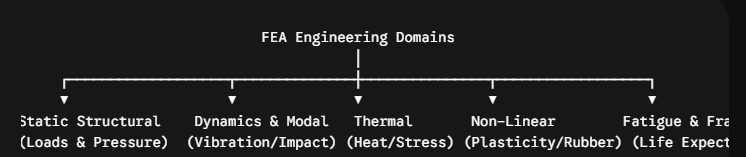
Importance of FEA in Engineering
Finite Element Analysis has transformed engineering design by enabling engineers to analyze complex systems accurately and efficiently.
1. Improves Design Accuracy
FEA provides detailed predictions of stress, deformation, and other performance characteristics, leading to more accurate and reliable designs.
2. Reduces Development Costs
Virtual simulations reduce the need for multiple physical prototypes, lowering material, labor, and testing expenses.
3. Shortens Product Development Time
Design modifications can be tested quickly, allowing faster design iterations and reducing the overall development cycle.
4. Enhances Product Safety
FEA identifies potential failure points before manufacturing, enabling engineers to strengthen critical areas and improve safety.
5. Optimizes Material Usage
By understanding stress distribution, engineers can remove unnecessary material while maintaining structural integrity, resulting in lighter and more economical products.
6. Supports Complex Engineering Problems
FEA can analyze complex geometries, assemblies, and loading conditions that are difficult or impossible to solve using traditional analytical methods.
7. Improves Product Reliability
Repeated simulations under different operating conditions help ensure products perform reliably throughout their service life.
8. Reduces Manufacturing Risks
Potential design flaws are identified early, minimizing production delays, recalls, and costly redesigns.
Engineering Analysis Using FEA
FEA supports various engineering analyses depending on the application.
1. Structural Analysis
Evaluates:
- Stress
- Strain
- Deformation
- Displacement
- Factor of Safety
Applications include machine components, bridges, and buildings.
2. Thermal Analysis
Analyzes heat transfer and temperature distribution.
Applications include:
- Engines
- Heat exchangers
- Electronic devices
- Furnaces
3. Modal Analysis
Determines:
- Natural frequencies
- Mode shapes
Used to avoid resonance and excessive vibration.
4. Dynamic Analysis
Evaluates structures under time-dependent or impact loads.
Examples:
- Earthquakes
- Machine vibrations
- Vehicle impacts
5. Buckling Analysis
Determines the critical load at which slender structures lose stability under compression.
6. Fatigue Analysis
Predicts the life of components subjected to repeated cyclic loading.
Common applications include:
- Gears
- Springs
- Crankshafts
- Aircraft structures
7. Nonlinear Analysis
Handles complex situations involving:
- Plastic deformation
- Large displacements
- Contact between components
- Hyperelastic materials
8. Multiphysics Analysis
Combines multiple physical phenomena such as structural, thermal, fluid, and electromagnetic effects into a single simulation.
Applications of FEA in Engineering
FEA is used in nearly every engineering discipline.
Mechanical Engineering
- Machine frames
- Gears
- Shafts
- Bearings
- Pressure vessels
- Springs
Civil Engineering
- Buildings
- Bridges
- Dams
- Towers
- Foundations
- Tunnels
Aerospace Engineering
- Aircraft wings
- Fuselage structures
- Jet engines
- Landing gear
- Rocket components
Automotive Engineering
- Chassis
- Suspension systems
- Brake components
- Engine blocks
- Crash simulations
Biomedical Engineering
- Artificial joints
- Dental implants
- Prosthetic limbs
- Bone fixation plates
Manufacturing Engineering
- Metal forming
- Casting simulation
- Injection molding
- Welding analysis
- Tool and die design
Marine Engineering
- Ship hulls
- Offshore platforms
- Marine propellers
Energy Engineering
- Wind turbine blades
- Boilers
- Pipelines
- Steam turbines
- Nuclear reactor components
Electronics Engineering
- PCB thermal management
- Electronic packaging
- Heat sink design
Benefits of FEA in Engineering
1. Higher Design Quality
FEA helps engineers produce stronger, safer, and more reliable products.
2. Cost Reduction
Fewer physical prototypes and less trial-and-error reduce overall project costs.
3. Faster Design Process
Engineers can evaluate multiple design alternatives quickly through virtual testing.
4. Improved Product Performance
Simulation identifies opportunities to optimize strength, stiffness, weight, and efficiency.
5. Better Decision-Making
Accurate simulation results support informed engineering decisions during product development.
6. Increased Safety
FEA predicts potential failures, helping engineers design products that meet safety standards.
7. Material Optimization
Efficient material usage reduces manufacturing costs and product weight.
8. Reduced Time-to-Market
Shorter development cycles enable products to reach the market more quickly.
9. Supports Innovation
Engineers can explore new concepts and complex designs with reduced development risk.
10. Environmentally Friendly
By reducing material waste, prototype production, and energy consumption during development, FEA contributes to more sustainable engineering practices.
Industries Using FEA
FEA has become indispensable across numerous industries.
Automotive Industry
- Vehicle safety analysis
- Engine design
- Suspension optimization
- Crashworthiness studies
Aerospace Industry
- Aircraft structures
- Engine components
- Spacecraft systems
- Composite materials
Civil and Structural Engineering
- High-rise buildings
- Bridges
- Dams
- Stadiums
Manufacturing Industry
- Tool design
- Production equipment
- Process optimization
Biomedical Industry
- Medical implants
- Surgical instruments
- Orthopedic devices
Energy Industry
- Wind turbines
- Power plants
- Oil and gas pipelines
- Nuclear facilities
Marine Industry
- Ships
- Offshore platforms
- Subsea equipment
Consumer Products Industry
- Household appliances
- Sports equipment
- Consumer electronics
- Furniture
Defense Industry
- Armored vehicles
- Military equipment
- Ballistic protection systems
Popular FEA Software Used in Engineering
Some commonly used FEA software packages include:
- ANSYS
- Abaqus
- SolidWorks Simulation
- COMSOL Multiphysics
- MSC Nastran
- Siemens Simcenter 3D
- Autodesk Inventor Nastran
- Altair HyperWorks (OptiStruct)
- LS-DYNA
- Fusion 360 Simulation
- CalculiX (Open Source)
- Code_Aster (Open Source)
Best Practices for Engineering FEA
- Create accurate CAD geometry.
- Use appropriate material properties.
- Generate a high-quality mesh.
- Apply realistic loads and boundary conditions.
- Perform mesh convergence studies.
- Validate results with experimental testing when possible.
- Review assumptions and simplify models carefully.
- Interpret results using sound engineering judgment.
Summary Table
| Aspect | Description |
|---|---|
| Full Form | Finite Element Analysis |
| Purpose | Simulate engineering behavior under real-world conditions |
| Main Inputs | CAD model, material properties, loads, boundary conditions |
| Common Outputs | Stress, strain, deformation, temperature, vibration, fatigue life |
| Major Users | Mechanical, civil, aerospace, automotive, biomedical, manufacturing engineers |
Frequently Asked Questions (FAQs)
1. What is FEA in engineering?
FEA (Finite Element Analysis) is a numerical simulation technique used to predict how engineering components and structures respond to physical conditions such as loads, temperature, vibration, and pressure.
2. Why is FEA important in engineering?
FEA improves design accuracy, reduces development costs, shortens product development time, enhances safety, and helps engineers optimize products before manufacturing.
3. Which engineering fields use FEA?
FEA is widely used in mechanical, civil, aerospace, automotive, biomedical, marine, electronics, energy, and manufacturing engineering.
4. What types of engineering analysis can be performed using FEA?
FEA supports structural, thermal, modal, dynamic, buckling, fatigue, nonlinear, and multiphysics analyses.
5. What are the main benefits of FEA?
Key benefits include reduced prototype costs, improved product quality, faster design cycles, better material utilization, enhanced safety, and reliable performance predictions.
6. What software is commonly used for FEA?
Popular FEA software includes ANSYS, Abaqus, SolidWorks Simulation, COMSOL Multiphysics, MSC Nastran, Siemens Simcenter 3D, and Fusion 360 Simulation.
Ansys Mechanical Official Page: Industrial simulation suite for complex structural, dynamic, thermal, and multiphysics engineering.
7. Can FEA replace physical testing?
FEA significantly reduces the need for physical prototypes but does not completely replace physical testing. Validation through experiments is still recommended for critical or safety-related designs.
8. What factors affect the accuracy of FEA?
Accuracy depends on mesh quality, material properties, boundary conditions, applied loads, solver settings, and proper interpretation of results.
9. Is FEA suitable for complex engineering problems?
Yes. FEA is especially valuable for analyzing complex geometries, multiple materials, nonlinear behavior, and combined physical effects that are difficult to solve analytically.
10. How does FEA contribute to sustainable engineering?
By minimizing material waste, reducing the number of physical prototypes, and optimizing designs for efficiency, FEA supports more sustainable and environmentally responsible engineering practices.
Conclusion
Finite Element Analysis (FEA) has become a cornerstone of modern engineering by enabling engineers to simulate and evaluate product performance under real-world operating conditions before manufacturing. Through virtual testing, FEA helps identify design weaknesses, optimize material usage, improve safety, and reduce development costs. Its applications span virtually every engineering discipline, including mechanical, civil, aerospace, automotive, biomedical, marine, and manufacturing engineering. With advanced simulation capabilities and powerful FEA software, engineers can make informed design decisions, accelerate innovation, and develop reliable, efficient, and high-quality products while minimizing risks and shortening the product development cycle.
Latest articles:

Best Budget Workstation Laptops for SolidWorks and Heavy 3D Assembly Modeling
Best Budget Workstation Laptops for SolidWorks and Heavy 3D Assembly Modeling Overview What Does SOLIDWORKS…

SolidWorks Standard vs Professional vs Premium: Full Feature Comparison
SolidWorks Standard vs Professional vs Premium: Full Feature Comparison Overview: SOLIDWORKS Package Overview SOLIDWORKS comes…

SolidWorks 2026 License Cost: Perpetual vs Subscription Pricing Breakdown
SolidWorks 2026 License Cost: Perpetual vs Subscription Pricing Breakdown Overview: SOLIDWORKS 2026 License Options SOLIDWORKS…
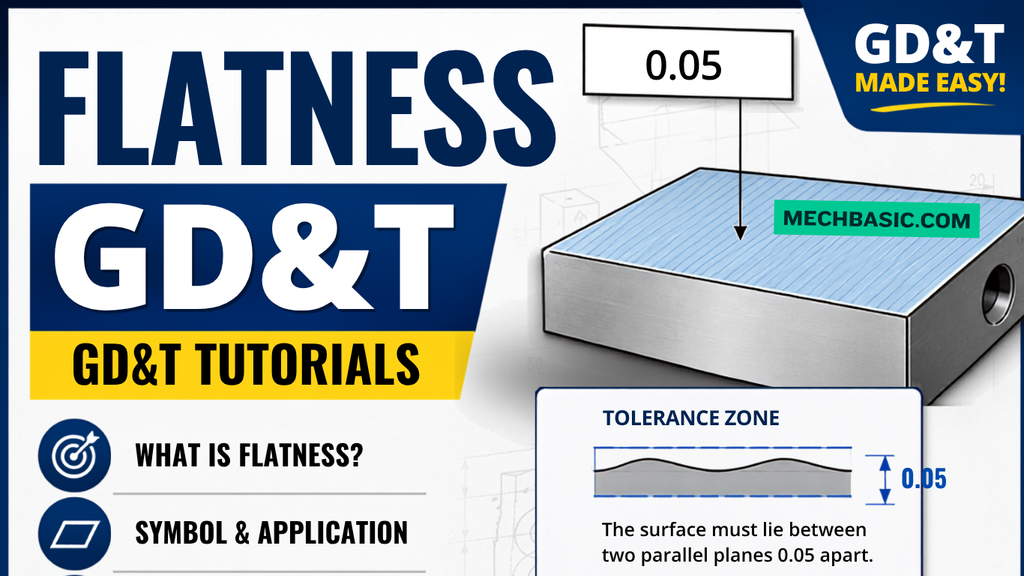
Flatness-GD&T | GD&T Tutorials

ANSI vs ISO Standards-Key Differences you need to know
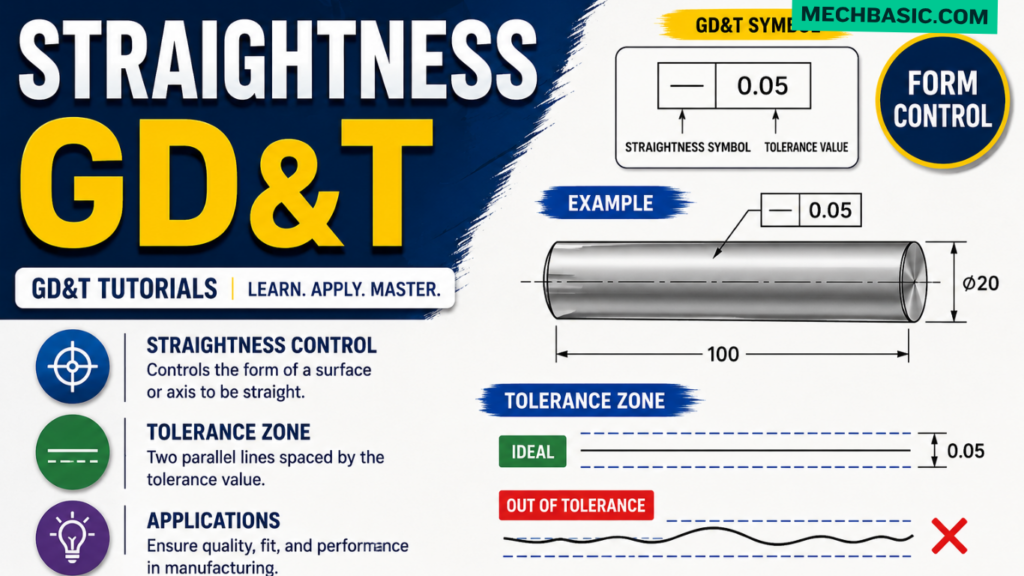
Straightness-GD&T | GD&T Tutorials
Categories: