What are ANSI and ISO Standards?
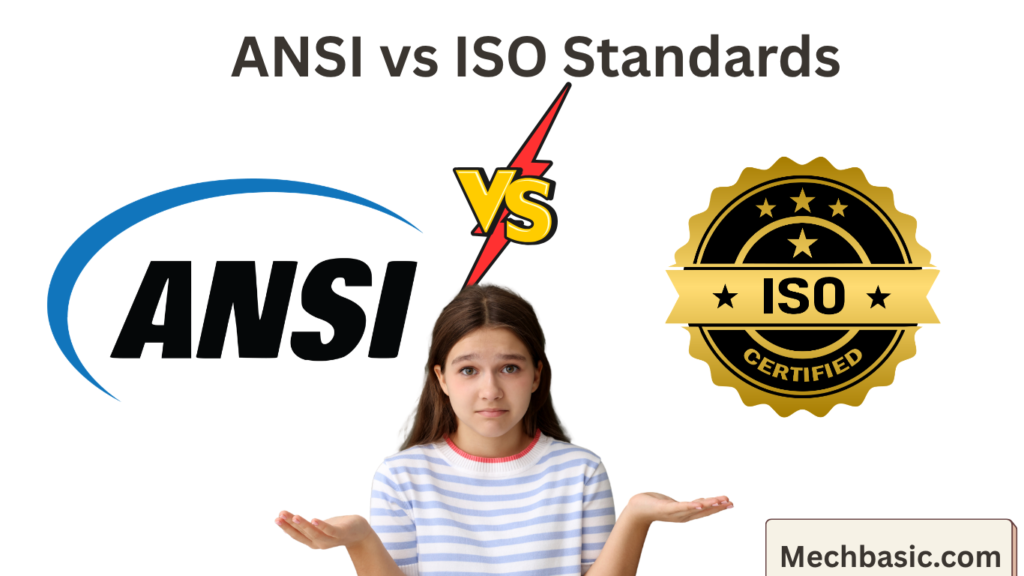
ANSI and ISO are two major organizations involved in developing standards that ensure quality, safety, efficiency, and compatibility of products, services, and systems.
- ANSI (American National Standards Institute) coordinates and approves standards primarily for use in the United States.
- ISO (International Organization for Standardization) develops international standards used by countries around the world.
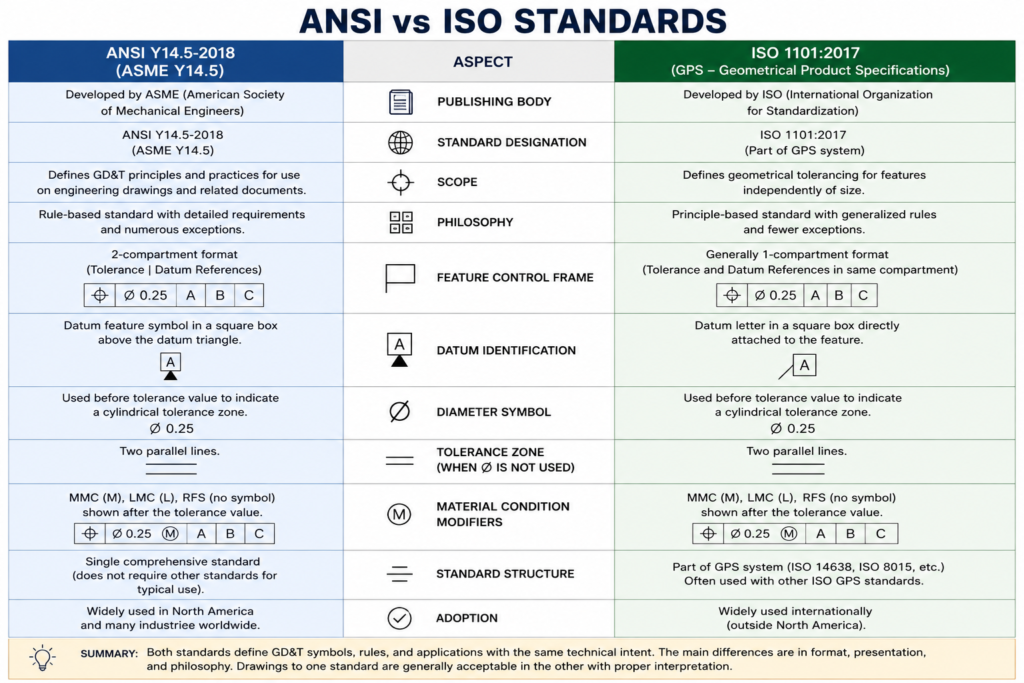
ANSI Standards
What is ANSI?
The American National Standards Institute (ANSI) is a private, non-profit organization established in 1918.
ANSI’s primary role is to accredit standards-developing organizations and approve their standards as American National Standards (ANS). It also represents the United States in international standardization bodies such as ISO and IEC.
Objectives
- Improve product quality
- Promote workplace safety
- Ensure compatibility between products
- Support innovation
- Facilitate trade
Common ANSI Standards
| Standard | Description |
|---|---|
| ANSI Z87.1 | Eye and face protection |
| ANSI Z535 | Safety signs and colors |
| ANSI B18 | Bolts, screws, and fasteners |
| ANSI B11 | Machine tool safety |
| ANSI/ASME Y14.5 | Geometric Dimensioning and Tolerancing (GD&T) |
Applications
- Mechanical engineering
- Construction
- Manufacturing
- Electrical engineering
- Information technology
- Healthcare
- Industrial safety
ISO Standards
What is ISO?
The International Organization for Standardization (ISO) is an independent, non-governmental international organization founded in 1947. It brings together national standards bodies from more than 160 countries to develop globally recognized standards.
Objectives
- Harmonize international standards
- Improve quality and safety
- Promote international trade
- Support environmental protection
- Encourage innovation
Common ISO Standards
| Standard | Description |
|---|---|
| ISO 9001 | Quality Management Systems |
| ISO 14001 | Environmental Management Systems |
| ISO 45001 | Occupational Health and Safety Management Systems |
| ISO 27001 | Information Security Management Systems |
| ISO 22000 | Food Safety Management Systems |
| ISO 50001 | Energy Management Systems |
| ISO 13485 | Quality Management for Medical Devices |
Applications
- Manufacturing
- Automotive
- Aerospace
- Healthcare
- Food industry
- Information technology
- Energy management
- Environmental management
ANSI vs ISO
| Feature | ANSI | ISO |
|---|---|---|
| Full Name | American National Standards Institute | International Organization for Standardization |
| Scope | Primarily United States | Global |
| Type | Private, non-profit organization | Independent international organization |
| Established | 1918 | 1947 |
| Main Role | Accredits and approves U.S. standards | Develops international standards |
| Geographic Use | Mainly U.S. | Worldwide |
| Members | U.S. organizations and stakeholders | National standards bodies from member countries |
Relationship Between ANSI and ISO
ANSI is the U.S. member body to ISO. It:
- Represents U.S. interests in ISO committees.
- Coordinates U.S. participation in the development of international standards.
- Helps align U.S. standards with global standards where appropriate.
As a result, some standards are adopted in both U.S. and international forms, although not all ANSI standards become ISO standards and vice versa.
Examples
ANSI Example
A U.S. manufacturer of safety goggles may design products to meet ANSI Z87.1, which specifies performance requirements for eye and face protection.
ISO Example
A manufacturing company seeking to demonstrate consistent quality management may implement ISO 9001, which is recognized internationally and often requested by customers worldwide.
Benefits of ANSI and ISO Standards
ANSI
- Improves product safety
- Promotes consistency
- Enhances interoperability
- Supports U.S. industry
ISO
- Enables global market access
- Improves product and service quality
- Increases customer confidence
- Facilitates international trade
- Encourages continual improvement
Summary
| ANSI | ISO |
|---|---|
| Focuses on U.S. standards | Focuses on international standards |
| Accredits and approves American National Standards | Develops globally recognized standards |
| Used widely in U.S. industries | Used by organizations around the world |
| Covers engineering, safety, manufacturing, IT, healthcare, and more | Covers quality, environment, safety, information security, food safety, energy, and many other fields |
- ANSI helps establish and coordinate standards primarily within the United States.
- ISO develops international standards that enable organizations across the world to work to common requirements, improving quality, safety, and global interoperability.
Latest articles:

Best Budget Workstation Laptops for SolidWorks and Heavy 3D Assembly Modeling
Best Budget Workstation Laptops for SolidWorks and Heavy 3D Assembly Modeling Overview What Does SOLIDWORKS…
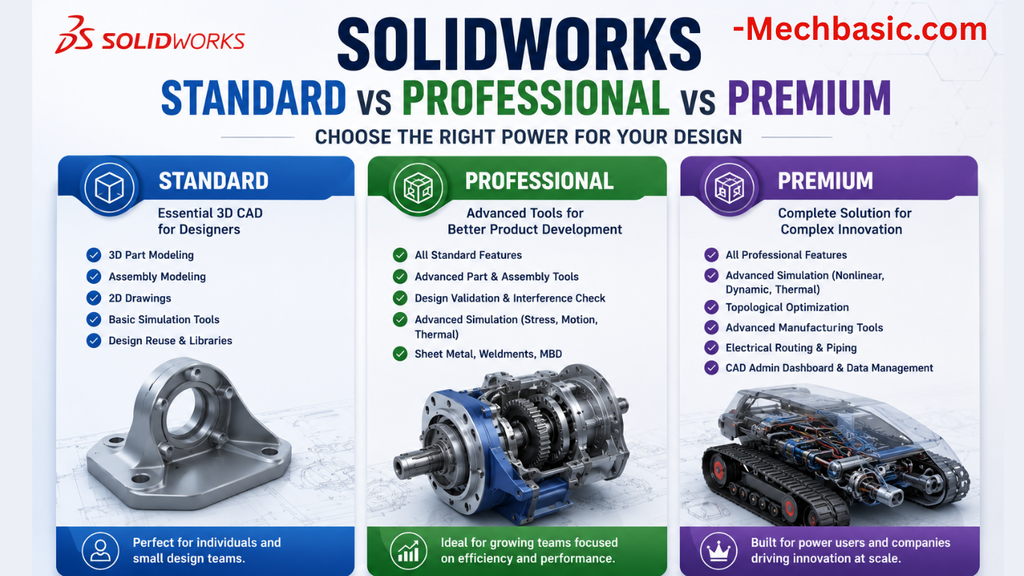
SolidWorks Standard vs Professional vs Premium: Full Feature Comparison
SolidWorks Standard vs Professional vs Premium: Full Feature Comparison Overview: SOLIDWORKS Package Overview SOLIDWORKS comes…
SolidWorks 2026 License Cost: Perpetual vs Subscription Pricing Breakdown
SolidWorks 2026 License Cost: Perpetual vs Subscription Pricing Breakdown Overview: SOLIDWORKS 2026 License Options SOLIDWORKS…
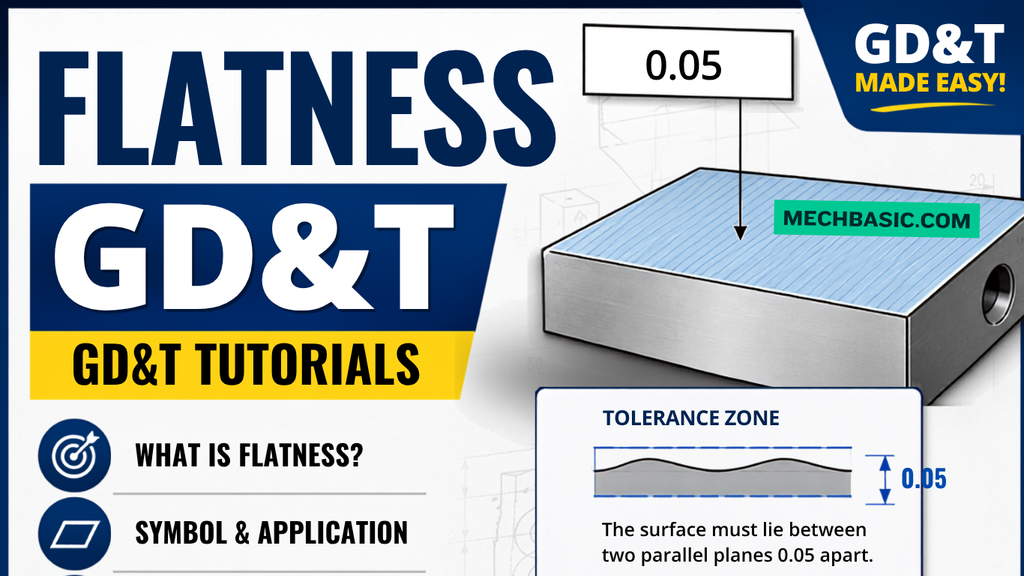
Flatness-GD&T | GD&T Tutorials
ANSI vs ISO Standards-Key Differences you need to know
Straightness-GD&T | GD&T Tutorials
Related Tags:
Categories: