Key Takeaways:
Digital Twin Technology
1. Introduction
What is a Digital Twin?
A virtual representation of a physical product, machine, or process.
2. How It Works
Physical–Digital Connection
Real-time data connects the physical asset with its digital model.
3. Key Components
Sensors & Data
Sensors collect data and update the digital twin.
Digital Model
Represents the condition and behavior of the physical asset.
4. Applications
Manufacturing
Used for production monitoring, simulation, and optimization.
Maintenance
Helps predict failures and plan maintenance.
5. Benefits
Improved Performance
Enables better monitoring, prediction, and decision-making.
Reduced Cost
Reduces downtime, waste, and maintenance expenses.
6. Future of Digital Twins
Smart Manufacturing
Supports automation, AI, IoT, and connected industrial systems.
7. Conclusion
From Physical to Digital
Digital twins connect real-world assets with intelligent virtual models.
In this article:
- Digital Twin Technology
- 1. Introduction
- 2. How Digital Twin Technology Works
- 3. Data Collection
- 4. Digital Model
- 5. Data Analytics
- 6. Simulation
- 7. Key Components of a Digital Twin
- 8. Types of Digital Twins
- 9. Digital Twin in Manufacturing
- 10. Predictive Maintenance
- 11. Product Design and Development
- 12. Virtual Commissioning
- 13. Quality Control
- 14. Energy Management
- 15. Benefits of Digital Twin Technology
- 16. Digital Twin vs. CAD Model
- 17. Digital Twin vs. Simulation
- 18. Challenges of Digital Twins
- 19. Future of Digital Twin Technology
- 20. Digital Twin in Industry 4.0
- 21. Frequently Asked Questions (FAQ)
- 22. Quick Summary
- Conclusion
Digital Twin Technology
Digital Twin Technology is one of the important technologies driving Industry 4.0, smart manufacturing, predictive maintenance, and connected engineering. It creates a digital representation of a physical object, machine, process, or system and connects that representation with real-world data.
A simple way to remember it is:
Physical Asset + Real-Time Data + Digital Model + Analytics = Digital Twin
1. Introduction
What is a Digital Twin?
A Digital Twin is a digital representation of a physical object, system, process, or environment that is connected to the real-world entity through data.
The digital model can represent information such as:
- Geometry
- Physical characteristics
- Operating conditions
- Performance
- Temperature
- Pressure
- Speed
- Vibration
- Energy consumption
- Maintenance history
- Current operating status
The important difference between an ordinary 3D CAD model and a digital twin is that a digital twin is connected to information about the physical asset throughout its operation.
Simple Example
Consider a manufacturing motor.
A CAD model may show:
What the motor looks like.
A digital twin can additionally show:
How the motor is operating right now, how it has performed over time, and whether it is likely to develop a problem.
Also Read: What is a Digital Twin Technology?
2. How Digital Twin Technology Works
Physical–Digital Connection
A digital twin works by establishing a continuous or periodic connection between a physical asset and its digital representation.
The basic process is:
Physical Asset
↓
Sensors
↓
Data Collection
↓
Communication Network
↓
Digital Twin
↓
Data Processing & Analytics
↓
Decision / Action
↓
Physical Asset
This creates a feedback loop between the physical and digital worlds.
Step 1 — Physical Asset
The physical asset may be:
- Machine
- Robot
- Engine
- Production line
- Building
- Vehicle
- Aircraft
- Factory
- Product
- Industrial process
Step 2 — Sensors
Sensors collect information from the physical system.
Examples include:
Temperature Sensors
Measure temperature changes.
Pressure Sensors
Measure pressure in systems such as hydraulic or pneumatic equipment.
Vibration Sensors
Detect abnormal vibration in rotating machinery.
Position Sensors
Determine the position of moving components.
Speed Sensors
Measure rotational or linear speed.
Current Sensors
Monitor electrical current.
Flow Sensors
Measure liquid or gas flow.
3. Data Collection
The sensor information is collected and transmitted to a computing environment.
Depending on the application, data may be processed:
- On the machine
- At an edge device
- On a local server
- In a cloud platform
- In a combination of these
The data can be:
- Real-time
- Periodic
- Historical
- Event-based
4. Digital Model
Digital Representation
The digital twin contains a model representing the physical asset.
The model may include:
- 3D geometry
- Engineering specifications
- Material information
- Machine configuration
- Operating parameters
- Sensor information
- Maintenance records
- Historical performance
The digital model can be connected to engineering and enterprise systems.
For example:
CAD → Digital Twin → IoT Data → Maintenance System
5. Data Analytics
The digital twin becomes more useful when collected data is analyzed.
Analytics can identify:
- Abnormal behavior
- Performance degradation
- Energy inefficiency
- Process variation
- Potential failures
- Maintenance requirements
Advanced systems may use:
- Statistical analysis
- Machine learning
- Artificial intelligence
- Physics-based simulation
- Predictive models
6. Simulation
What-If Analysis
One major advantage of digital twins is the ability to test scenarios digitally.
For example:
What happens if machine speed is increased by 10%?
or:
What happens if the operating temperature increases?
or:
What happens if a particular component begins to wear?
Instead of experimenting immediately on the physical machine, engineers can first evaluate possible outcomes using the digital model.
7. Key Components of a Digital Twin
A digital twin generally consists of several interconnected components.
1. Physical Asset
The real-world object or system.
2. Sensors
Collect operating information from the physical asset.
3. Connectivity
Transfers data between the physical and digital environments.
Examples include:
- Industrial Ethernet
- Wi-Fi
- 5G
- Fieldbus systems
- Industrial IoT networks
4. Digital Model
Represents the physical asset or process.
5. Data Platform
Stores and manages current and historical information.
6. Analytics
Analyzes data to identify patterns and conditions.
7. Visualization
Presents information through:
- Dashboards
- 3D models
- Charts
- Alerts
- Digital interfaces
8. Decision and Control
The insights generated by the twin can support engineering or operational decisions.
In some advanced systems, information can also be used to influence the physical process automatically, subject to appropriate control and safety mechanisms.
8. Types of Digital Twins
Digital twins can exist at different levels.
Component Twin
Represents an individual component.
Example
A bearing, motor, pump, or valve.
Asset Twin
Represents an entire machine or asset.
Example
A CNC machine.
System Twin
Represents multiple interconnected assets.
Example
An automated production line.
Process Twin
Represents an entire process.
Example
A manufacturing process from raw material to finished product.
Product Twin
Represents a product throughout its lifecycle.
It can potentially connect information from:
Design → Manufacturing → Operation → Maintenance → End of Life
9. Digital Twin in Manufacturing
Smart Manufacturing
Digital twins are particularly important in modern manufacturing.
A factory can create digital representations of:
- CNC machines
- Robots
- Assembly lines
- Conveyors
- Injection molding machines
- Welding systems
- Inspection systems
- Entire production cells
Production Monitoring
The digital twin can display:
- Machine status
- Production rate
- Cycle time
- Temperature
- Energy consumption
- Quality information
- Downtime
This helps engineers and operators understand production conditions.
10. Predictive Maintenance
One of the most valuable applications is predictive maintenance.
Traditional maintenance may be:
Reactive
Repair the machine after failure.
or:
Preventive
Perform maintenance at predetermined intervals.
Digital twins can support:
Predictive Maintenance
Use machine condition and historical data to identify potential problems before failure occurs.
Example
A rotating machine normally operates with a particular vibration pattern.
Over time, the digital twin detects:
Increasing vibration + increasing temperature + changing operating behavior
Analytics may indicate that a bearing or another component requires investigation.
The maintenance team can then inspect the equipment before an unexpected breakdown.
11. Product Design and Development
Digital twins can also support product development.
Engineers can evaluate:
- Performance
- Thermal behavior
- Structural behavior
- Fluid flow
- Energy consumption
- Manufacturing feasibility
This can reduce the number of physical prototypes required in some development processes.
12. Virtual Commissioning
What Is Virtual Commissioning?
Virtual commissioning uses a digital representation of a machine or production system to test control logic and behavior before the physical system is fully commissioned.
For example, engineers can test:
- PLC logic
- Robot sequences
- Conveyor behavior
- Sensor interactions
- Safety sequences
- Production cycles
This can help identify problems earlier.
13. Quality Control
Digital twins can support manufacturing quality by connecting:
- Process parameters
- Inspection results
- Machine conditions
- Material information
- Product specifications
Engineers can investigate relationships between manufacturing conditions and product quality.
For example:
Increased process temperature → dimensional variation → increased rejection rate
Such relationships can help improve process control.
14. Energy Management
Digital twins can monitor energy consumption from:
- Motors
- Compressors
- HVAC systems
- Pumps
- Production machines
- Entire factories
Engineers can identify:
- Energy-intensive equipment
- Unusual consumption
- Inefficient operating conditions
- Opportunities for optimization
15. Benefits of Digital Twin Technology
1. Improved Performance
Continuous monitoring and analysis can help improve machine and process performance.
2. Reduced Downtime
Predictive maintenance can help identify potential problems before unexpected failure.
3. Reduced Maintenance Cost
Maintenance can become more condition-based rather than relying only on fixed schedules.
4. Better Product Quality
Process information can help identify causes of defects and variation.
5. Faster Product Development
Simulation and virtual testing can reduce dependence on physical prototypes in appropriate applications.
6. Improved Decision Making
Engineers can use real-world data rather than relying only on assumptions.
7. Increased Productivity
Production bottlenecks and inefficient operations can be identified.
8. Improved Asset Utilization
Companies can understand how equipment is actually being used and identify opportunities to improve utilization.
9. Lifecycle Management
Digital twins can support information throughout the asset lifecycle:
Design → Manufacturing → Operation → Maintenance → Retirement
16. Digital Twin vs. CAD Model
This is a common question.
| CAD Model | Digital Twin |
|---|---|
| Primarily represents geometry/design | Represents an asset/system and its behavior or state |
| Mainly design-focused | Lifecycle/operation-focused |
| Usually static | Can be continuously updated |
| Contains design information | Can combine design, operational, and historical data |
| Does not inherently require sensors | Often connected to sensors/data sources |
| Used mainly for engineering design | Used for monitoring, simulation, optimization, and decision support |
Simple Rule
CAD tells you what was designed.
A digital twin can help tell you how the real asset is behaving.
A CAD model can, however, be one important input into a digital twin.
17. Digital Twin vs. Simulation
These terms are also often confused.
Simulation
A simulation models behavior under defined conditions.
Digital Twin
A digital twin is connected to a particular physical asset, system, or process and can use actual operational data.
Simple Difference
Simulation → “What might happen?”
Digital Twin → “What is happening, and what may happen?”
In practice, digital twins may use simulation models as part of their architecture.
18. Challenges of Digital Twins
Digital twin technology also has challenges.
Data Quality
Incorrect or incomplete sensor data can produce unreliable results.
Cybersecurity
Connected industrial systems need strong security measures.
Integration
Digital twins may need to integrate:
- CAD
- PLM
- ERP
- MES
- SCADA
- IoT
- Maintenance systems
Cost
Sensors, connectivity, software, computing infrastructure, and implementation require investment.
Model Accuracy
The digital model must adequately represent the real system for its intended purpose.
Skills
Organizations may need expertise in:
- Mechanical engineering
- Data analytics
- IoT
- Automation
- Software
- Simulation
- Cybersecurity
19. Future of Digital Twin Technology
Smart Manufacturing
Digital twins are expected to become increasingly important in connected manufacturing environments.
Future systems may combine:
Digital Twin + AI + IoT + Robotics + Cloud/Edge Computing
This can enable more intelligent monitoring and optimization.
AI-Powered Digital Twins
Artificial intelligence can help identify complex patterns in operational data.
Potential applications include:
- Failure prediction
- Process optimization
- Anomaly detection
- Quality prediction
- Energy optimization
Autonomous Optimization
More advanced systems may recommend or automatically adjust operating parameters within defined constraints.
For example:
Detect inefficient operating condition → analyze alternatives → recommend optimized settings → implement approved adjustment.
Digital Thread
Digital twins can become part of a broader digital thread, connecting information across the product lifecycle.
For example:
Design → Engineering → Manufacturing → Inspection → Operation → Maintenance
This creates greater continuity of information.
20. Digital Twin in Industry 4.0
Digital twin technology is closely associated with Industry 4.0.
A modern smart factory can combine:
- Industrial IoT
- Sensors
- Automation
- Robotics
- Artificial intelligence
- Cloud/edge computing
- Big-data analytics
- Digital twins
The digital twin acts as an important bridge between the physical manufacturing environment and the digital engineering environment.
21. Frequently Asked Questions (FAQ)
Q1. What is a digital twin?
A digital twin is a digital representation of a physical object, system, or process that is connected to real-world information about that entity.
Q2. What is the main purpose of a digital twin?
Its purpose is to understand, monitor, simulate, predict, and optimize the behavior or performance of a physical asset or system.
Q3. Is a digital twin the same as a 3D model?
No.
A 3D model primarily represents geometry, while a digital twin can include geometry plus operational, sensor, historical, and analytical information.
Q4. Does a digital twin require sensors?
Not every digital representation requires sensors, but operational digital twins commonly use sensors or other data sources to maintain a connection with the physical system.
Q5. What is the difference between IoT and a digital twin?
IoT primarily focuses on connecting devices and collecting/transmitting data.
A digital twin uses data together with a digital representation of the physical entity for monitoring, analysis, simulation, or optimization.
Q6. What is predictive maintenance?
Predictive maintenance uses condition and performance information to identify potential failures and determine when maintenance may be needed.
Q7. Can digital twins reduce manufacturing downtime?
Yes. They can support condition monitoring and predictive maintenance, potentially allowing problems to be identified before unexpected failures.
Q8. Can digital twins be used during product design?
Yes.
They can support simulation, virtual testing, performance analysis, and design optimization.
Q9. Can digital twins be used for an entire factory?
Yes.
A digital twin can represent an individual machine, production line, manufacturing process, or potentially an entire factory.
Q10. What technologies are used with digital twins?
Common technologies include:
- IoT
- Sensors
- CAD
- PLM
- Simulation
- Cloud computing
- Edge computing
- AI
- Machine learning
- Data analytics
- Industrial automation
Q11. What is a digital thread?
A digital thread is a connected flow of information across different stages of a product or asset lifecycle.
Q12. What are the major benefits?
Major benefits include:
- Improved performance
- Reduced downtime
- Better maintenance
- Improved quality
- Faster development
- Better decision-making
- Improved resource utilization
Q13. What are the main challenges?
Major challenges include:
- Data quality
- Integration
- Cybersecurity
- Cost
- Model accuracy
- Infrastructure
- Skills
Q14. Is a digital twin useful only for manufacturing?
No.
Digital twins can be used in areas such as:
- Aerospace
- Automotive
- Energy
- Healthcare
- Buildings
- Transportation
- Infrastructure
- Logistics
- Industrial equipment
Q15. What is the simplest way to understand a digital twin?
Think of it as:
A living digital representation of a real-world asset that uses data to understand and improve that asset.
22. Quick Summary
| Element | Role |
|---|---|
| Physical asset | Real-world object/system |
| Sensors | Collect data |
| Connectivity | Transfers data |
| Digital model | Represents the asset |
| Data platform | Stores/manages information |
| Analytics | Finds patterns and problems |
| Simulation | Evaluates possible behavior |
| Visualization | Helps users understand information |
| AI/ML | Supports prediction and optimization |
| Feedback | Enables decisions/actions |
Conclusion
Digital Twin Technology creates a powerful connection between the physical world and the digital world.
Instead of viewing a machine or product only through drawings and specifications, engineers can combine its digital representation with real-world operating data. This enables better monitoring, simulation, maintenance, quality control, optimization, and lifecycle management.
The fundamental concept can be summarized as:
Physical Asset → Data → Digital Twin → Analysis → Decision → Improved Physical Asset
In manufacturing, this can support smart factories, predictive maintenance, virtual commissioning, quality improvement, energy optimization, and better production planning.
The future of digital twins will increasingly involve AI, IoT, robotics, simulation, cloud/edge computing, and digital threads, creating more connected and intelligent engineering systems.
Latest articles:
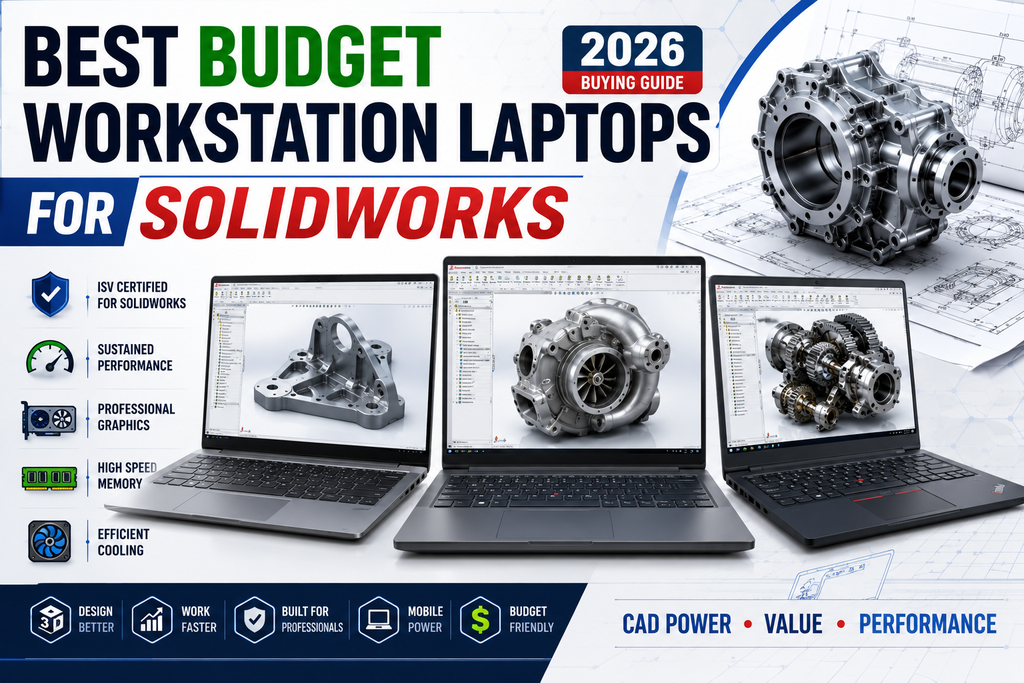
Best Budget Workstation Laptops for SolidWorks and Heavy 3D Assembly Modeling
Best Budget Workstation Laptops for SolidWorks and Heavy 3D Assembly Modeling Overview What Does SOLIDWORKS…
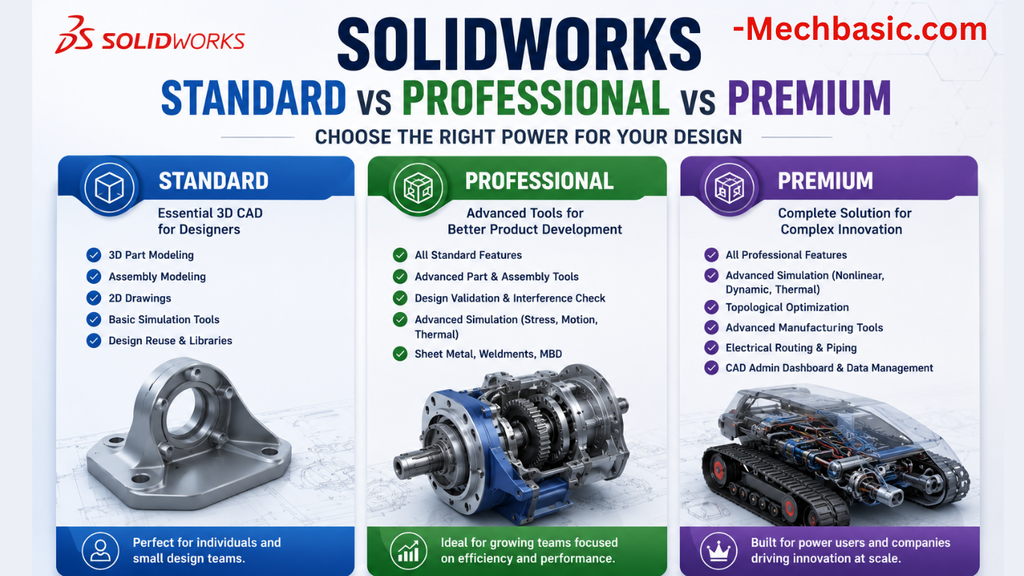
SolidWorks Standard vs Professional vs Premium: Full Feature Comparison
SolidWorks Standard vs Professional vs Premium: Full Feature Comparison Overview: SOLIDWORKS Package Overview SOLIDWORKS comes…
SolidWorks 2026 License Cost: Perpetual vs Subscription Pricing Breakdown
SolidWorks 2026 License Cost: Perpetual vs Subscription Pricing Breakdown Overview: SOLIDWORKS 2026 License Options SOLIDWORKS…
Flatness-GD&T | GD&T Tutorials
ANSI vs ISO Standards-Key Differences you need to know
Straightness-GD&T | GD&T Tutorials
Related Tags:
Categories: