Key Takeaways:
Who is a CFD Engineer?
A Computational Fluid Dynamics (CFD) Engineer is a professional who uses CFD software to simulate and analyze fluid flow, heat transfer, and aerodynamic performance of engineering systems. They help optimize product designs, improve efficiency, and solve complex fluid-related engineering problems before physical testing.
Roles and Responsibilities of a CFD Engineer:
A CFD Engineer creates simulation models, generates meshes, applies boundary conditions, performs fluid flow and thermal analyses, validates simulation results, optimizes product designs, and prepares technical reports for engineering projects.
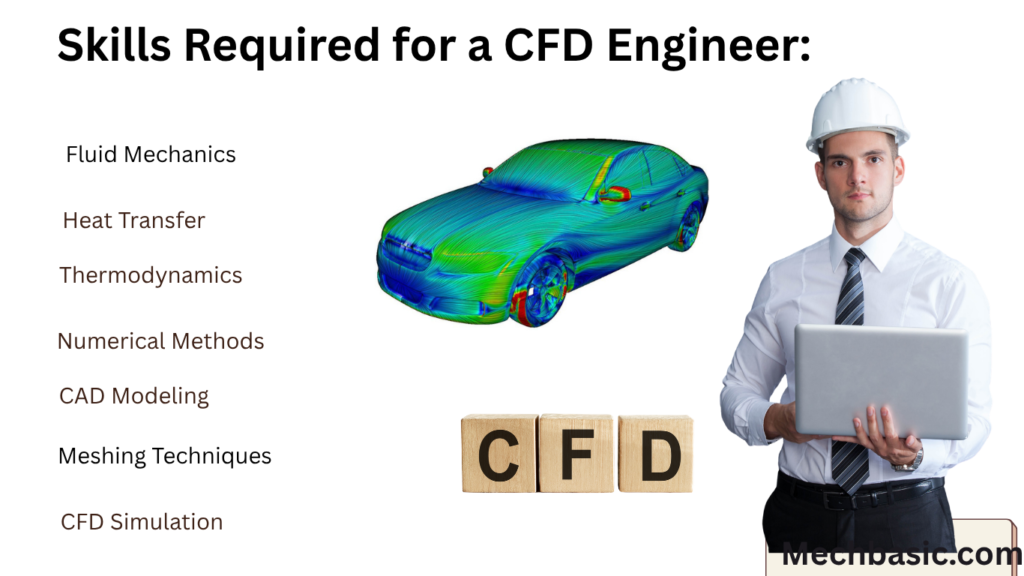
Skills Required for a CFD Engineer:
A CFD Engineer should have knowledge of fluid mechanics, heat transfer, thermodynamics, numerical methods, turbulence modeling, meshing techniques, CAD modeling, and engineering mathematics. Proficiency in CFD software and programming tools is also beneficial.
Software Used by a CFD Engineer:
Common software used by CFD Engineers includes ANSYS Fluent, ANSYS CFX, STAR-CCM+, OpenFOAM, COMSOL Multiphysics, SolidWorks Flow Simulation, Autodesk CFD, and SimScale.
Industries Hiring CFD Engineers:
CFD Engineers are employed in the automotive, aerospace, energy, HVAC, marine, chemical, biomedical, oil and gas, electronics, and manufacturing industries to improve product performance and optimize fluid systems.
Career Opportunities for CFD Engineers:
CFD Engineers can work as Simulation Engineer, CFD Analyst, Thermal Engineer, Aerodynamics Engineer, Design Engineer, Research Engineer, CAE Engineer, or Product Development Engineer in engineering and technology organizations.
In this article:
- Who is a CFD Engineer?
- CFD Engineer
- Who is a CFD Engineer?
- Roles and Responsibilities of a CFD Engineer
- Skills Required for a CFD Engineer
- Software Used by a CFD Engineer
- Industries Hiring CFD Engineers
- Career Opportunities for CFD Engineers
- Typical CFD Project Workflow
- Advantages of Becoming a CFD Engineer
- Summary Table
- Frequently Asked Questions (FAQs)
- Conclusion
CFD Engineer
Introduction
A Computational Fluid Dynamics (CFD) Engineer is a specialized engineering professional who uses CFD software and engineering principles to analyze, simulate, and optimize the behavior of fluids (liquids and gases) in various products and systems. CFD engineers create virtual simulations to predict fluid flow, heat transfer, pressure distribution, turbulence, combustion, and other fluid-related phenomena before physical prototypes are built.
By replacing or reducing costly experimental testing, CFD engineers help organizations improve product performance, reduce development costs, shorten design cycles, and ensure compliance with industry standards. CFD engineers are in high demand across industries such as aerospace, automotive, energy, marine, chemical processing, electronics, HVAC, biomedical, and manufacturing.
Who is a CFD Engineer?
A CFD Engineer is an engineer who specializes in using Computational Fluid Dynamics (CFD) to solve engineering problems involving fluid flow and heat transfer. They combine knowledge of fluid mechanics, thermodynamics, heat transfer, mathematics, and numerical methods with advanced simulation software to evaluate and optimize engineering designs.
CFD engineers work closely with design, structural, manufacturing, and testing teams to improve products before production.
A CFD Engineer typically analyzes:
- Fluid flow
- Heat transfer
- Pressure distribution
- Aerodynamics
- Hydrodynamics
- Turbulence
- Combustion
- Cooling systems
- Ventilation systems
- Multiphase flows
Roles and Responsibilities of a CFD Engineer
A CFD Engineer performs a wide range of simulation and design-related tasks.
1. Create CFD Models
Develop accurate computational models from CAD geometry by defining the fluid domain and preparing the simulation environment.
2. Generate High-Quality Meshes
Create structured or unstructured meshes and refine critical regions to ensure accurate simulation results.
3. Apply Boundary Conditions
Define realistic operating conditions, including:
- Velocity inlets
- Pressure outlets
- Mass flow rates
- Wall conditions
- Heat sources
- Rotating regions
4. Perform CFD Simulations
Run simulations for various engineering problems, including:
- Fluid flow
- Heat transfer
- Turbulence
- Combustion
- Multiphase flow
- Cooling analysis
5. Analyze and Interpret Results
Evaluate outputs such as:
- Velocity
- Pressure
- Temperature
- Streamlines
- Turbulence intensity
- Drag and lift coefficients
- Heat flux
Use these results to identify performance improvements and potential issues.
6. Optimize Designs
Recommend design changes to improve:
- Efficiency
- Performance
- Cooling
- Aerodynamics
- Fuel economy
- Energy consumption
7. Validate Simulation Results
Compare CFD predictions with:
- Experimental data
- Wind tunnel testing
- Laboratory measurements
- Analytical calculations
8. Prepare Technical Reports
Document simulation methods, assumptions, results, and recommendations for project stakeholders.
9. Collaborate with Cross-Functional Teams
Work with:
- Design engineers
- Structural analysts
- Manufacturing engineers
- Test engineers
- Project managers
to develop optimized engineering solutions.
10. Stay Updated with Technology
Continuously learn about:
- New CFD software features
- Advanced turbulence models
- High-performance computing
- Artificial intelligence in simulation
- Industry standards and best practices
Skills Required for a CFD Engineer
A successful CFD Engineer needs a combination of technical and professional skills.
Technical Skills
Fluid Mechanics
- Fluid properties
- Laminar and turbulent flow
- Boundary layers
- Compressible flow
Heat Transfer
- Conduction
- Convection
- Radiation
- Thermal management
Thermodynamics
Understanding energy conservation, entropy, and thermodynamic cycles.
Numerical Methods
Knowledge of:
- Finite Volume Method (FVM)
- Finite Difference Method (FDM)
- Numerical solvers
- Convergence techniques
CAD Modeling
Experience with:
- SolidWorks
- CATIA
- Creo
- Siemens NX
- Fusion 360
Meshing Techniques
Knowledge of:
- Structured meshes
- Unstructured meshes
- Boundary-layer meshing
- Mesh quality assessment
CFD Simulation
Ability to:
- Select appropriate physical models
- Apply boundary conditions
- Configure solver settings
- Perform post-processing
Data Analysis
Interpret simulation results using:
- Graphs
- Contour plots
- Streamlines
- Vector plots
- Technical reports
Soft Skills
- Analytical thinking
- Problem-solving
- Communication
- Teamwork
- Time management
- Attention to detail
- Technical writing
Software Used by a CFD Engineer
CFD Engineers use a variety of commercial and open-source software tools.
CFD Software
- ANSYS Fluent
- ANSYS CFX
- Siemens Simcenter STAR-CCM+
- OpenFOAM
- COMSOL Multiphysics
- SolidWorks Flow Simulation
- Autodesk CFD
- Altair AcuSolve
- FLOW-3D
- SimScale
CAD Software
- SolidWorks
- CATIA
- Siemens NX
- Creo
- Autodesk Inventor
- Fusion 360
Pre-Processing Tools
- ANSYS Meshing
- ICEM CFD
- Pointwise
- HyperMesh
Post-Processing Tools
- ANSYS CFD-Post
- ParaView
- Tecplot
- Ensight
Programming and Automation
Many CFD Engineers also use:
- Python
- MATLAB
- C++
- Shell scripting
for automation, data analysis, and custom workflows.
Industries Hiring CFD Engineers
CFD Engineers are employed in many sectors where fluid flow and heat transfer are critical.
Aerospace Industry
- Aircraft manufacturers
- Space agencies
- Defense organizations
Typical work:
- Aerodynamics
- Jet engines
- Rocket propulsion
Automotive Industry
- Passenger vehicles
- Electric vehicles (EVs)
- Motorsports
Typical work:
- Vehicle aerodynamics
- Battery cooling
- Engine thermal management
Mechanical Engineering
- Pumps
- Compressors
- Heat exchangers
- HVAC systems
Energy Industry
- Wind turbines
- Gas turbines
- Nuclear power plants
- Solar thermal systems
Chemical Industry
- Chemical reactors
- Mixing systems
- Process optimization
Marine Industry
- Ship hull design
- Propeller optimization
- Offshore platforms
Biomedical Industry
- Blood flow simulation
- Medical devices
- Artificial organs
Electronics Industry
- CPU cooling
- Battery thermal management
- Electronic packaging
Civil Engineering
- Building ventilation
- Tunnel airflow
- Smoke control
- Wind engineering
Research and Development
- Universities
- Government laboratories
- Research institutions
- Innovation centers
Career Opportunities for CFD Engineers
CFD Engineers can pursue a variety of career paths.
Entry-Level Positions
- Graduate CFD Engineer
- Simulation Engineer
- Thermal Engineer
- Design Analysis Engineer
Mid-Level Positions
- CFD Engineer
- Senior Simulation Engineer
- Thermal Systems Engineer
- Product Development Engineer
Senior-Level Positions
- Senior CFD Engineer
- Lead Simulation Engineer
- CFD Specialist
- Technical Consultant
Management Roles
- Engineering Manager
- Simulation Team Lead
- R&D Manager
- Technical Director
Specialized Career Paths
- Aerodynamics Engineer
- Thermal Management Engineer
- HVAC Simulation Engineer
- Combustion Engineer
- Renewable Energy Simulation Engineer
- Multiphysics Simulation Engineer
Research and Academic Careers
- Research Scientist
- University Professor
- CFD Research Engineer
- Doctoral Researcher
Typical CFD Project Workflow
- Understand the engineering problem.
- Create or import the CAD model.
- Simplify the geometry.
- Generate the computational mesh.
- Define material properties.
- Apply boundary conditions.
- Select physical and turbulence models.
- Run the CFD simulation.
- Analyze and validate the results.
- Recommend design improvements and document findings.
Advantages of Becoming a CFD Engineer
- High demand across multiple industries.
- Opportunities to work on cutting-edge technologies.
- Involvement in innovative product development.
- Competitive salaries and career growth.
- Global employment opportunities.
- Continuous learning through evolving simulation technologies.
- Ability to contribute to sustainable and energy-efficient designs.
Summary Table
| Aspect | Description |
|---|---|
| Profession | CFD Engineer |
| Primary Role | Simulate and optimize fluid flow and heat transfer |
| Core Knowledge | Fluid mechanics, thermodynamics, numerical methods |
| Common Software | ANSYS Fluent, ANSYS CFX, STAR-CCM+, OpenFOAM, COMSOL |
| Key Industries | Aerospace, automotive, energy, marine, biomedical, electronics |
| Career Growth | Graduate Engineer → CFD Engineer → Senior Engineer → Lead/Manager |
Frequently Asked Questions (FAQs)
1. Who is a CFD Engineer?
A CFD Engineer is an engineering professional who uses Computational Fluid Dynamics software to simulate and analyze fluid flow, heat transfer, and related physical processes for product design and optimization.
2. What qualifications are required to become a CFD Engineer?
Most CFD Engineers hold a bachelor’s or master’s degree in Mechanical, Aerospace, Automotive, Chemical, Civil, or related engineering disciplines. Knowledge of fluid mechanics, thermodynamics, and numerical methods is essential.
3. What software do CFD Engineers commonly use?
Popular tools include ANSYS Fluent, ANSYS CFX, Simcenter STAR-CCM+, OpenFOAM, COMSOL Multiphysics, SolidWorks Flow Simulation, and Autodesk CFD.
4. What industries hire CFD Engineers?
CFD Engineers are employed in aerospace, automotive, energy, marine, HVAC, chemical processing, biomedical, electronics, civil engineering, and research organizations.
5. What skills are most important for a CFD Engineer?
Key skills include fluid mechanics, heat transfer, thermodynamics, meshing, CFD modeling, CAD, data analysis, programming (such as Python or MATLAB), problem-solving, and technical communication.
6. Is programming required for a CFD Engineer?
Basic programming knowledge is highly beneficial for automating workflows, customizing simulations, processing large datasets, and integrating simulation tools. Python is one of the most commonly used languages.
7. What is the difference between a CFD Engineer and an FEA Engineer?
A CFD Engineer focuses on fluid flow and heat transfer, whereas an FEA Engineer analyzes structural behavior, stress, strain, deformation, vibration, and fatigue of components.
8. Can CFD Engineers work in electric vehicle (EV) development?
Yes. CFD Engineers contribute to battery thermal management, motor cooling, cabin airflow, aerodynamic optimization, and thermal performance of electric vehicles.
9. What are the career growth opportunities for CFD Engineers?
Career progression typically includes roles such as Graduate CFD Engineer, CFD Engineer, Senior CFD Engineer, Lead Simulation Engineer, Engineering Manager, Technical Consultant, or Research Scientist.
10. Is CFD a good career choice?
Yes. CFD is a rewarding career with strong demand in high-technology industries. As industries increasingly rely on virtual testing and digital engineering, skilled CFD Engineers continue to have excellent opportunities for professional growth.
Conclusion
A CFD Engineer plays a vital role in modern engineering by using advanced simulation tools to predict and optimize fluid flow, heat transfer, and related physical phenomena. Their expertise helps organizations develop safer, more efficient, and higher-performing products while reducing costs and development time. With applications spanning aerospace, automotive, energy, marine, biomedical, electronics, and manufacturing, CFD Engineers are integral to innovation and sustainable engineering. As simulation technologies, high-performance computing, and artificial intelligence continue to evolve, the demand for skilled CFD Engineers is expected to grow, making it an exciting and future-focused career path.
TargetJobs: CFD Engineer Job Profile: Detailed breakdown of day-to-day responsibilities, typical employers, required qualifications, and core technical skills.
Latest articles:
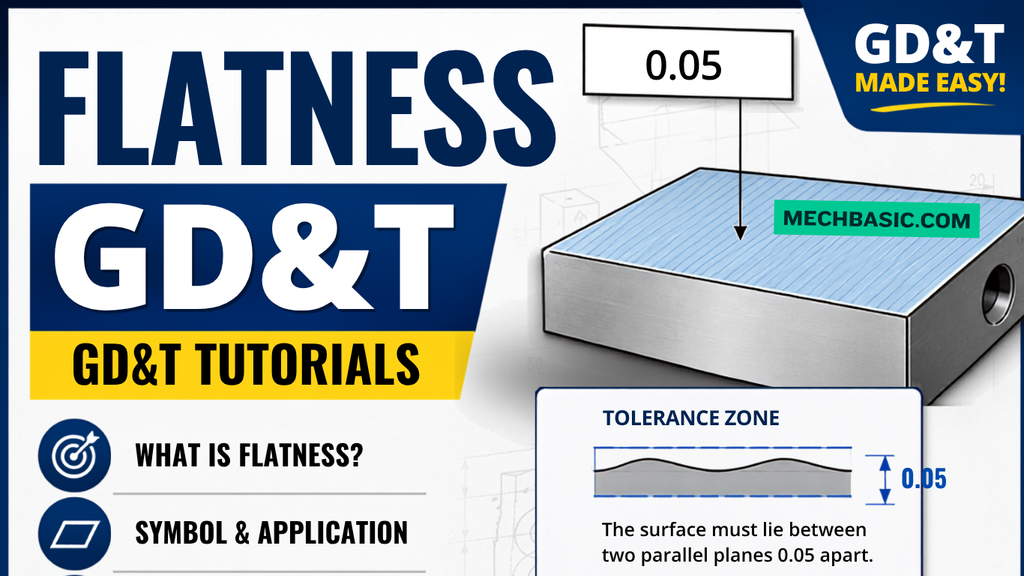
Flatness-GD&T | GD&T Tutorials
ANSI vs ISO Standards-Key Differences you need to know
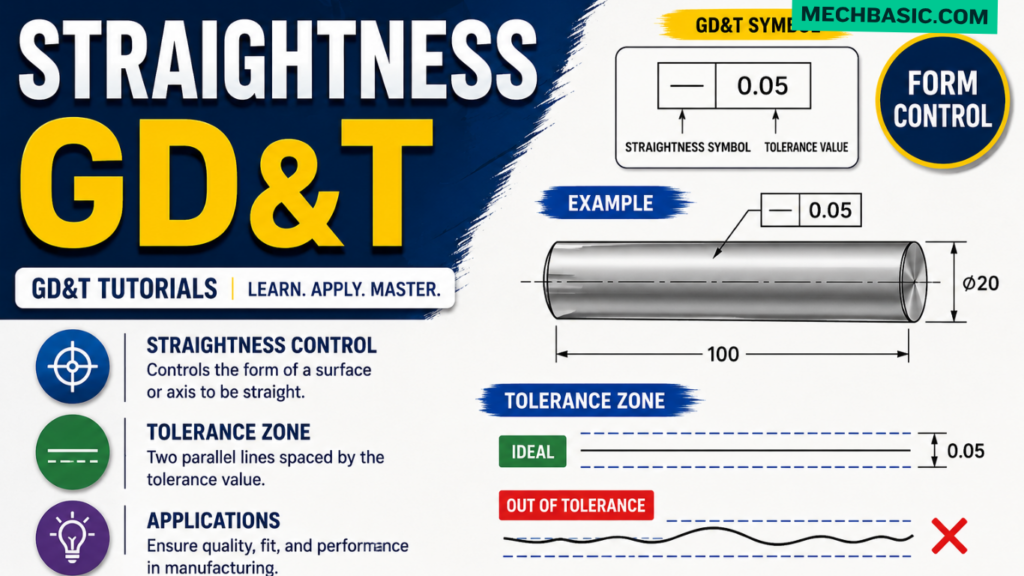
Straightness-GD&T | GD&T Tutorials
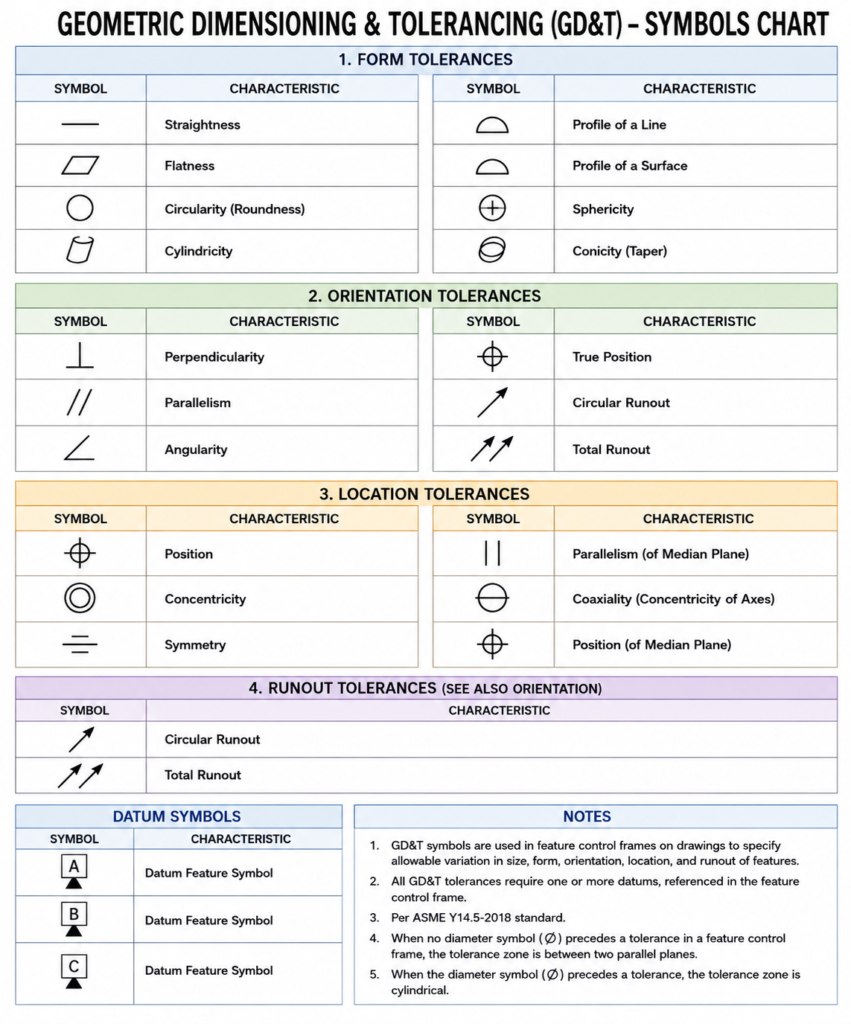
GD&T Symbols chart- Free download | GD&T
Geometric Dimensioning and Tolerancing (GD&T) is a standardized system used in engineering drawings to define…
GD&T Symbols, Basics and full form
Can I convert a DXF to STL?
Can I convert a DXF to STL? Can I Convert a DXF to STL? Yes,…
Categories: