
Copper and aluminum should generally not be used together in direct contact.
They can cause galvanic corrosion when moisture is present.
This corrosion weakens the metals and reduces their service life.
In this article:
- What Two Metals Should Not Be Used Together?
- 1. Aluminum and Copper (Most Common Problem)
- 2. Steel and Copper
- 3. Aluminum and Stainless Steel
- 4. Zinc and Copper
- 5. Magnesium and Almost Any Metal
- Metal Combinations to Avoid
- When Can Different Metals Be Used Together?
- Example: Aircraft Construction
- Example: Marine Environment
- Conclusion
What Two Metals Should Not Be Used Together?
In engineering, some metals should not be used in direct contact with each other, especially in the presence of moisture, because they can cause galvanic corrosion (also called bimetallic corrosion).
One of the most common examples is aluminum and copper.
When two dissimilar metals touch and an electrolyte (water, humidity, saltwater, etc.) is present, one metal corrodes faster while the other is protected.
What Is Galvanic Corrosion?
Galvanic corrosion occurs when:
- Two different metals are in contact.
- An electrolyte is present.
- An electrical path exists between the metals.
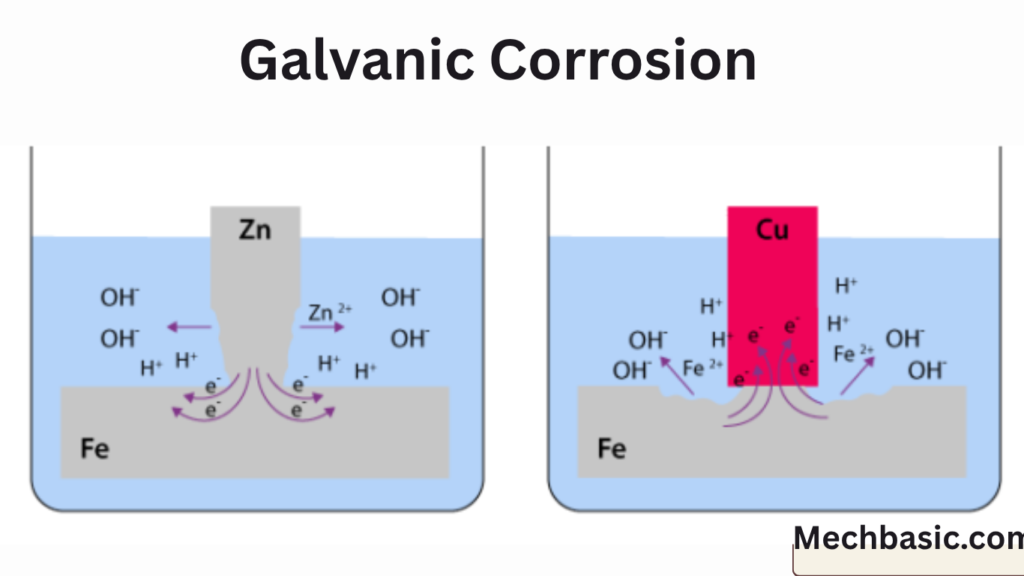
The more active metal becomes the anode and corrodes.
The more noble metal becomes the cathode and is protected.
1. Aluminum and Copper (Most Common Problem)
Why They Should Not Be Used Together
Copper is much more noble than aluminum.
When they touch:
- Aluminum becomes the anode
- Copper becomes the cathode
Result:
- Rapid corrosion of aluminum
Problems Caused
- Structural weakening
- Electrical connection failure
- Increased resistance
- Material loss
Examples
Electrical Wiring
Connecting aluminum wire directly to copper wire can cause:
- Corrosion
- Overheating
- Connection failure
Special connectors are required.
Roofing Systems
Copper gutters touching aluminum roofing can damage the aluminum.
2. Steel and Copper
What Happens?
Steel is less noble than copper.
When joined:
- Steel corrodes
- Copper remains protected
Common Problems
- Rusting around fasteners
- Pipe corrosion
- Structural deterioration
Example
Copper plumbing attached directly to steel components may accelerate steel corrosion.
3. Aluminum and Stainless Steel
This combination can also be problematic.
What Happens?
Stainless steel is more noble.
Aluminum becomes sacrificial.
Result:
- Pitting corrosion
- Surface degradation
Example
Marine equipment exposed to seawater.
4. Zinc and Copper
Zinc is highly active.
When connected to copper:
- Zinc corrodes rapidly
Example
Galvanized steel in contact with copper piping.
The zinc coating may be consumed quickly.
5. Magnesium and Almost Any Metal
Magnesium is extremely active.
When paired with:
- Steel
- Copper
- Stainless steel
Magnesium corrodes aggressively.
Example
Marine structures and aerospace components.
Metal Combinations to Avoid
| Metal 1 | Metal 2 | Risk |
|---|---|---|
| Aluminum | Copper | Very High |
| Aluminum | Stainless Steel | High |
| Zinc | Copper | High |
| Steel | Copper | High |
| Magnesium | Copper | Extremely High |
| Magnesium | Stainless Steel | Extremely High |
When Can Different Metals Be Used Together?
Different metals can be used together if precautions are taken.
Methods include:
Insulating Materials
Use:
- Plastic washers
- Rubber gaskets
- Non-conductive spacers
These prevent direct electrical contact.
Protective Coatings
Examples:
- Paint
- Powder coating
- Galvanizing
Sealants
Prevent moisture from entering the joint.
Similar Metals
Whenever possible, use metals that are close in the galvanic series.
Example: Aircraft Construction
Aircraft often contain:
- Aluminum alloys
- Titanium fasteners
Engineers use:
- Special coatings
- Sealants
- Insulating materials
to prevent galvanic corrosion.
Example: Marine Environment
In seawater, galvanic corrosion becomes much more severe because seawater is an excellent electrolyte.
Particularly dangerous combinations:
- Aluminum + Copper
- Aluminum + Stainless Steel
- Steel + Copper
Conclusion
The most common pair of metals that should not be used together is aluminum and copper, because aluminum corrodes rapidly when it is in electrical contact with copper in the presence of moisture. Other problematic combinations include steel and copper, aluminum and stainless steel, and zinc and copper. To safely use dissimilar metals together, engineers employ insulation, coatings, sealants, and proper joint design to prevent galvanic corrosion.
Other courses:





