
Bleeding your brakes is an essential maintenance procedure that removes trapped air from the brake lines, ensuring firm pedal feel and reliable stopping power. Over time, air can enter the braking system through worn components or during repairs, leading to a soft or spongy brake pedal.
Understanding how and when to bleed your brakes helps maintain safe braking performance and protects the overall braking system.
In this article:
What is bleeding brakes?
Bleeding brakes is the process of removing air bubbles from the brake hydraulic system. Air compresses, unlike brake fluid, so even a small amount can cause a soft or spongy brake pedal, longer stopping distances, and unsafe braking.
1. When You Need to Bleed Brakes
You should bleed the brakes if:
- Brake pedal feels spongy or soft
- Pedal goes too far down
- Brake lines, calipers, wheel cylinders, or master cylinder were replaced
- Brake fluid was flushed or ran very low
- ABS components were serviced (some vehicles)
2. Tools & Supplies Needed
- Correct brake fluid type (DOT 3, DOT 4, DOT 5.1 – check owner’s manual)
- Wrench (usually 8mm–10mm) for bleeder screws
- Clear plastic hose (tight fit on bleeder)
- Catch bottle or container
- Jack and jack stands
- Wheel chocks
- Safety glasses and gloves
- Rags (brake fluid damages paint)
⚠️ Never mix brake fluid types unless manufacturer allows it.
3. Safety Precautions
- Work on a level surface
- Secure car with wheel chocks
- Support vehicle with jack stands
- Avoid spilling brake fluid on paint or skin
- Do not reuse old brake fluid
4. Brake Bleeding Order (Very Important)
Most vehicles use this order (farthest to closest from master cylinder):
- Right rear
- Left rear
- Right front
- Left front
⚠️ Always confirm in the owner’s manual—some vehicles differ.
5. Two‑Person (Manual) Brake Bleeding Method
Step 1: Prepare the Master Cylinder
- Open hood
- Fill master cylinder reservoir to MAX line
- Leave cap loosely in place
⚠️ Never let reservoir run dry during bleeding.
Step 2: Lift Vehicle & Remove Wheels
- Jack up car
- Remove wheels for access to bleeder screws
Step 3: Attach Hose
- Place clear hose over bleeder screw
- Submerge other end in brake fluid inside catch bottle
Step 4: Pump Pedal
- Assistant pumps brake pedal 3–5 times
- Assistant holds pedal firmly down
Step 5: Open Bleeder Screw
- Loosen bleeder screw ~¼ turn
- Old fluid and air bubbles flow out
- Pedal drops toward floor
Step 6: Close Bleeder Screw
- Tighten bleeder screw before assistant releases pedal
- This prevents air from being sucked back in
Step 7: Repeat
- Repeat until:
- Fluid flows clean
- No air bubbles appear
- Check and top up master cylinder frequently
Step 8: Move to Next Wheel
- Follow proper bleeding order
6. One‑Person Brake Bleeding Methods
A. Gravity Bleeding
- Open bleeder screw
- Let fluid drip slowly
- Keep reservoir full
- Slower but simple
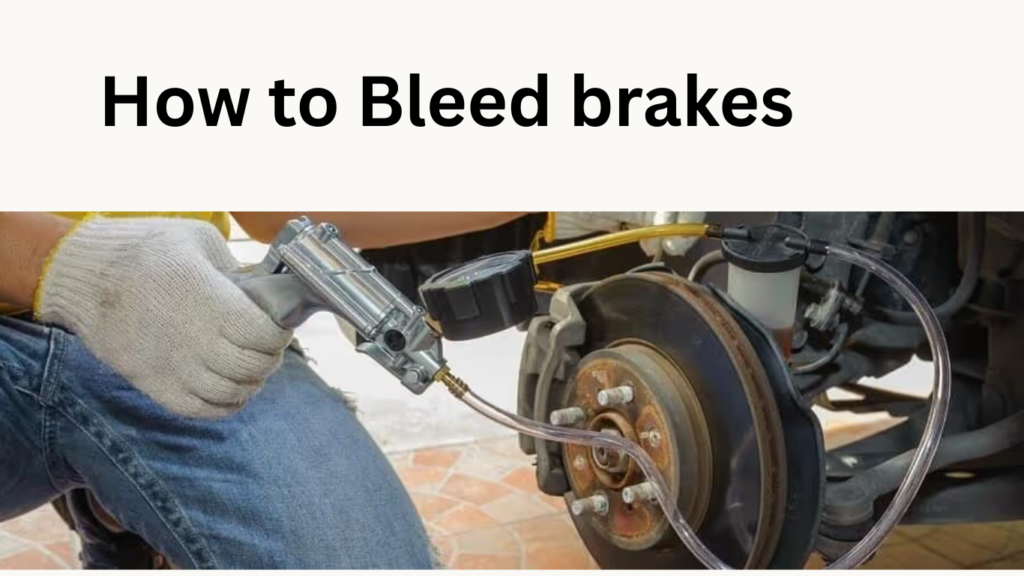
B. Vacuum Bleeding
- Uses hand pump at bleeder screw
- Faster and cleaner
- May pull air around threads (not always internal air)
C. Pressure Bleeding
- Pressurizes master cylinder
- Most effective
- Requires special tool
7. Bleeding ABS Brakes
- Some ABS systems require a scan tool to cycle ABS valves
- If pedal stays soft after normal bleeding:
- Air may be trapped in ABS module
- Check manufacturer procedure before bleeding ABS-equipped cars
8. After Bleeding Checks
- Top off master cylinder
- Install wheels and torque lug nuts
- Pump brake pedal—should feel firm
- Test brakes at low speed
- Recheck fluid level
9. Common Mistakes to Avoid
| Mistake | Result |
|---|---|
| Letting reservoir run dry | Air enters system |
| Opening bleeder too much | Air sucked back in |
| Wrong bleeding order | Trapped air |
| Mixing brake fluid types | Seal damage |
| Not tightening bleeder | Fluid leaks |
10. How Long It Takes
- DIY manual bleeding: 45–90 minutes
- Vacuum or pressure bleeding: 30–45 minutes
- ABS systems: Longer if scan tool needed
Summary
Bleeding brakes removes air from the hydraulic system to restore firm pedal feel and safe stopping power. The two‑person method is the most common and reliable, but vacuum or pressure bleeding can be faster. Always follow the correct wheel order and never allow the master cylinder to run dry.
Other courses:





