
“High mileage” usually refers to a vehicle that has accumulated a lot of use (often 150,000 km / 90,000 miles or more). At this stage, problems arise mainly from wear, heat, vibration, and aging of materials, even if the car has been well maintained.
Below is a detailed, system-by-system breakdown of the most common high-mileage problems, why they occur, and what symptoms to expect.
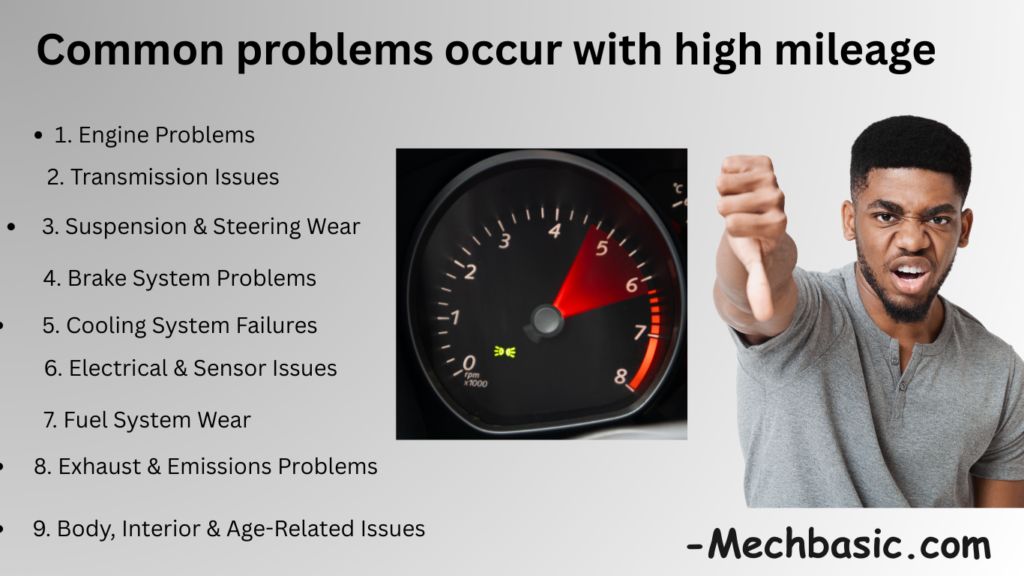
In this article:
10 common problems occur with high mileage
High-mileage vehicles often face increased wear and tear on major components. Common issues include engine oil consumption, transmission slipping, and suspension deterioration. Regular maintenance becomes crucial to prevent costly repairs and extend the vehicle’s lifespan.
1. Engine Problems
a. Oil leaks & oil consumption
Why it happens
- Rubber seals and gaskets harden and shrink with age
- Piston rings wear, allowing oil into the combustion chamber
Common symptoms
- Oil spots under the car
- Burning oil smell
- Blue exhaust smoke
- Frequent need to top up oil
Typical culprits
- Valve cover gasket
- Oil pan gasket
- Rear main seal
b. Loss of compression & power
Why
- Worn piston rings
- Cylinder wall wear
- Valve seat erosion
Symptoms
- Sluggish acceleration
- Rough idle
- Poor fuel economy
- Hard starting
c. Timing chain/belt wear
Why
- Metal fatigue (chains)
- Rubber degradation (belts)
Symptoms
- Rattling noise on startup
- Check engine light
- Engine misfires
⚠️ Timing belt failure can destroy the engine in interference engines.
2. Transmission Issues
Automatic transmissions
Common problems
- Slipping gears
- Delayed engagement
- Harsh or erratic shifting
Causes
- Worn clutch packs
- Degraded transmission fluid
- Valve body wear
Manual transmissions
Common problems
- Worn clutch
- Grinding gears
- Weak synchronizers
3. Suspension & Steering Wear
Components that wear out
- Shocks & struts
- Ball joints
- Tie rods
- Control arm bushings
Symptoms
- Excessive bouncing
- Clunking noises
- Uneven tire wear
- Poor handling or wandering steering
4. Brake System Problems
Common issues
- Worn rotors
- Sticking calipers
- Corroded brake lines
- ABS sensor failures
Symptoms
- Vibration while braking
- Pulling to one side
- Brake warning lights
- Reduced stopping power
5. Cooling System Failures
Why common in high mileage
- Heat cycles weaken plastics and rubber
Failure points
- Radiator
- Hoses
- Water pump
- Thermostat
Symptoms
- Overheating
- Coolant leaks
- Sweet smell
- Temperature gauge fluctuations
⚠️ Overheating is one of the fastest ways to kill a high-mileage engine.
6. Electrical & Sensor Issues
Typical problems
- Aging wiring insulation
- Corroded connectors
- Sensor degradation
Common failed sensors
- Oxygen (O₂) sensor
- Mass airflow (MAF)
- Crankshaft position sensor
Symptoms
- Check engine light
- Poor fuel economy
- Stalling or misfires
7. Fuel System Wear
Issues
- Clogged fuel injectors
- Weak fuel pump
- Carbon buildup (especially direct injection engines)
Symptoms
- Hard starting
- Hesitation
- Rough idle
- Reduced power
8. Exhaust & Emissions Problems
Common failures
- Catalytic converter degradation
- Rusted exhaust pipes
- Cracked manifolds
Symptoms
- Loud exhaust noise
- Sulfur smell
- Failed emissions tests
- Loss of power
9. Body, Interior & Age-Related Issues
Age-related problems
- Rust (especially underbody and suspension mounts)
- Sagging seats
- Broken window regulators
- Failing door locks and handles
10. How Maintenance Changes the Outcome
Well-maintained high-mileage vehicles:
- Can exceed 300,000 km / 200,000 miles
- Problems appear gradually and predictably
Poorly maintained vehicles:
- Multiple failures at once
- High repair costs
- Short remaining lifespan
Summary Table
| System | Most Common High-Mileage Problems |
|---|---|
| Engine | Oil leaks, wear, loss of power |
| Transmission | Slipping, harsh shifts |
| Suspension | Worn shocks, loose joints |
| Brakes | Rotor wear, caliper failure |
| Cooling | Hose & radiator leaks |
| Electrical | Sensor failures |
| Fuel system | Injector clogging |
| Exhaust | Rust, catalytic failure |
Conclusion:
High mileage doesn’t automatically mean “bad”—it means wear management becomes critical. Most problems come from rubber, seals, fluids, and moving parts reaching the end of their design life, not from mileage alone.
Other courses:





