
In this article:
- POLYMERS – DEFINITION, EXPLANATION, AND EXAMPLES
- 1. Definition of Polymers
- 2. Structure of Polymers
- 3. Classification of Polymers (with Examples)
- 4. Classification Based on Molecular Structure
- 5. Classification Based on Thermal Behavior
- 6. Classification Based on Polymerization Method
- 7. Properties of Polymers
- 8. Advantages of Polymers
- 9. Limitations of Polymers
- 10. Applications of Polymers
- 11. Examples of Common Polymers and Uses
- Conclusion
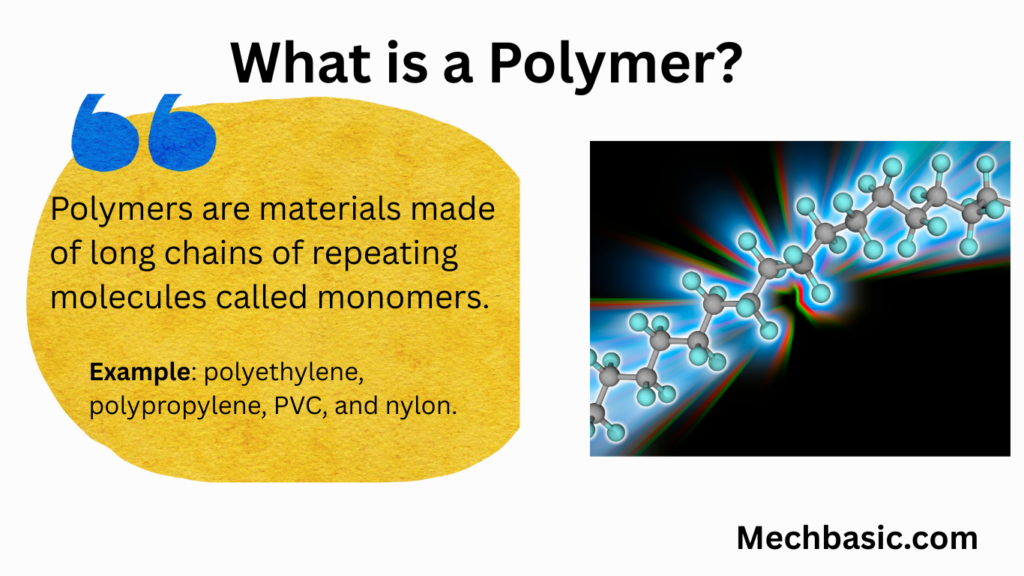
Polymers are materials made of long chains of repeating molecules called monomers.
They are lightweight, flexible, and resistant to corrosion.
Common examples include polyethylene, polypropylene, PVC, and nylon.
Polymers are widely used in packaging, textiles, automotive, and medical products.
POLYMERS – DEFINITION, EXPLANATION, AND EXAMPLES
1. Definition of Polymers
Polymers are high molecular weight materials formed by the chemical bonding of a large number of small repeating units called monomers.
The word polymer comes from Greek:
- Poly = many
- Meros = parts
Example:
Ethylene (monomer) → Polyethylene (polymer)
2. Structure of Polymers
Polymers consist of long-chain molecules with:
- Repeating structural units
- Strong covalent bonds within the chain
- Weak secondary bonds between chains
This structure gives polymers their:
- Flexibility
- Low density
- Good chemical resistance
3. Classification of Polymers (with Examples)
3.1 Based on Source
a) Natural Polymers
Polymers obtained from plants and animals.
Examples:
- Natural rubber (polyisoprene)
- Cellulose (wood, cotton)
- Starch
- Proteins
- Silk
Applications:
Textiles, paper, food products
b) Synthetic Polymers
Man-made polymers produced through chemical reactions.
Examples:
- Polyethylene (PE)
- Polyvinyl chloride (PVC)
- Polystyrene (PS)
- Nylon
- Teflon (PTFE)
Applications:
Plastics, fibers, engineering components
c) Semi-synthetic Polymers
Derived from natural polymers but chemically modified.
Examples:
- Rayon
- Cellulose acetate
- Vulcanized rubber
Applications:
Textiles, films
4. Classification Based on Molecular Structure
a) Linear Polymers
- Straight chain structure
- High tensile strength
Examples:
PVC, Nylon, HDPE
b) Branched Polymers
- Side chains attached to main chain
- Lower density
Examples:
LDPE
c) Cross-linked Polymers
- Chains linked together by covalent bonds
- Hard and rigid
Examples:
Bakelite, melamine
5. Classification Based on Thermal Behavior
5.1 Thermoplastics
Soften on heating and harden on cooling (reversible).
Examples:
- Polyethylene (PE)
- Polypropylene (PP)
- PVC
- Polystyrene (PS)
- Nylon
Applications:
Packaging, pipes, containers
5.2 Thermosetting Polymers
Once set, cannot be remelted.
Examples:
- Bakelite
- Epoxy resin
- Phenolic resin
- Melamine
Applications:
Electrical switches, adhesives
6. Classification Based on Polymerization Method
a) Addition Polymers
Formed without by-products.
Examples:
- Polyethylene
- PVC
- Polystyrene
b) Condensation Polymers
Formed with elimination of small molecules (water, alcohol).
Examples:
- Nylon
- Polyester
- Bakelite
7. Properties of Polymers
- Low density
- Good corrosion resistance
- Electrical insulation
- Easy to mold and shape
- Low melting temperature (compared to metals)
8. Advantages of Polymers
- Lightweight
- Low cost
- Easy processing
- Good surface finish
- Chemical resistance
9. Limitations of Polymers
- Low strength at high temperatures
- Creep under load
- Environmental degradation
- Recycling challenges
10. Applications of Polymers
- Packaging materials
- Electrical insulation
- Automotive components
- Medical devices
- Household goods
11. Examples of Common Polymers and Uses
| Polymer | Full Name | Application |
|---|---|---|
| PE | Polyethylene | Plastic bags |
| PVC | Polyvinyl chloride | Pipes |
| PS | Polystyrene | Disposable cups |
| Nylon | Polyamide | Ropes, gears |
| PTFE | Teflon | Non-stick coating |
Conclusion
Polymers are versatile materials with wide applications due to their lightweight, corrosion resistance, and ease of processing. Their properties can be tailored for specific engineering and everyday uses.
Other courses:





