
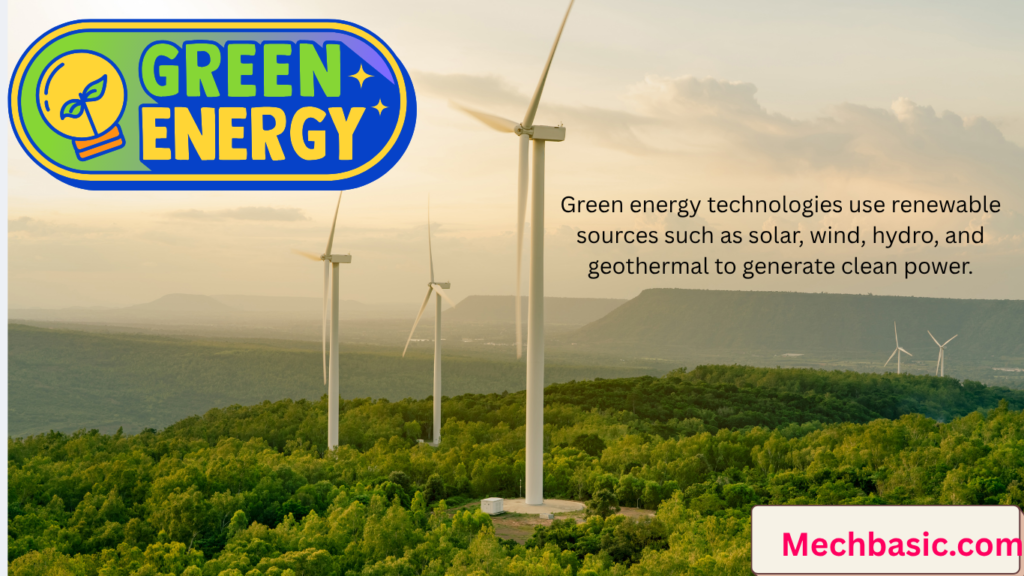
Green energy technologies use renewable sources such as solar, wind, hydro, and geothermal to generate clean power.
Future trends include advanced battery storage, green hydrogen, smart grids, and offshore wind energy.
These technologies help reduce carbon emissions, improve energy efficiency, and support sustainable development.
In this article:
- Green Energy Technologies: Future Trends in Power
- What is Green Energy?
- Importance of Green Energy
- Major Green Energy Technologies
- 1. Solar Energy
- 2. Wind Energy
- 3. Hydroelectric Power
- 4. Geothermal Energy
- 5. Biomass Energy
- 6. Ocean Energy
- 7. Green Hydrogen
- Emerging Green Energy Technologies
- Energy Storage Technologies
- Smart Grids
- Electric Vehicles (EVs)
- Artificial Intelligence in Green Energy
- Future Trends in Green Energy
- Applications of Green Energy
- Advantages of Green Energy
- Challenges
- Career Opportunities
- Comparison of Major Green Energy Sources
- Frequently Asked Questions (FAQs)
- Conclusion
Green Energy Technologies: Future Trends in Power
Introduction
Green energy refers to energy produced from renewable, naturally replenishing, and environmentally friendly sources that generate little or no greenhouse gas emissions. As the global demand for electricity continues to rise and concerns about climate change grow, green energy technologies are becoming essential for creating a clean, sustainable, and reliable energy future.
Governments, industries, and researchers are investing heavily in renewable energy systems, energy storage, smart grids, hydrogen technologies, and advanced power generation methods. These innovations are transforming the way electricity is generated, transmitted, stored, and consumed.
What is Green Energy?
Definition
Green energy is energy produced from renewable resources that have minimal environmental impact and can be naturally replenished.
Common green energy sources include:
- Solar energy
- Wind energy
- Hydropower
- Geothermal energy
- Biomass energy
- Ocean energy
- Green hydrogen
Unlike fossil fuels, green energy sources produce significantly lower carbon emissions and help reduce air pollution.
Importance of Green Energy
Green energy plays a vital role in addressing global energy and environmental challenges.
Key Benefits
- Reduces greenhouse gas emissions
- Decreases dependence on fossil fuels
- Improves air quality
- Enhances energy security
- Creates new employment opportunities
- Supports sustainable economic development
- Conserves natural resources
Major Green Energy Technologies
1. Solar Energy
Overview
Solar energy converts sunlight into electricity using photovoltaic (PV) cells or into heat using solar thermal systems.
Working Principle
- Sunlight strikes photovoltaic panels.
- Solar cells generate direct current (DC).
- An inverter converts DC into alternating current (AC).
- Electricity powers homes, industries, or is supplied to the grid.
Applications
- Residential rooftop systems
- Solar farms
- Street lighting
- Water pumping
- Solar-powered vehicles
- Portable electronic devices
Advantages
- Renewable
- Clean and silent
- Low operating cost
- Suitable for remote areas
Limitations
- Dependent on sunlight
- High initial installation cost
- Requires energy storage for nighttime use
2. Wind Energy
Overview
Wind turbines convert the kinetic energy of moving air into electrical energy.
Types
Onshore Wind Farms
Located on land and widely used for large-scale electricity generation.
Offshore Wind Farms
Installed in oceans or coastal waters where wind speeds are generally higher and more consistent.
Advantages
- Renewable
- Low emissions
- Large-scale electricity generation
- Cost-effective in windy regions
Limitations
- Variable wind speeds
- Visual and noise concerns
- Requires suitable locations
3. Hydroelectric Power
Overview
Hydropower generates electricity by using flowing or falling water to rotate turbines connected to generators.
Types
- Large hydroelectric dams
- Run-of-river plants
- Small hydro systems
- Pumped-storage hydroelectricity
Advantages
- High efficiency
- Reliable power generation
- Long operational life
- Supports grid stability
Limitations
- High construction cost
- Environmental impact on rivers
- Relocation of communities in some projects
4. Geothermal Energy
Overview
Geothermal energy utilizes heat from beneath the Earth’s surface for electricity generation and heating.
Applications
- Power plants
- District heating
- Greenhouses
- Industrial processes
Advantages
- Continuous power generation
- Low emissions
- Small land footprint
Limitations
- Limited to suitable geological regions
- High exploration and drilling costs
5. Biomass Energy
Overview
Biomass uses organic materials to produce heat, electricity, or biofuels.
Sources
- Agricultural waste
- Wood residues
- Animal manure
- Municipal organic waste
- Energy crops
Applications
- Power generation
- Heating
- Bioethanol
- Biodiesel
- Biogas production
Advantages
- Utilizes waste materials
- Renewable when managed sustainably
- Can reduce landfill waste
Limitations
- Air pollution if combustion is poorly controlled
- Land-use considerations
- Feedstock availability
6. Ocean Energy
Types
Tidal Energy
Generated from the rise and fall of ocean tides.
Wave Energy
Harnesses the motion of ocean waves.
Ocean Thermal Energy Conversion (OTEC)
Uses temperature differences between warm surface water and cold deep water to generate electricity.
Advantages
- Predictable energy source
- Vast resource potential
Limitations
- High capital cost
- Marine engineering challenges
- Environmental considerations
7. Green Hydrogen
Overview
Green hydrogen is produced by splitting water into hydrogen and oxygen using electricity from renewable energy sources.
Applications
- Fuel-cell vehicles
- Industrial heating
- Steel manufacturing
- Fertilizer production
- Long-duration energy storage
Advantages
- Zero carbon emissions during production (when powered by renewables)
- High energy density
- Versatile fuel
Limitations
- High production cost
- Storage and transportation challenges
- Limited infrastructure
Emerging Green Energy Technologies
Floating Solar Power Plants
Solar panels installed on reservoirs, lakes, or other water bodies help save land and can improve panel efficiency through natural cooling.
Perovskite Solar Cells
These next-generation solar cells have the potential for:
- Higher efficiency
- Lower manufacturing costs
- Flexible designs
Challenges remain in long-term durability and large-scale commercialization.
Advanced Wind Turbines
Future turbines feature:
- Taller towers
- Larger rotor blades
- Smart control systems
- Improved efficiency
- Better offshore performance
Small Modular Nuclear Reactors (SMRs)
Although nuclear energy is not renewable, SMRs are being developed as a low-carbon power source with enhanced safety features and flexible deployment.
Energy Harvesting Technologies
These systems capture small amounts of energy from:
- Vibrations
- Body movement
- Heat
- Ambient light
- Radio-frequency signals
They are particularly useful for powering low-energy sensors and IoT devices.
Energy Storage Technologies
Renewable energy generation can vary with weather and time of day. Energy storage helps balance supply and demand.
Lithium-Ion Batteries
Used in:
- Electric vehicles
- Home energy storage
- Grid-scale storage
Solid-State Batteries
Expected benefits include:
- Higher energy density
- Improved safety
- Faster charging
- Longer lifespan
Flow Batteries
Suitable for large-scale grid energy storage due to their long cycle life and scalability.
Pumped Hydro Storage
Stores energy by pumping water to a higher elevation during periods of excess electricity and releasing it to generate power when needed.
Hydrogen Storage
Excess renewable electricity can produce hydrogen, which is stored and later used for electricity generation or industrial applications.
Smart Grids
A smart grid is an electricity network that uses digital communication, sensors, and automation to improve the efficiency, reliability, and flexibility of power distribution.
Features
- Real-time monitoring
- Automated fault detection
- Renewable energy integration
- Demand response
- Smart electricity meters
- Improved grid reliability
Electric Vehicles (EVs)
The widespread adoption of electric vehicles supports the transition to cleaner transportation.
Benefits
- Reduced emissions
- Lower operating costs
- Higher energy efficiency
- Compatibility with renewable electricity
Future developments include:
- Ultra-fast charging
- Vehicle-to-grid (V2G) technology
- Improved battery recycling
Artificial Intelligence in Green Energy
AI enhances renewable energy systems by:
- Forecasting electricity demand
- Predicting weather-dependent power generation
- Optimizing energy storage
- Detecting equipment faults
- Improving maintenance scheduling
- Increasing grid efficiency
Future Trends in Green Energy
1. Greater Renewable Energy Adoption
Solar and wind power are expected to supply an increasing share of global electricity generation.
2. Smart Cities
Cities will integrate:
- Renewable power
- Smart lighting
- Electric transportation
- Energy-efficient buildings
- Intelligent energy management systems
3. Carbon-Neutral Manufacturing
Industries will increasingly adopt renewable electricity, green hydrogen, and energy-efficient technologies to reduce carbon emissions.
4. Decentralized Energy Systems
Communities and households will generate electricity locally through rooftop solar panels, small wind turbines, and battery storage.
5. Circular Economy
Energy technologies will increasingly focus on:
- Recycling batteries
- Reusing materials
- Reducing waste
- Improving resource efficiency
6. AI-Driven Power Systems
Artificial intelligence will optimize power generation, transmission, storage, and consumption with minimal human intervention.
Applications of Green Energy
- Residential electricity
- Commercial buildings
- Manufacturing industries
- Transportation
- Agriculture
- Water desalination
- Healthcare facilities
- Data centers
- Remote communities
Advantages of Green Energy
- Environmentally friendly
- Renewable and sustainable
- Reduces carbon emissions
- Improves public health through cleaner air
- Enhances energy independence
- Creates jobs in emerging industries
- Low operating costs after installation
- Supports long-term energy security
Challenges
- High initial investment
- Weather-dependent generation (solar and wind)
- Energy storage requirements
- Grid modernization needs
- Land and environmental considerations
- Limited infrastructure for emerging technologies such as green hydrogen
Career Opportunities
The transition to clean energy is creating demand for professionals in:
- Renewable Energy Engineering
- Solar System Design
- Wind Turbine Engineering
- Power Systems Engineering
- Battery Technology
- Hydrogen Energy
- Smart Grid Engineering
- Energy Storage Systems
- Sustainability Consulting
- Environmental Engineering
- Energy Data Analytics
Comparison of Major Green Energy Sources
| Energy Source | Renewable | Carbon Emissions | Reliability | Typical Applications |
|---|---|---|---|---|
| Solar | Yes | Very Low | Moderate (weather-dependent) | Homes, industries, solar farms |
| Wind | Yes | Very Low | Moderate (wind-dependent) | Utility-scale power generation |
| Hydropower | Yes | Very Low | High | Large-scale electricity generation |
| Geothermal | Yes | Very Low | High | Electricity and heating |
| Biomass | Yes* | Low to Moderate | High | Heat, electricity, biofuels |
| Ocean Energy | Yes | Very Low | Moderate | Coastal power generation |
| Green Hydrogen | Produced from renewables | Very Low | High (with storage) | Industry, transport, energy storage |
*Biomass is considered renewable when feedstocks are sustainably managed.
Frequently Asked Questions (FAQs)
1. What is green energy?
Green energy is energy generated from renewable resources such as sunlight, wind, water, geothermal heat, and sustainably managed biomass, with minimal environmental impact.
2. Why is green energy important?
It helps reduce greenhouse gas emissions, improves air quality, enhances energy security, and supports sustainable economic development.
3. Which renewable energy source is growing the fastest?
Solar and wind energy are among the fastest-growing renewable energy technologies due to falling costs, improved efficiency, and supportive government policies.
4. What is green hydrogen?
Green hydrogen is hydrogen produced through the electrolysis of water using electricity generated from renewable energy sources, resulting in very low carbon emissions.
5. What is a smart grid?
A smart grid is an intelligent electricity network that uses digital technologies to monitor, manage, and optimize power generation, transmission, distribution, and consumption.
6. What role do batteries play in renewable energy?
Batteries store excess electricity generated from renewable sources and supply it when generation is low or demand is high, improving grid stability and reliability.
7. What are the main challenges of green energy?
Challenges include high initial costs, weather-dependent generation, energy storage needs, grid upgrades, and infrastructure development for emerging technologies.
8. How does AI support renewable energy?
AI improves renewable energy systems by forecasting demand, predicting renewable generation, optimizing storage, detecting equipment faults, and enhancing overall system efficiency.
9. What careers are available in the green energy sector?
Career opportunities include renewable energy engineering, battery research, power systems engineering, smart grid development, hydrogen technologies, sustainability consulting, and environmental engineering.
10. What is the future of green energy?
The future includes greater adoption of renewable energy, smarter electricity grids, advanced battery technologies, green hydrogen, AI-powered energy management, decentralized power generation, and carbon-neutral industries.
Conclusion
Green energy technologies are reshaping the global energy landscape by providing cleaner, more sustainable alternatives to fossil fuels. Solar, wind, hydropower, geothermal, biomass, ocean energy, and green hydrogen are becoming increasingly important in meeting the world’s growing energy demand while reducing environmental impacts. Supported by innovations in energy storage, smart grids, artificial intelligence, and digital technologies, the future of power generation is expected to be cleaner, more efficient, and more resilient. Engineers, policymakers, businesses, and consumers all have important roles in accelerating the transition toward a sustainable and low-carbon energy future.
Other courses:





