
Gasoline engine efficiency is lower than diesel engine efficiency, but modern gasoline engines have improved dramatically due to technologies like direct injection, turbocharging, variable valve timing, and high compression ratios.
Below is a deep, engineering-level breakdown of how gasoline engines work, why their efficiency is limited, and how engineers improve it.
1. Thermodynamic Basis: The Otto Cycle
Most gasoline engines operate on the Otto cycle, characterized by:
- Constant-volume heat addition (spark ignition)
- Compression of an air–fuel mixture
- Rapid combustion across a homogeneous charge
The theoretical thermal efficiency of the Otto cycle is:
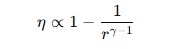
Where:
- ( \eta ) = ideal thermal efficiency
- ( r ) = compression ratio
- ( \gamma ) = ratio of specific heats (~1.35–1.4)
Typical compression ratios:
- Old gasoline engines: 8:1 to 10:1
- Modern engines: 10:1 to 14:1 (Thanks to direct injection + knock control)
Result:
Higher compression → higher efficiency
But gasoline engines are limited by knock, forcing them to run lower compression than diesels.
2. Knock Limits Efficiency in Gasoline Engines
Knock (autoignition of the air-fuel mixture before the spark fires) is the primary factor limiting gasoline efficiency.
Gasoline engines compress a premixed air-fuel charge, so if compression becomes too high, the mixture detonates.
Effects of knock:
- Engine damage
- Lower compression ratio limitations
- Less aggressive ignition timing
- Richer mixtures at high load
This reduces potential efficiency relative to diesel engines, which intentionally operate with compression ignition and control combustion using injection rather than spark.
3. Throttling Losses Reduce Efficiency Significantly
Gasoline engines control power by restricting air using a throttle plate.
At low load:
- The throttle is partially closed
- A vacuum forms in the intake manifold
- Pistons waste energy pulling air past the restriction
This “pumping loss” is one of the biggest inefficiencies:
- Bad in city driving
- Significant at idle and low rpm
Diesel engines avoid this problem entirely.
4. Stoichiometric Combustion Requirement
Gasoline engines must run close to the stoichiometric ratio:
- 14.7:1 (air : fuel)
Why?
- Catalytic converters require this mixture to reduce NOx, CO, and HC emissions.
- Running lean (excess air) dramatically increases NOx emissions.
Diesels run very lean → more efficient
Gasoline engines run stoichiometric → lower efficiency
Stoichiometric burn:
- Higher temperatures
- Higher heat loss
- More energy lost to coolant, exhaust, and cylinder walls
5. High Combustion Temperatures Increase Heat Loss
Premixed gasoline burns fast and hot:
- Peak flame temperatures exceed 2,200°C
- More heat transferred to cylinder walls and exhaust
- Greater thermal conduction + radiation losses
Hotter combustion ≠ better efficiency.
It means more energy leaves the engine without doing useful work.
6. High RPM Operation = More Friction Loss
Gasoline engines rev higher than diesels:
- Typical peak power: 5,500–7,000 rpm
- Some performance engines: 8,000–9,000 rpm
High RPM increases:
- Ring friction
- Bearing losses
- Valve-train friction
- Oil pumping losses
So despite high power output, gasoline engines may be less fuel-efficient because a large portion of work counters internal friction.
7. Advantages That Improve Gasoline Efficiency
Despite limitations, modern gasoline engines achieve impressive efficiency (up to 40% in advanced engines like Toyota’s Dynamic Force or Mazda SkyActiv-G).
Here’s how:
7.1 Direct Injection
Allows:
- Cooling effect of fuel evaporation inside cylinder
- Higher compression ratios (knock resistance)
- Stratified combustion at light loads
- More precise fuel control
This alone can increase efficiency by ~5–10%.
7.2 High Compression Ratios (Up to 14:1)
New engines like Mazda SkyActiv-G use:
- Special pistons
- Long 4-2-1 exhaust manifolds
- Very precise timing
This allows near-diesel-level compression without knock.
Higher compression → higher thermal efficiency.
7.3 Turbocharging
Turbocharging:
- Recovers exhaust energy
- Increases volumetric efficiency
- Allows downsizing (smaller engine, same power)
- Enables Atkinson-cycle-like efficiencies when cruising
But turbos can cause knock, requiring careful boost control and intercooling.
7.4 Variable Valve Timing and Lift (VVT/VVL)
Technologies like:
- VVT
- VVTL
- VTEC
- Valvetronic
Improve efficiency by:
- Reducing pumping losses
- Optimizing airflow for load and rpm
- Enabling Miller or Atkinson cycle operation
- Improving combustion stability
7.5 Atkinson/Miller Cycles
Hybrid engines and some efficient gasoline engines use:
- Late intake valve closing
- Larger expansion ratio than compression ratio
This increases:
- Expansion work
- Efficiency
At the cost of reduced torque (which hybrids offset with electric motors).
7.6 Exhaust Gas Recirculation (EGR)
Recirculating cooled exhaust gas:
- Lowers combustion temperature
- Reduces knock
- Allows higher compression or earlier spark timing
- Reduces pumping losses
EGR improves part-load efficiency, especially in highway cruising.
8. Real-World Gasoline Engine Efficiency Numbers
Typical gasoline engines:
- 25–30% thermal efficiency
High-end modern engines (e.g., Toyota Dynamic Force, Honda Earth Dreams, Mazda SkyActiv-G):
- 35–40% efficiency
Hybrid-optimized Atkinson-cycle engines:
- 41–43% efficiency (one of the best in the world for gasoline)
Even these top engines still generally trail diesel engines by 5–10% in most driving conditions.
9. Summary: Why Gasoline Engines Are Less Efficient
| Limitation | Reason |
|---|---|
| Knock-limited | Lower compression ratios required |
| Throttle losses | Pumping losses at low load |
| Stoichiometric requirement | Limited ability to run lean |
| High combustion temperature | More heat loss |
| Higher RPM operation | More friction |
| Premixed combustion | Less flexible timing control |
Despite this, gasoline engines continue improving and are closing the gap with diesels.
10. When Gasoline Engines Are Most Efficient
Gasoline engines can approach their peak efficiency under:
- Light highway cruising
- High gear, low RPM
- Atkinson/Miller cycle
- Direct-injection + turbo + cooled EGR
- Lean-burn (where allowed)
Other courses:





