
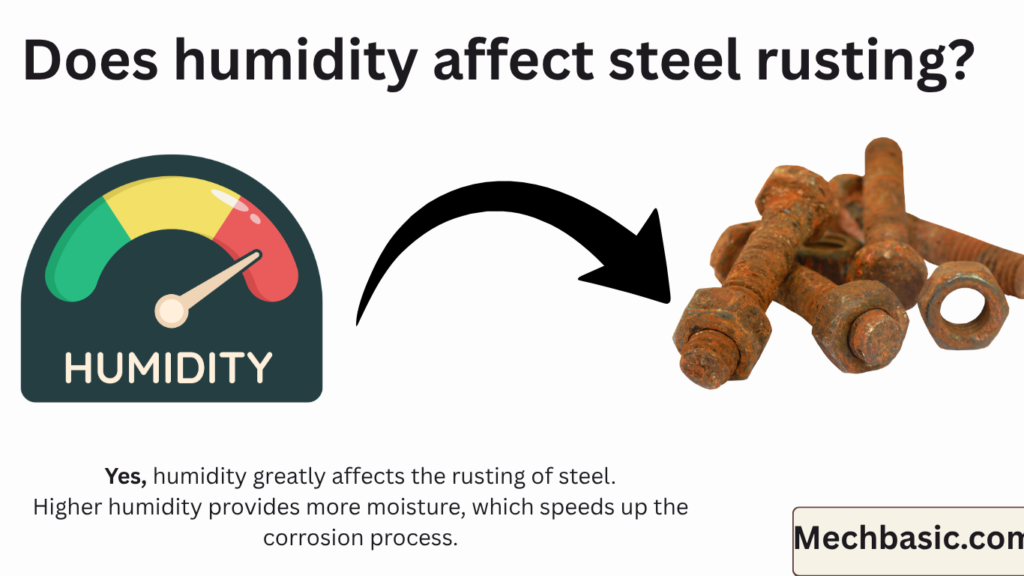
Yes, humidity greatly affects the rusting of steel.
Higher humidity provides more moisture, which speeds up the corrosion process.
Steel rusts much faster in humid environments than in dry conditions.
In this article:
- Does Humidity Affect Steel Rusting?
- What Is Rust?
- Why Humidity Matters
- The Electrochemical Rusting Process
- Critical Humidity Level
- Humidity vs Rust Rate
- Why Coastal Areas Cause More Rust
- Effect of Temperature and Humidity Together
- Condensation and Rust
- How Different Types of Steel Respond
- How to Protect Steel from Humidity
- Industrial Methods for Humidity Control
- Advantages of Maintaining Low Humidity
- Summary:
- Conclusion
Does Humidity Affect Steel Rusting?
Yes. Humidity significantly affects steel rusting. The higher the humidity in the air, the faster steel tends to rust. Moisture from humid air forms a thin water film on the steel surface, which enables the electrochemical reactions that cause rust.
In general, steel stored in a humid environment will rust much faster than steel stored in a dry environment.
What Is Rust?
Rust is a form of corrosion that occurs when iron or steel reacts with oxygen and water.
The main rust product is hydrated iron oxide.
The rusting process requires:
- Iron (or steel)
- Oxygen
- Water (moisture)
If any one of these is absent, rusting is greatly reduced or stopped.
Why Humidity Matters
What Is Humidity?
Humidity is the amount of water vapor present in the air.
How Humidity Causes Rust
Even if steel is not directly exposed to rain or water, humid air can provide enough moisture for corrosion.
When humidity rises:
- Water molecules settle on the steel surface.
- A microscopic moisture film forms.
- Oxygen dissolves in this moisture.
- Electrochemical corrosion begins.
The steel starts oxidizing, producing rust.
The Electrochemical Rusting Process
Rusting is an electrochemical reaction.
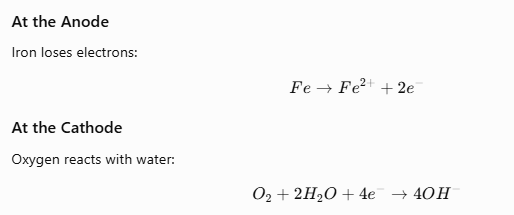
Iron ions combine with oxygen and water to form rust.
Because humidity provides the water needed for these reactions, higher humidity generally means faster rusting.
Critical Humidity Level
Steel does not rust at the same rate at all humidity levels.
Below 40% RH
- Rusting is usually very slow.
- Surface remains relatively dry.
40–60% RH
- Mild corrosion may occur.
- Long-term storage can still cause rust.
Above 60% RH
- Rusting rate increases noticeably.
Above 75% RH
- Corrosion can accelerate rapidly.
- Particularly dangerous for unprotected steel.
This threshold is often called the critical relative humidity for steel.
Humidity vs Rust Rate
| Relative Humidity | Rusting Tendency |
|---|---|
| Below 40% | Very low |
| 40–60% | Low to moderate |
| 60–75% | Moderate |
| Above 75% | High |
| Above 90% | Very high |
Why Coastal Areas Cause More Rust
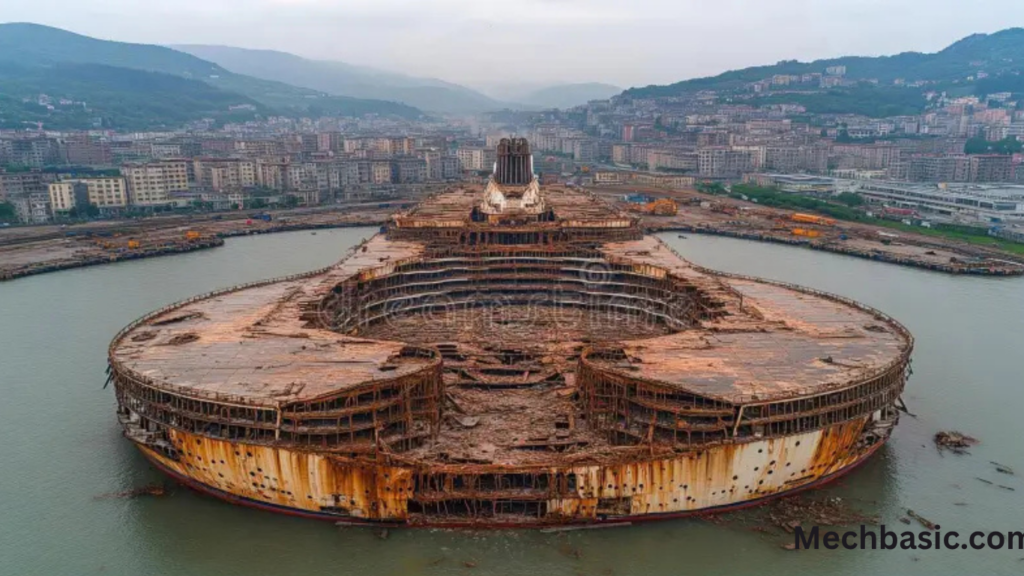
Coastal environments combine:
- High humidity
- Salt particles
- Warm temperatures
Salt attracts and retains moisture, creating an electrolyte on the steel surface.
As a result, steel near the sea often rusts much faster than steel inland.
Effect of Temperature and Humidity Together
Humidity alone is important, but temperature also affects corrosion.
Warm + Humid Environment
Produces:
- Faster chemical reactions
- More condensation
- Increased corrosion
Example:
A steel tool stored in a hot, humid workshop may rust quickly.
Cold + Humid Environment
Rusting still occurs but usually at a slower rate.
Condensation and Rust
One of the most common causes of rust is condensation.
Example
A steel machine is kept in a workshop overnight.
During the night:
- Temperature drops.
- Moisture condenses on the steel.
- Thin water droplets form.
- Rust begins.
This often happens even when there is no direct water exposure.
How Different Types of Steel Respond
Carbon Steel
Most susceptible to humidity-induced rusting.
Examples:
- Mild steel
- Medium-carbon steel
- High-carbon steel
Rusts relatively quickly when exposed to humid air.
Alloy Steel
Better resistance than plain carbon steel but can still rust.
Stainless Steel
Contains chromium, which forms a protective oxide layer.
Benefits
- Much better corrosion resistance.
- Less affected by humidity.
Important
Stainless steel is not completely rust-proof. Under high humidity and chloride exposure, it can still corrode.
How to Protect Steel from Humidity
1. Apply Paint
Paint forms a barrier that prevents moisture from reaching the steel.
2. Use Oil or Grease
Common for:
- Tools
- Machine components
- Spare parts
The oil layer blocks moisture.
3. Galvanizing
Steel is coated with zinc.
Benefits:
- Zinc protects the steel.
- Excellent corrosion resistance.
4. Powder Coating
Creates a durable protective coating.
Common for:
- Industrial equipment
- Outdoor furniture
5. Control Humidity
Keep storage areas below:
50% RHwhen possible.
Methods:
- Air conditioning
- Dehumidifiers
- Desiccants
6. Use Stainless Steel
For humid environments, stainless steel often provides better long-term performance.
Examples:
- Food-processing equipment
- Marine hardware
- Medical devices
Industrial Methods for Humidity Control
Many industries use:
Dehumidifiers
Reduce moisture in storage rooms.
Silica Gel Packs
Absorb water vapor.
Vapor Corrosion Inhibitors (VCI)
Protect stored steel components.
Climate-Controlled Warehouses
Maintain stable temperature and humidity.
Advantages of Maintaining Low Humidity
- ✔ Reduced corrosion
- ✔ Longer equipment life
- ✔ Lower maintenance costs
- ✔ Improved product quality
- ✔ Better reliability
Summary:
- Rusting requires iron, oxygen, and water.
- Humidity provides the moisture needed for corrosion.
- Rusting becomes much more likely above about 60–75% relative humidity.
- Coastal areas accelerate rust because of humidity and salt.
- Carbon steel rusts more easily than stainless steel.
- Paint, oil, galvanizing, coatings, and humidity control are effective protection methods.
Conclusion
Humidity has a major effect on steel rusting. As humidity increases, more moisture becomes available on the steel surface, allowing the electrochemical corrosion process to occur more rapidly. Steel exposed to high humidity, especially in warm or coastal environments, can rust much faster than steel kept in dry conditions. Proper protective coatings, material selection, and humidity control are essential for preventing rust and extending the service life of steel components and structures.
Other courses:





