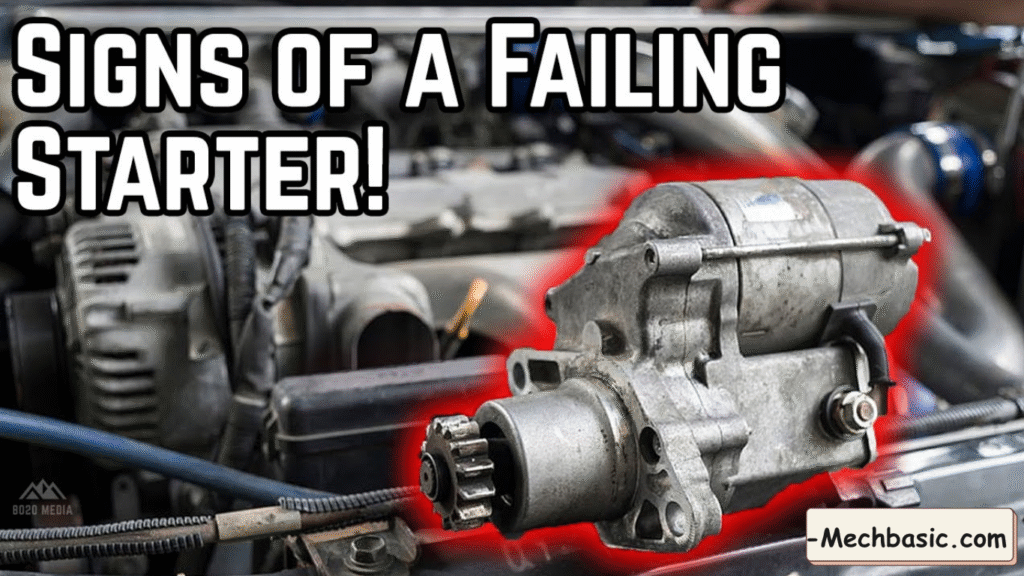
A starter motor is one of the most critical components for engine starting. When it goes bad, your car may fail to crank , click repeatedly , or make grinding noises — and it can easily be mistaken for a weak battery or alternator issue.
Let’s go through every symptom of a bad starter , in full technical detail — including why it happens , how to confirm it , and how to distinguish it from a battery or wiring fault.
What are the symptoms of a bad starter? 1. What the Starter Does ?
The starter motor is an electric motor that cranks (rotates) the engine to begin the combustion process.
When you turn the key (or press Start):
The ignition switch energizes the starter relay/solenoid .
The solenoid pushes the starter gear (pinion) forward to engage the engine’s flywheel .
The starter motor spins, turning the crankshaft .
Once the engine starts, the starter disengages automatically.
So if the starter (or its control system) fails, the engine won’t turn — even if your battery and alternator are fine.
2. Main Symptoms of a Bad Starter
Let’s cover them one by one, with causes and diagnostics.
Also watch : Main Symptoms of a Bad Starter
1. Engine Won’t Crank (No Sound, or Just a “Click”)
Description:
You turn the key or press the start button, but nothing happens .
Sometimes, you may hear a single click (from the solenoid) or rapid clicking — but the engine does not rotate.
Why It Happens:
Cause Explanation Burnt-out starter motor Brushes or windings damaged → motor won’t spin. Faulty solenoid Solenoid clicks but doesn’t send power to motor. Worn-out commutator or brushes Poor contact = no current flow. Internal short circuit Windings shorted → starter dead.
How to Identify:
Battery voltage normal (12.6V+).
Lights and horn work fine (proves battery is OK).
Starter gets voltage when key turned → but no rotation → starter motor failure .
2. Repeated Clicking Noise but Engine Doesn’t Crank
Description:
You hear rapid clicking when turning the key — but no engine movement.
Why It Happens:
The solenoid tries to engage repeatedly but starter motor can’t draw enough current.
This can be due to:
Weak starter motor
Sticking solenoid plunger
Bad internal contacts in solenoid
High resistance connection in cables
How to Confirm:
Measure voltage at starter while cranking:
If voltage drops below 10V , the motor is drawing excessive current → internal fault.
If voltage stays high but motor doesn’t spin → open circuit inside starter.
3. Grinding Noise When Starting
Description:
Loud grinding , metal-on-metal , or buzzing noise when cranking.
Why It Happens:
The starter gear (pinion) is not meshing properly with the flywheel ring gear .
Possible Causes:
Component Fault Starter drive gear (Bendix) Worn teeth → slipping or partial engagement Flywheel teeth Damaged or missing teeth → grinding Solenoid mechanism Weak or sticking → incomplete engagement
Why It’s Serious:
Repeated grinding can damage the flywheel , requiring expensive repair.
4. Starter Spins, But Engine Doesn’t Crank (“Free-Spinning”)
Description:
You hear the starter motor whirring , but the engine does not turn over .
Why It Happens:
The starter gear fails to engage the flywheel due to:
Defective Bendix drive (overrunning clutch inside starter)
Broken solenoid linkage
Stripped teeth on gear or flywheel
Result:
Motor spins freely with no load → engine stays still.
5. Intermittent Starting Problems
Description:
Sometimes the car starts fine, other times — no crank at all.
Often worse in hot weather.
Why It Happens:
Cause Explanation Worn brushes or commutator Inconsistent contact → intermittent operation Weak solenoid coil Works when cool, fails when hot Loose wiring or ground Current flow interrupted randomly
Test:
Lightly tap the starter body with a wrench while trying to start.
If it suddenly cranks, brushes or solenoid are sticking → starter needs replacement.
6. Smoke or Burning Smell from Starter Area
Description:
Electrical smoke , burning smell , or heat near the starter after repeated cranking.
Why It Happens:
Overheated due to prolonged cranking or internal short .
Excessive resistance in the starter windings or cables → heat buildup.
Damaged insulation or shorted wires → burning smell.
⚠️ Danger: Continuing to crank can melt wiring or cause a fire — stop immediately.
7. Slow or Weak Cranking
Description:
Engine turns over slowly or sluggishly , as if the battery were weak.
Yet, the battery tests fine (12.6V+ and good amperage).
Why It Happens:
Cause Effect Worn brushes or bearings Increased internal friction Partially shorted armature windings Reduced torque output Corroded terminals / bad ground High resistance current path Weak solenoid Reduced voltage to motor
How to Distinguish from Battery Issue:
If voltage drops below 10V during crank , but battery is known good → starter drawing too much current.
Use an ammeter or clamp meter — excessive draw (>250–300A) indicates bad starter.
8. Starter Stays On After Engine Starts
Description:
After engine starts, you still hear a grinding or whining sound for a few seconds.
Starter gear fails to disengage immediately.
Why It Happens:
Cause Explanation Sticking solenoid contacts Solenoid remains engaged even after key released Faulty ignition switch Still sending current to solenoid Return spring failure Pinion gear doesn’t retract from flywheel
Why It’s Dangerous:
Can damage flywheel teeth and overheat the starter.
In some cases, starter motor can burn out within minutes if left engaged.
9. No Click, No Noise, Total Silence
Description:
Turn the key — absolutely nothing happens.
No click, no crank, no sound.
Why It Happens:
Component Possible Fault Ignition switch Fails to send signal to starter relay Starter relay or fuse Blown or faulty Starter solenoid coil Open circuit — cannot energize Wiring fault No voltage reaching starter
How to Confirm:
Check if power reaches solenoid terminal when key is turned.
If yes → starter/solenoid fault.
If no → problem in ignition switch, relay, or wiring.
3. How to Diagnose a Bad Starter (Step-by-Step)
Step Test What It Tells You 1. Check Battery Voltage 12.6V or higher Confirms power supply is good 2. Observe Lights While Starting Do they dim or stay bright? If they dim → current draw (starter issue); if not → circuit open 3. Listen for Sounds Clicks, grind, spin Identify mechanical vs electrical fault 4. Voltage Drop Test Measure across starter cables >0.5V drop indicates bad cable/connection 5. Check Voltage at Starter Motor Should get 12V when cranking If yes and no movement → bad starter 6. Bench Test (if removed) Apply 12V directly Confirms starter operation off the car
4. Distinguishing Between Battery, Starter, and Alternator
Symptom Battery Starter Alternator Car won’t crank, lights dim ✅ ✅ ❌ Clicking sound only ✅ ✅ ❌ Starts after jump, dies later ❌ ❌ ✅ Grinding or free-spinning ❌ ✅ ❌ No crank, lights bright ❌ ✅ ❌ Electrical issues while driving ❌ ❌ ✅
5. Common Causes of Starter Failure
Component Failure Type Description Brushes / Commutator Wear, carbon buildup Poor electrical contact Solenoid Burnt contacts No engagement or stuck on Armature windings Short or open circuit Weak or no torque Bendix drive Mechanical wear Grinding or free-spinning Bearings Seized or worn Noise, high current draw Connections Loose or corroded Voltage drop, intermittent failure
6. Summary: Key Signs of a Bad Starter
Symptom What It Means ✅ No crank but battery OK Starter or solenoid fault ⚡ Single click / rapid clicks Solenoid or internal short 🔊 Grinding noise Bad Bendix or damaged flywheel 🌀 Whirring (free spin) Starter gear not engaging 🔥 Smoke or burning smell Overheated or shorted starter 💡 Lights stay bright, no crank Open circuit inside starter 🎲 Starts intermittently Worn brushes or loose wiring ⏱️ Slow crank High internal resistance or weak starter
Other courses: