
Common problems with spot welders include poor weld quality, electrode wear, inconsistent weld size, and overheating.
Other issues can be misalignment of electrodes, insufficient pressure, or electrical supply fluctuations, leading to weak or defective welds.
Regular maintenance, proper setup, and monitoring are essential to prevent these problems.
In this article:
- 10 Most common problems with spot welders
- 1. Poor Weld Nugget Formation
- 2. Excessive Metal Expulsion (“Spatter”)
- 3. Electrode Wear and Deformation
- 4. Misaligned or Poorly Positioned Electrodes
- 5. Overheating of Welders or Electrodes
- 6. Poor Weld Penetration
- 7. Inconsistent Weld Quality
- 8. Mechanical Problems
- 9. Fume and Smoke Build-Up
- 10. Summary Table of Common Spot Welder Problems
- Other courses:
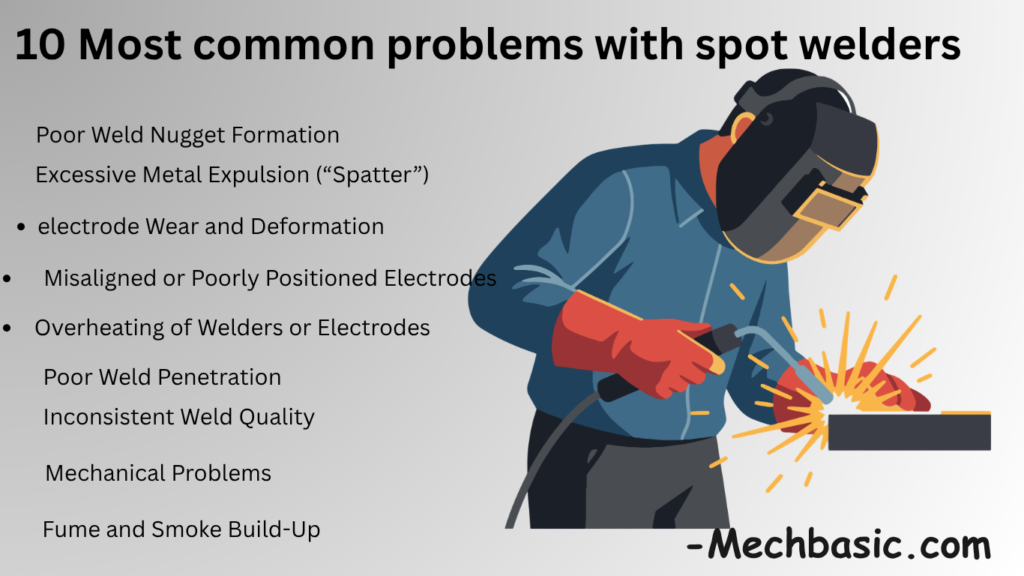
10 Most common problems with spot welders
Here’s a detailed overview of common problems with spot welders, why they occur, and how they affect weld quality and machine performance:
1. Poor Weld Nugget Formation
Symptoms:
- Weak welds
- Shallow or missing weld nuggets
- Welds that pull apart under stress
Causes:
- Insufficient current: Not enough heat to melt the metal fully.
- Short welding time: Weld cycle too brief for proper fusion.
- Low electrode pressure: Sheets not pressed together tightly; current cannot flow efficiently.
- Dirty or coated metal surfaces: Oil, rust, paint, or galvanization can prevent proper fusion.
Solutions:
- Increase current or welding time according to material thickness.
- Ensure electrodes apply proper force.
- Clean and prep metal sheets before welding.
2. Excessive Metal Expulsion (“Spatter”)
Symptoms:
- Molten metal ejected around the weld spot
- Rough weld appearance
- Potential for burns or damage to surrounding material
Causes:
- Excessive current or long welding time: Overheats the metal.
- Too much electrode pressure: Forces molten metal out of the weld zone.
- Misaligned electrodes: Uneven current distribution.
Solutions:
- Adjust current and weld time to suit material thickness.
- Check electrode alignment and maintenance.
- Use proper electrode size for the sheet thickness.
3. Electrode Wear and Deformation
Symptoms:
- Poor electrical contact
- Irregular welds
- Need for frequent electrode replacement
Causes:
- Repeated high-current cycles: Electrodes gradually erode.
- Overheating: Lack of cooling or too high current.
- Contamination: Metal splatter or oxide build-up on electrode tips.
Solutions:
- Regularly dress or replace electrodes.
- Use water-cooled electrodes for heavy-duty welding.
- Keep electrodes clean and polished.
4. Misaligned or Poorly Positioned Electrodes
Symptoms:
- Welds off-center or uneven
- Weak welds due to improper current path
- Metal distortion
Causes:
- Mechanical wear of robot arms or fixtures
- Manual positioning errors in non-automated machines
- Loose electrode mounting
Solutions:
- Regular calibration and maintenance of electrode holders.
- Ensure fixtures hold sheets firmly in position.
- Replace worn parts or adjust alignment regularly.
5. Overheating of Welders or Electrodes
Symptoms:
- Machine shutdowns or trips
- Electrode deformation
- Reduced weld quality
Causes:
- Continuous high-current operation without cooling
- Insufficient electrode contact leading to high resistance heating in the electrode instead of the workpiece
Solutions:
- Ensure water cooling systems are functioning.
- Monitor duty cycle and allow cooling periods for the machine.
- Inspect electrode contact and maintenance schedules.
6. Poor Weld Penetration
Symptoms:
- Weak joints
- Pull-outs under load
- Weld nugget smaller than expected
Causes:
- Low welding current
- Thin electrodes for thick metal
- Short welding time or poor electrode contact
Solutions:
- Adjust current, electrode size, and welding time.
- Ensure proper sheet alignment and surface contact.
7. Inconsistent Weld Quality
Symptoms:
- Some spots strong, others weak
- Variable weld size or depth
Causes:
- Fluctuating power supply
- Worn electrodes
- Inconsistent material thickness
- Operator error or misalignment
Solutions:
- Use a regulated and stable power source.
- Replace or maintain electrodes regularly.
- Standardize material preparation and handling.
8. Mechanical Problems
Symptoms:
- Robot arms or clamps malfunction
- Pneumatic/hydraulic system leaks
- Inaccurate pressure application
Causes:
- Wear and tear of moving parts
- Poor maintenance or lubrication
- Damaged or worn hydraulic/pneumatic components
Solutions:
- Scheduled maintenance for all mechanical components.
- Inspect hoses, pistons, and joints regularly.
- Replace worn components promptly.
9. Fume and Smoke Build-Up
Symptoms:
- Operator discomfort
- Potential health hazards
- Contamination on weld surface
Causes:
- Heated coatings, galvanized metals, or residues
- Lack of local exhaust ventilation
Solutions:
- Use proper fume extraction systems.
- Ensure workpieces are cleaned of oil, paint, or flux.
- Use PPE when necessary.
10. Summary Table of Common Spot Welder Problems
| Problem | Symptoms | Causes | Solutions |
|---|---|---|---|
| Poor weld nugget | Weak welds, shallow fusion | Low current, short time, low pressure, dirty sheets | Adjust parameters, clean metal |
| Excessive spatter | Molten metal ejection | High current/time, high pressure | Reduce current/time, check alignment |
| Electrode wear | Irregular welds, poor contact | High current cycles, overheating | Dress/replace electrodes, water cooling |
| Misaligned electrodes | Off-center welds, weak spots | Worn fixtures, manual error | Calibrate, maintain, replace parts |
| Overheating | Shutdowns, electrode deformation | Poor cooling, high resistance | Ensure cooling, monitor duty cycle |
| Poor penetration | Small weld nuggets | Low current, thin electrodes | Adjust current/time/size |
| Inconsistent quality | Variable welds | Power fluctuation, operator error | Stable power, maintain electrodes, standard prep |
| Mechanical failures | Robot/clamp issues | Wear, poor lubrication | Regular maintenance, replace worn parts |
| Fumes/smoke | Health risks | Coated metals, no ventilation | Fume extraction, clean metal, PPE |
Conclusion:
- Most spot welder problems stem from incorrect parameters, electrode wear, or poor maintenance.
- Quality welds require proper current, pressure, electrode alignment, and surface prep.
- Regular maintenance, calibration, and proper ventilation prevent most safety and quality issues.
- Robotic spot welding can reduce some human errors but still requires careful setup and maintenance.
Other courses:





