
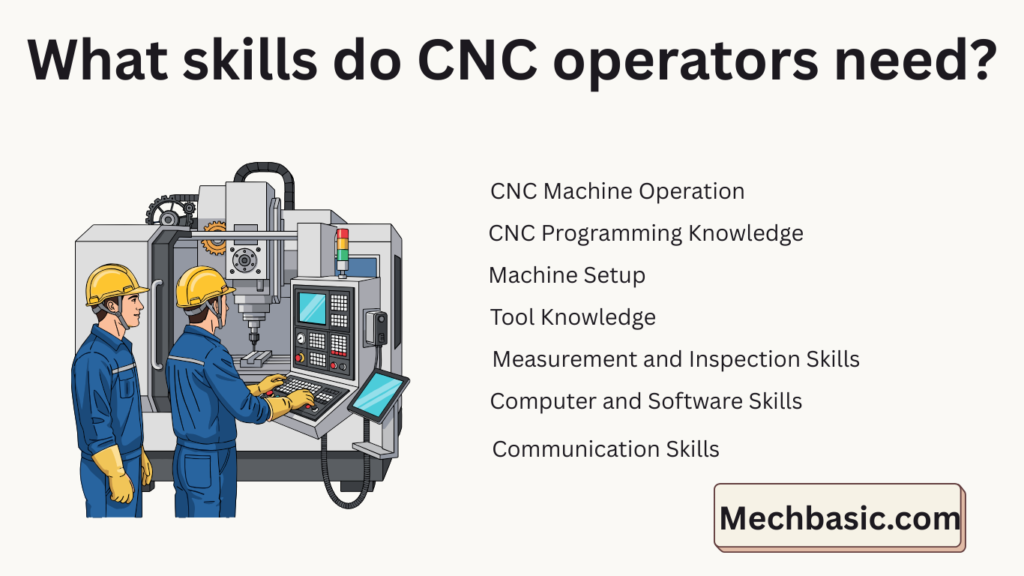
CNC operators need a combination of technical, analytical, and practical skills, including the ability to read engineering drawings, operate CNC machines, understand basic programming, and perform accurate measurements. Attention to detail, problem-solving skills, and knowledge of safety procedures are also essential.
In this article:
- Skills Required for CNC Operators
- 1. Technical Skills
- 2. Measurement and Inspection Skills
- 3. Mechanical and Technical Understanding
- 4. Problem-Solving and Analytical Skills
- 5. Computer and Software Skills
- 6. Safety Awareness
- 7. Attention to Detail
- 8. Communication Skills
- 9. Time Management and Organization
- 10. Soft Skills
- Summary Table: CNC Operator Skills
- 1. Technical Skills
Skills Required for CNC Operators
A CNC (Computer Numerical Control) operator is responsible for setting up, operating, and monitoring CNC machines to produce high-precision parts. This role requires a combination of technical knowledge, practical skills, and analytical abilities. Below is a detailed breakdown of the skills CNC operators need.
1. Technical Skills
A. CNC Machine Operation
- Understanding how CNC machines work (lathe, milling, router, grinding, etc.).
- Ability to start, stop, and monitor the machine safely.
- Knowledge of spindle speeds, feed rates, depth of cut, and coolant use.
B. CNC Programming Knowledge
- Reading and interpreting G-code and M-code.
- Understanding basic CNC programming logic for modifying or troubleshooting programs.
- Familiarity with CAM software (Computer-Aided Manufacturing) is beneficial for some operators.
C. Machine Setup
- Selecting the correct tooling, holders, and workpieces.
- Properly aligning and securing the workpiece on the machine table or chuck.
- Adjusting zero points, offsets, and tool lengths.
D. Tool Knowledge
- Choosing the right cutting tool for material and operation.
- Understanding tool wear, life, and replacement.
- Knowledge of drills, end mills, inserts, and specialized tools.
2. Measurement and Inspection Skills
- Using precision measuring tools like:
- Vernier calipers
- Micrometers
- Dial indicators
- Height gauges
- Interpreting engineering drawings and blueprints.
- Checking tolerances, dimensions, and surface finishes.
- Using CMM (Coordinate Measuring Machine) in advanced setups.
3. Mechanical and Technical Understanding
- Basic understanding of metallurgy and material properties.
- Knowledge of cutting forces, chip formation, and heat generation.
- Ability to troubleshoot machine issues (vibration, chatter, spindle problems).
4. Problem-Solving and Analytical Skills
- Detecting errors in machining, tooling, or programs.
- Adjusting feeds, speeds, or cutting paths to solve issues.
- Understanding why a part may be out of tolerance and correcting the process.
- Diagnosing minor mechanical issues in the machine before reporting major faults.
5. Computer and Software Skills
- Familiarity with CNC control panels and touchscreens.
- Basic knowledge of CAD (Computer-Aided Design) and CAM software.
- Ability to read and modify CNC programs.
- Understanding file formats, program transfers (USB, network, or DNC systems).
6. Safety Awareness
- Knowledge of workplace safety standards.
- Proper use of personal protective equipment (PPE): gloves, goggles, ear protection, steel-toed shoes.
- Awareness of emergency stops, machine guards, and coolant hazards.
- Handling sharp tools and heavy workpieces safely.
7. Attention to Detail
- Ensuring high dimensional accuracy (up to ±0.001 mm).
- Monitoring the machine continuously during operation.
- Observing surface finish, burr formation, and tool condition.
- Maintaining records of parts produced, tool life, and maintenance.
8. Communication Skills
- Ability to read and interpret engineering drawings.
- Communicating issues or changes to supervisors, engineers, or programmers.
- Documenting machine parameters, tool usage, and inspection results.
9. Time Management and Organization
- Managing setup, operation, and part inspection efficiently.
- Planning tool changes, machine cycles, and batch production.
- Maintaining a clean and organized work area.
10. Soft Skills
- Patience and concentration for long or repetitive operations.
- Willingness to learn new CNC machines and software.
- Problem-solving mindset for minor troubleshooting without halting production.
Summary Table: CNC Operator Skills
| Skill Category | Key Skills |
|---|---|
| Technical Skills | Machine operation, setup, tooling, G/M code programming |
| Measurement Skills | Micrometers, calipers, CMM, tolerances |
| Mechanical Knowledge | Material properties, chip formation, spindle, cutting forces |
| Problem-Solving | Adjusting feed/speed, troubleshooting errors |
| Computer Skills | CAD/CAM, CNC panel, file transfer |
| Safety Awareness | PPE, emergency stops, coolant handling |
| Attention to Detail | Surface finish, dimensional accuracy, tool condition |
| Communication | Reading blueprints, reporting, documentation |
| Time Management | Efficient operation, planning, setup |
| Soft Skills | Patience, concentration, adaptability, willingness to learn |
In Simple Words
A CNC operator needs to know how the machine works, how to read drawings, measure accurately, use software, solve problems, and stay safe. They combine technical skill, precision, and attention to detail to produce high-quality parts.
Other courses:





