
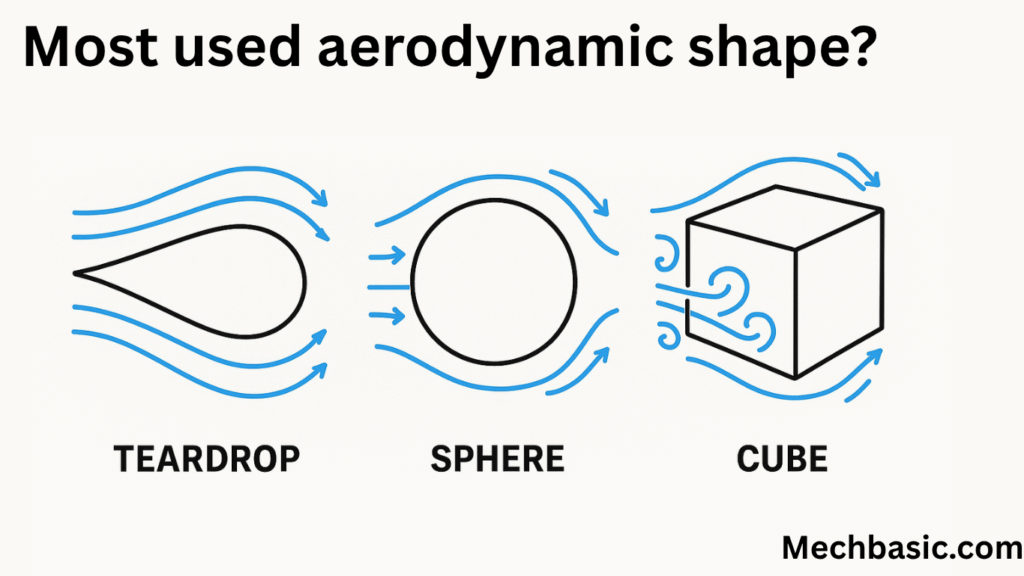
The most aerodynamic shape is the teardrop shape, also called the streamlined or airfoil shape. This shape minimizes air resistance (drag) and allows smooth airflow around an object. Here’s a detailed explanation:
1. Definition
- Aerodynamic Shape: Any shape that reduces air drag and turbulence as it moves through the air.
- Teardrop / Streamlined Shape: Rounded at the front, tapering gradually toward the rear, resembling a water droplet.
2. Characteristics of a Teardrop Shape
| Feature | Description |
|---|---|
| Rounded Front | Allows air to split smoothly, reducing pressure drag. |
| Gradual Tapered Rear | Reduces wake turbulence and air separation, lowering drag. |
| Smooth Surfaces | Minimizes friction drag caused by surface roughness. |
| Symmetry along Flow Axis | Ensures consistent airflow and prevents lift or yaw forces. |
3. Why the Teardrop Shape is Ideal
- Reduces Drag: Air passes over the object smoothly, minimizing the energy lost to turbulence.
- Reduces Lift / Lift-Induced Drag: Proper tapering prevents air separation that can lift or destabilize the object.
- Energy Efficiency: Vehicles, aircraft, and even underwater vehicles use this shape to maximize speed and fuel efficiency.
4. Examples of Teardrop Shapes in Vehicles
- Electric Vehicles (EVs)
- Tesla Model S, Lucid Air, Mercedes EQS → Rounded front, tapered rear, smooth underbody.
- Aircraft / Airfoils
- Wings and fuselages use teardrop profiles for lift and drag optimization.
- High-Speed Trains
- Shinkansen (Japan) and TGV (France) have streamlined noses to minimize drag.
- Racing Cars
- Le Mans prototypes and Formula 1 cars use streamlined bodywork to balance drag and downforce.
5. Comparison with Other Shapes
| Shape | Aerodynamic Efficiency | Notes |
|---|---|---|
| Teardrop / Streamlined | Highest | Smooth flow, low drag, minimal turbulence |
| Cylinder / Box** | Low | Air separation creates high drag and wake turbulence |
| Sphere | Moderate | Less drag than cube, but higher than teardrop; flow separation occurs at rear |
| Flat Plate / Rectangular | Very Low | Maximum drag, strong turbulence and vortex formation |
6. Scientific Note
- Drag Coefficient (Cd) for Shapes:
- Teardrop: ~0.05–0.10 (excellent)
- Sphere: ~0.47
- Cube / Flat plate: ~1.0–2.0
- Conclusion: The lower the Cd, the more aerodynamic the shape; teardrop is the best practical shape for minimizing drag.
✅ In Short
The teardrop shape is the most aerodynamic shape. It has a rounded front, tapered rear, and smooth surfaces, which reduces drag, improves stability, and maximizes energy efficiency.
This principle is applied in cars, trains, aircraft, and even underwater vehicles.
Other courses:





