
Power steering fluid doesn’t have just one color—its color depends on the type of fluid, the vehicle manufacturer, and the condition of the fluid.
If the fluid appears dark brown, black, or has a burnt smell, it may indicate contamination or wear and could mean it’s time for a fluid change or system inspection.
In this article:
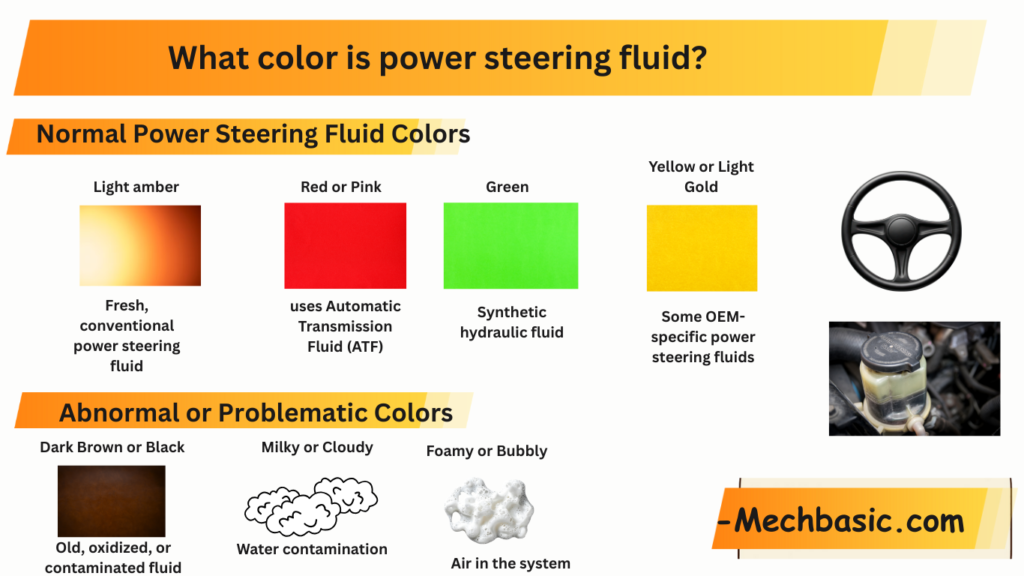
What color is power steering fluid?
Below is a detailed, mechanic-level breakdown so you can identify what you’re seeing and know whether it’s normal or a problem.
1. Normal Power Steering Fluid Colors (By Type)
A. Clear to Light Amber (MOST COMMON)
What it means:
- Fresh, conventional power steering fluid
- Normal and healthy
Used in:
- Many Honda, Toyota, Ford, GM, and older vehicles
📌 Slight darkening over time is normal.
B. Red or Pink
What it means:
- The system uses Automatic Transmission Fluid (ATF) as power steering fluid
Common ATF types:
- Dexron III / VI
- Mercon
Used in:
- Many GM, Ford, Chrysler vehicles
- Some older imports
⚠️ Red fluid is normal only if ATF is specified in your owner’s manual.
C. Green
What it means:
- Synthetic hydraulic fluid
Common types:
- CHF 11S / CHF 202 (Pentosin)
Used in:
- BMW
- Mercedes-Benz
- Audi
- Volvo
- Some VW and Porsche models
⚠️ Green fluid must never be mixed with red or amber fluid.
D. Yellow or Light Gold
What it means:
- Some OEM-specific power steering fluids
Used in:
- Certain Asian and European vehicles
2. Abnormal or Problematic Colors
A. Dark Brown or Black
What it means:
- Old, oxidized, or contaminated fluid
- Fluid has overheated
Symptoms:
- Whining noise
- Stiff steering
- Pump wear
🔧 Action: Flush and replace fluid.
B. Milky or Cloudy
What it means:
- Water contamination
- Air trapped in the system
Causes:
- Leaking seals
- Low fluid level
- Recent hose replacement
🔧 Action:
- Inspect for leaks
- Bleed or flush system immediately
C. Foamy or Bubbly
What it means:
- Air in the system
Causes:
- Low fluid
- Loose hose connection
- Failing pump
🔧 Action:
- Fix leaks
- Bleed system
D. Gray or Metallic Shimmer
What it means:
- Internal wear of the pump or steering rack
🚨 Action:
- Immediate inspection—major component failure may be coming
3. Why Fluid Color Matters
Color tells you:
- If the correct fluid is being used
- The health of the system
- Whether contamination or wear is present
Using the wrong color/type can:
- Damage seals
- Cause pump failure
- Lead to expensive rack replacement
4. How to Confirm the Correct Fluid
- Check the reservoir cap
- Look in the owner’s manual
- Use manufacturer-approved fluid only
📌 Never rely on color alone—always verify the specification.
5. Quick Reference Table
| Color | Normal? | Meaning |
|---|---|---|
| Clear / Light Amber | ✅ Yes | Standard PS fluid |
| Red / Pink | ✅ Yes (if ATF) | ATF-based system |
| Green | ✅ Yes (vehicle-specific) | Synthetic hydraulic fluid |
| Dark Brown / Black | ❌ No | Old/overheated |
| Milky | ❌ No | Water or air |
| Foamy | ❌ No | Air in system |
| Metallic | ❌ No | Internal damage |
When to See a Mechanic
- Fluid color changes quickly
- Steering whines or feels stiff
- Repeated foaming or fluid loss
- Metallic or glittery fluid
Other courses:





