
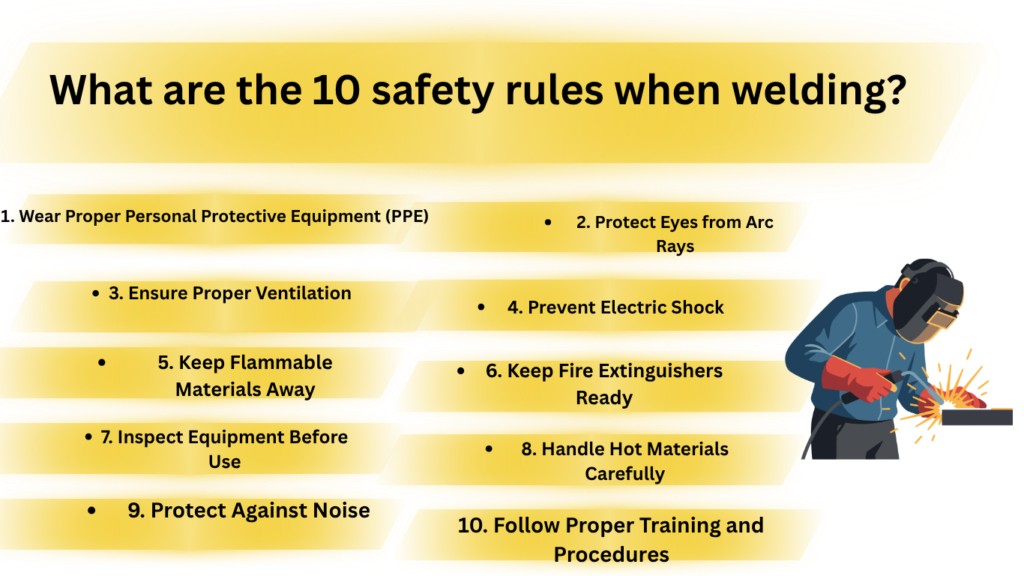
Ten key welding safety rules include wearing proper PPE, ensuring good ventilation, checking equipment, and avoiding flammable materials nearby.
They also include using proper grounding, protecting eyes and skin, handling gas cylinders safely, and keeping a fire extinguisher ready.
Following these rules helps prevent injuries, accidents, and ensures a safe working environment.
In this article:
- What are the 10 safety rules when welding?
- 1. Wear Proper Personal Protective Equipment (PPE)
- 2. Protect Eyes from Arc Rays
- 3. Ensure Proper Ventilation
- 4. Prevent Electric Shock
- 5. Keep Flammable Materials Away
- 6. Keep Fire Extinguishers Ready
- 7. Inspect Equipment Before Use
- 8. Handle Hot Materials Carefully
- 9. Protect Against Noise
- 10. Follow Proper Training and Procedures
- Summary Table
- 1. Wear Proper Personal Protective Equipment (PPE)
What are the 10 safety rules when welding?
Welding is a high-risk activity, so following proper safety rules is essential to prevent injuries, fires, and long-term health problems.
Here are the 10 important welding safety rules explained in detail:
1. Wear Proper Personal Protective Equipment (PPE)
Includes:
- Welding helmet with filter lens
- Safety goggles
- Leather gloves
- Flame-resistant clothing
Purpose:
Protects from sparks, heat, and radiation
2. Protect Eyes from Arc Rays
Why important:
Welding arc produces harmful UV and IR rays
Risk:
- “Arc eye” (painful eye injury)
- Vision damage
Safety:
- Always use proper helmet shade
- Never look at arc directly
3. Ensure Proper Ventilation
Why:
Welding produces toxic fumes and gases
Risk:
- Breathing problems
- Lung diseases
Safety:
- Work in ventilated area
- Use exhaust systems or respirators
4. Prevent Electric Shock
Causes:
- Wet conditions
- Damaged cables
Risk:
- Severe injury or death
Safety:
- Keep equipment dry
- Use insulated gloves
- Proper grounding
5. Keep Flammable Materials Away
Why:
Sparks can travel long distances
Risk:
- Fire
- Explosion
Safety:
- Remove fuels, oil, gas cylinders nearby
- Maintain clean workspace
6. Keep Fire Extinguishers Ready
Why:
Welding can easily start fires
Safety:
- Always have extinguisher nearby
- Know how to use it
7. Inspect Equipment Before Use
Check:
- Cables
- Electrodes
- Gas connections
Purpose:
Prevent accidents and equipment failure
8. Handle Hot Materials Carefully
Risk:
- Burns from hot metal or slag
Safety:
- Use tongs or pliers
- Allow cooling before touching
9. Protect Against Noise
Sources:
- Grinding
- Cutting
Risk:
- Hearing loss
Safety:
- Use ear protection
10. Follow Proper Training and Procedures
Why:
Untrained welding is dangerous
Safety:
- Follow WPS (Welding Procedure Specification)
- Work under supervision if needed
- Follow safety guidelines
Summary Table
| Rule | Purpose |
|---|---|
| PPE | Protect body |
| Eye protection | Prevent arc eye |
| Ventilation | Avoid fumes |
| Electrical safety | Prevent shock |
| Remove flammables | Avoid fire |
| Fire extinguisher | Emergency control |
| Inspect equipment | Prevent failure |
| Handle hot metal | Avoid burns |
| Noise protection | Protect hearing |
| Training | Ensure safe work |
“Protect – Ventilate – Inspect – Prevent Fire – Stay Safe”
Conclusion:
- Always use PPE and helmet
- Ensure ventilation and electrical safety
- Keep flammables away
- Follow proper procedures and training
- Safety is as important as welding quality
Other courses:





