
Vehicle safety features are technologies designed to protect drivers, passengers, and pedestrians from accidents and injuries. They include systems that help prevent crashes as well as features that reduce harm during a collision. Examples include airbags, anti-lock braking systems (ABS), seat belts, and electronic stability control. 🚗🛡️
In this article:
Vehicle safety features in automobile
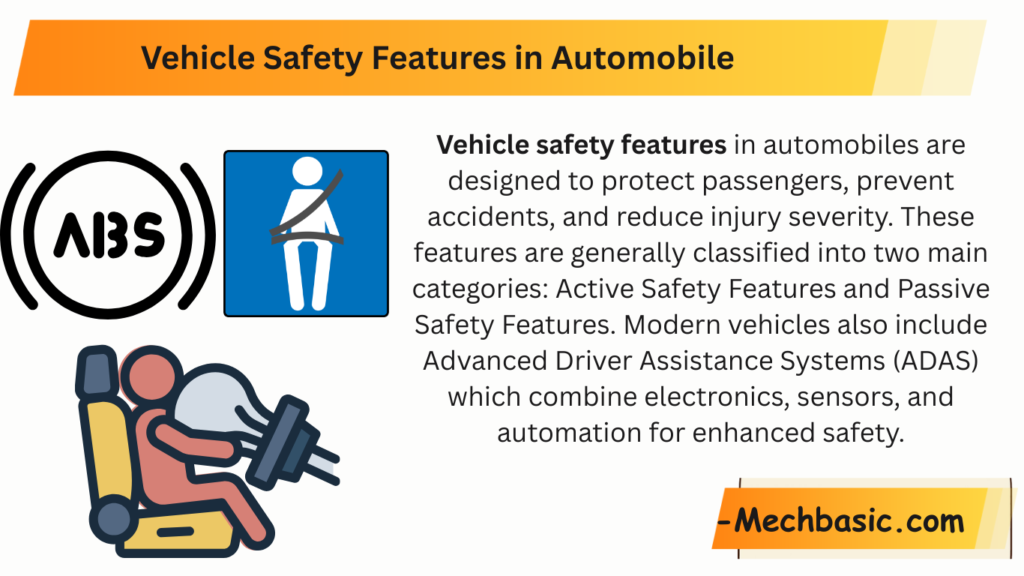
Vehicle safety features in automobiles are designed to protect passengers, prevent accidents, and reduce injury severity. These features are generally classified into two main categories: Active Safety Features and Passive Safety Features. Modern vehicles also include Advanced Driver Assistance Systems (ADAS) which combine electronics, sensors, and automation for enhanced safety. 🚗🛡️
1. Active Safety Features (Accident Prevention)
Active safety features help avoid accidents before they happen by improving vehicle control and stability.
a) Anti-lock Braking System (ABS)
- Prevents wheel locking during sudden braking.
- Maintains steering control when braking hard.
- Works using wheel speed sensors, ECU, and hydraulic modulator.
- Reduces skidding and stopping distance on slippery roads.
b) Electronic Stability Control (ESC)
- Automatically applies brakes to individual wheels if the car starts to skid.
- Helps maintain vehicle direction and balance during sharp turns.
- Especially useful on wet or icy roads.
c) Traction Control System (TCS)
- Prevents wheel spin during acceleration.
- Controls engine power or applies brake to maintain traction.
- Useful on mud, snow, and wet roads.
d) Lane Departure Warning (LDW)
- Uses cameras to monitor road lane markings.
- Warns the driver if the vehicle drifts out of its lane without signaling.
e) Adaptive Cruise Control (ACC)
- Maintains constant speed and safe distance from the vehicle ahead.
- Automatically accelerates or brakes when traffic conditions change.
f) Blind Spot Detection
- Detects vehicles in areas not visible in side mirrors.
- Alerts the driver using lights or sounds.
2. Passive Safety Features (Injury Reduction)
Passive safety features protect occupants during an accident by reducing injury impact.
a) Airbags
- Inflate instantly during a collision.
- Protect head, chest, and knees from impact.
- Types include:
- Front airbags
- Side airbags
- Curtain airbags
- Knee airbags
b) Seat Belts
- Most important passive safety device.
- Three-point seat belt secures the chest and lap.
- Often includes pretensioners and load limiters to reduce injury.
c) Crumple Zones
- Areas designed to absorb crash energy.
- Deform during impact to reduce force transferred to passengers.
d) Head Restraints
- Protect the neck from whiplash injuries during rear-end collisions.
e) Safety Cage (Rigid Passenger Cell)
- Strong structure surrounding passengers.
- Prevents cabin deformation during severe crashes.
3. Advanced Driver Assistance Systems (ADAS)
ADAS uses sensors, radar, cameras, and AI to improve driving safety.
a) Automatic Emergency Braking (AEB)
- Detects potential collisions.
- Automatically applies brakes if the driver does not react.
b) Parking Assist
- Uses ultrasonic sensors and cameras to help park safely.
- Some systems can automatically steer while parking.
c) 360-Degree Camera System
- Provides a bird’s-eye view around the vehicle.
- Helps avoid obstacles while parking.
d) Driver Drowsiness Detection
- Monitors steering patterns and driver behavior.
- Warns the driver if signs of fatigue or sleepiness are detected.
Summary
| Category | Purpose | Examples |
|---|---|---|
| Active Safety | Prevent accidents | ABS, ESC, TCS, Lane Departure Warning |
| Passive Safety | Reduce injury during crash | Airbags, Seat Belts, Crumple Zones |
| ADAS | Intelligent safety support | AEB, Parking Assist, 360° Camera |
Conclusion:
Vehicle safety features play a crucial role in reducing accidents and protecting occupants. With advancements in electronics and automation, modern cars are becoming much safer through intelligent systems and structural design improvements.
Other courses:





