
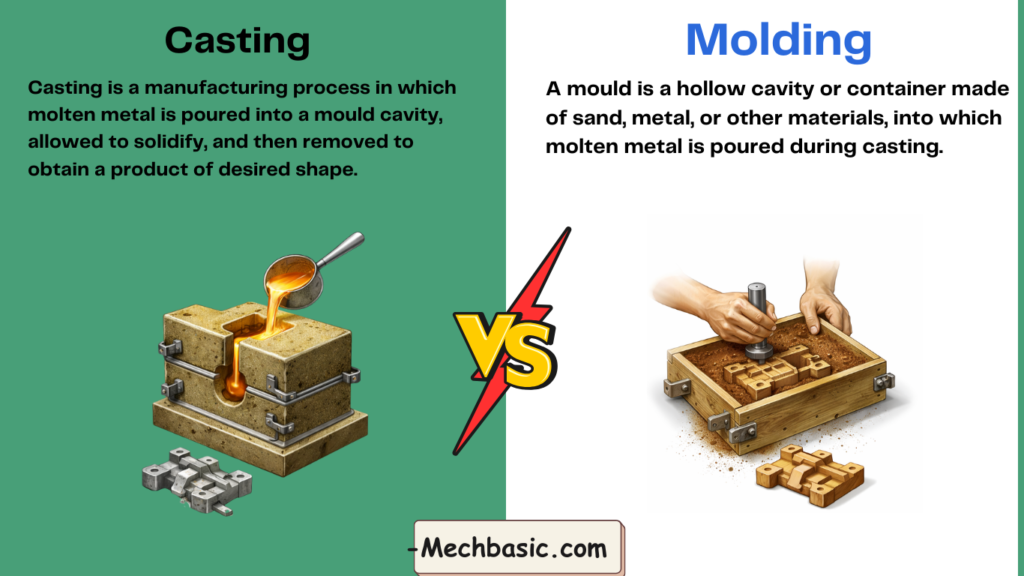
What is casting vs Mold Differences
Casting is the manufacturing process in which molten metal is poured into a mould and allowed to solidify into a […]
Casting is the manufacturing process in which molten metal is poured into a mould and allowed to solidify into a […]
Advantages of die casting: high production rate, excellent dimensional accuracy, smooth surface finish, and ability to make complex shapes. Disadvantages
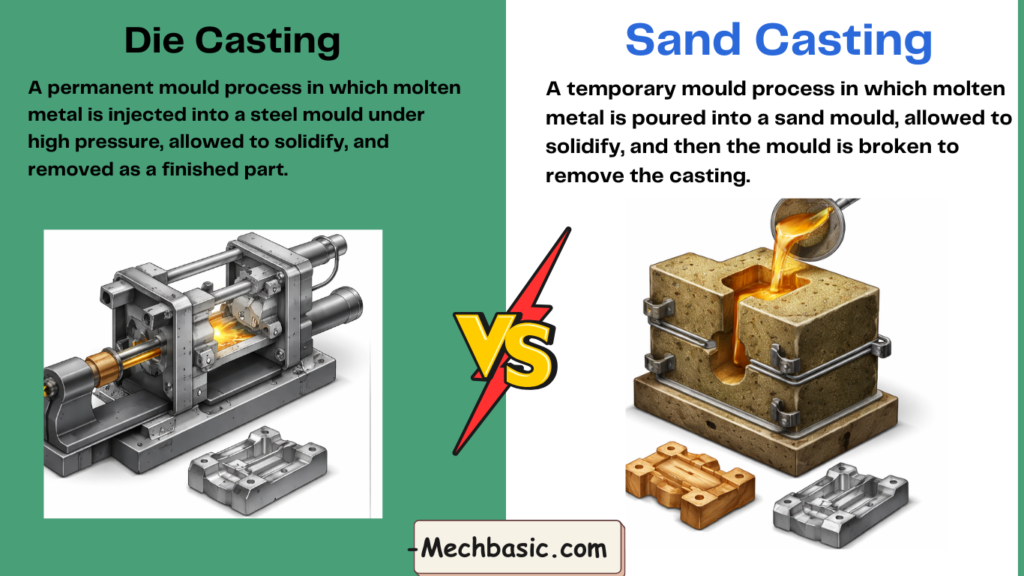
Die casting uses a permanent metal mould and high pressure to produce accurate, smooth-finished parts, while sand casting uses a
Investment casting is generally more expensive than sand casting due to higher material, tooling, and processing costs, but it offers
Advantages of investment casting: high dimensional accuracy, excellent surface finish, and ability to produce complex shapes. Disadvantages of investment casting:
Advantages of sand casting: low cost, simple process, suitable for large and complex shapes, and flexible for small or large
Sand used in sand casting should have refractoriness (resist high temperatures), permeability (allow gases to escape), adhesiveness (hold shape with
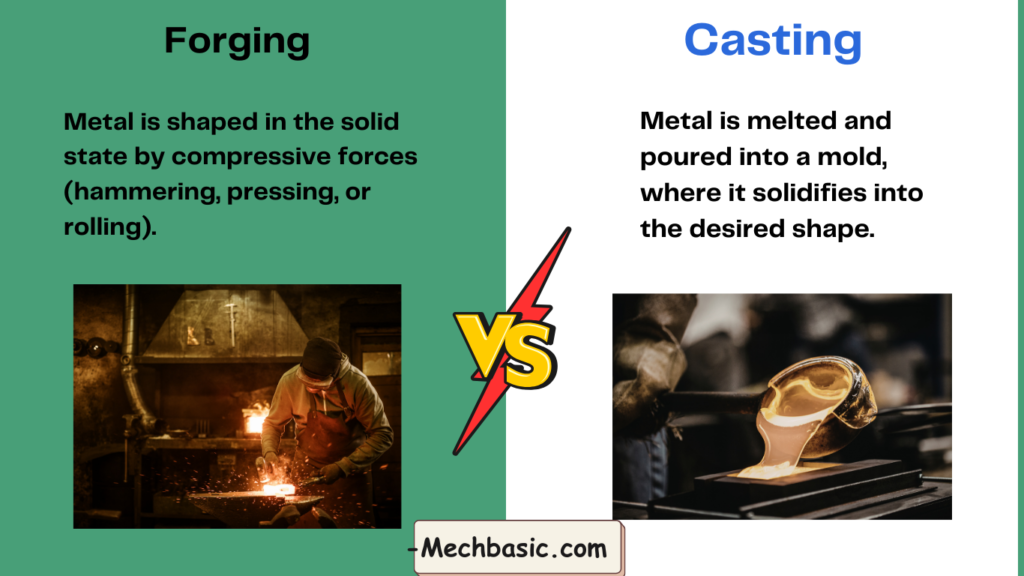
Casting and forging are two widely used metal shaping processes in manufacturing. Casting involves pouring molten metal into a mold




