
A seatbelt has several key parts that work together to keep passengers safe.
Main components include the webbing (strap), tongue (metal latch), buckle, retractor, and anchor points.
These parts help secure, tighten, and release the belt during normal use and in a crash.
In this article:
Main Parts of a Seat Belt System
A car seat belt is a carefully engineered safety system, not just a strap. It’s made of multiple parts that work together to restrain, absorb energy, and protect you during a crash.
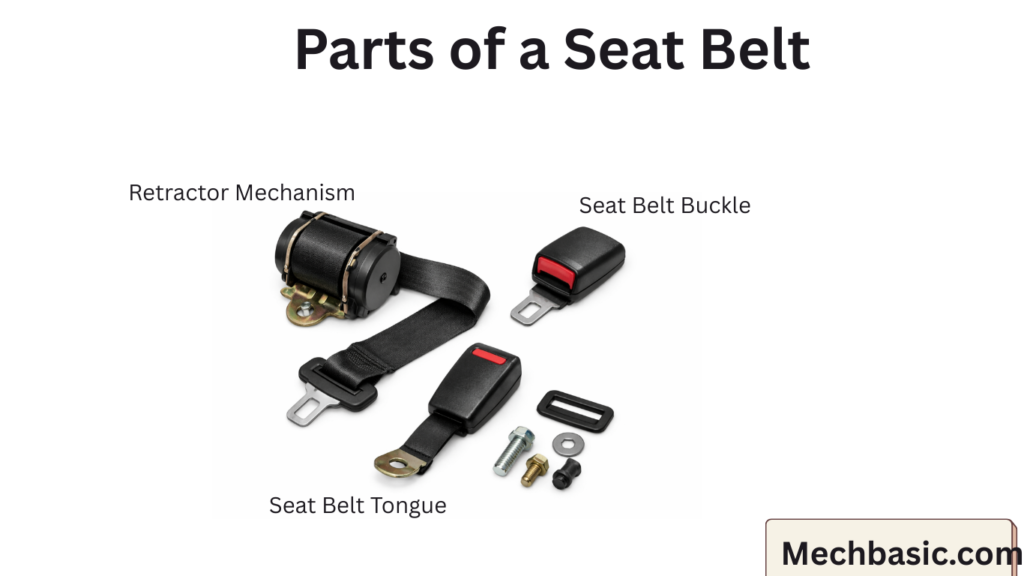
Here’s a detailed, easy-to-understand breakdown:
1. Webbing (the belt itself)
- The long, flat strap you pull across your body
- Made from high-strength polyester
- Designed to:
- Stretch slightly (to absorb crash energy)
- Not tear under extreme force
2. Tongue (male part)
- The metal tab you insert into the buckle
- Also called:
- Latch plate
- Insert tab
Function:
- Slides into the buckle and locks securely
- Designed for quick insertion and strong hold
3. Buckle (female part)
- The part near the seat where the tongue clicks in
- Also called:
- Receptacle
- Latch assembly
Contains:
- Locking mechanism
- Release button
- Sensor (in modern cars)
4. Retractor
- The device that winds and unwinds the belt
- Usually hidden in the pillar or side panel
Types:
- Emergency Locking Retractor (ELR)
- Automatic Locking Retractor (ALR)
Function:
- Keeps belt tight but comfortable
- Locks during sudden stops or impacts
5. Pretensioner
- Advanced safety device linked to airbags
- Activates during a crash
What it does:
- Instantly tightens the belt
- Removes slack to hold you firmly
6. Load Limiter
- Works with the pretensioner
Function:
- Allows slight belt give during extreme force
- Prevents:
- Rib fractures
- Chest injuries
7. Anchor Points
- Strong mounting points on the car body
Usually located at:
- Floor
- Door pillar (B-pillar)
- Seat frame
Function:
- Hold the belt securely in place during impact
8. Height Adjuster
- Found on the side pillar
Function:
- Adjusts belt height for:
- Different passenger heights
- Prevents neck injury
9. Seat Belt Sensor
- Detects whether the belt is fastened
Connected to:
- Warning light
- Alarm system
10. Crash Sensor Integration
- Works with systems like:
- Airbag system
Function:
- Coordinates:
- Pretensioner activation
- Airbag deployment
How all parts work together
- You pull the webbing
- Insert the tongue into the buckle
- The retractor keeps tension
- During a crash:
- Retractor locks
- Pretensioner tightens
- Load limiter reduces injury
- Anchors hold everything in place
Important concept behind it
The seat belt works based on inertia:
- Your body wants to keep moving forward
- The belt restrains and spreads the force safely
Why every part matters
If any component fails:
- The whole system becomes unsafe
Examples:
- Faulty buckle → won’t lock
- Broken retractor → loose belt
- Damaged webbing → can tear in crash
Summary
A seat belt system includes:
- Strap (webbing)
- Locking parts (tongue + buckle)
- Control systems (retractor, pretensioner, load limiter)
- Mounting (anchors)
- Electronics (sensors)
👉 Together, they save lives by controlling crash forces on your body
Other courses:





