
Here is a full, clear, and detailed comparison of cabin air filters vs. engine air filters — how they work, what they affect, what happens when they get dirty, and why both matter.
In this article:
Cabin Air Filter vs. Engine Air Filter
Detailed Technical Comparison
Cabin and engine air filters serve two completely different purposes, operate in different parts of the vehicle, and affect different systems. Below is a precise breakdown.
1. Primary Function
Cabin Air Filter
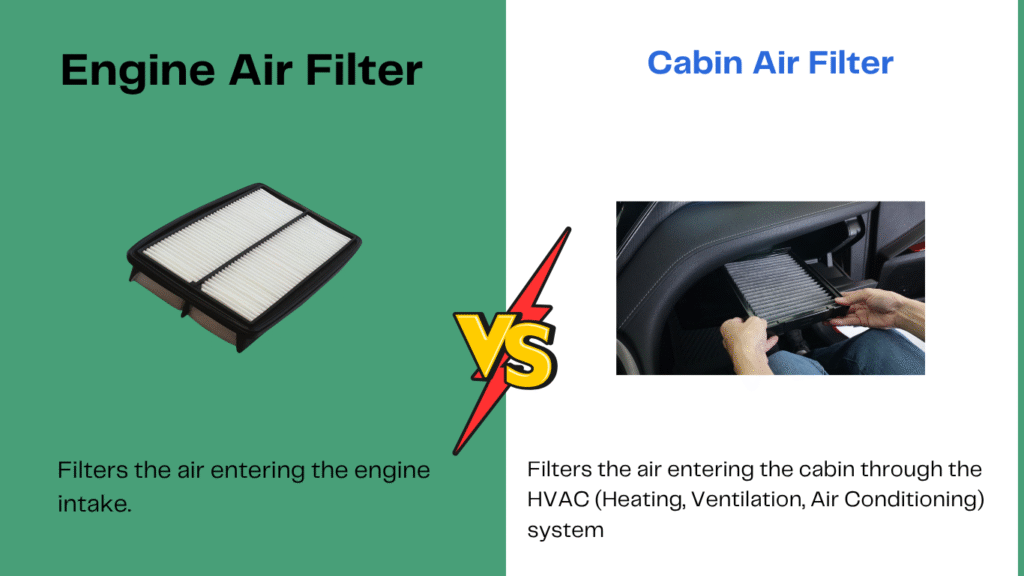
- Filters the air entering the cabin through the HVAC (Heating, Ventilation, Air Conditioning) system.
- Protects the passengers and interior components.
What it filters:
- Dust
- Pollen
- Mold spores
- Exhaust particles
- Pollution
- Leaves and debris
- Odors (if charcoal-activated)
Engine Air Filter
- Filters the air entering the engine intake.
- Protects the engine from harmful contaminants.
What it filters:
- Dirt
- Sand
- Dust
- Road debris
- Insects
- Fine particulate matter
This is essential for proper combustion, fuel efficiency, and engine health.
2. Location in the Vehicle
Cabin Air Filter
- Located behind the glove box, in the dashboard, or under the hood near the windshield cowl.
- Installed in the HVAC ducting.
Engine Air Filter
- Installed in the airbox inside the engine bay.
- Located in the main intake path before the throttle body or turbocharger.
3. Impact on Performance
Cabin Air Filter
Does NOT directly affect engine performance.
It affects:
- Airflow inside the cabin
- AC and heater efficiency
- Defrost speed
- Air quality
A very clogged cabin filter can indirectly cause:
- Higher HVAC load → higher alternator load → slight engine load
- AC working harder → reduced available engine power
But no effect on combustion or power output directly.
Engine Air Filter
Directly affects engine performance and efficiency.
A clogged engine air filter can cause:
- Reduced air intake → restricted airflow
- Lower horsepower
- Poor fuel economy
- Misfires
- Rough idle
- Rich fuel mixture (excess fuel, not enough air)
- Black smoke
- Reduced turbo efficiency
- Poor acceleration
A severely clogged engine air filter can cause engine damage, especially to:
- Mass airflow sensors
- Turbocharger compressor wheel
- Piston rings (due to unfiltered dust)
4. Impact on Fuel Economy
Cabin Air Filter
- Minimal effect
- Only indirect through AC/blower load
Engine Air Filter
- Major effect
- Dirty filter = rich fuel mixture = more fuel consumed
- Modern EFI compensates, but often at the cost of performance
5. Design & Material Differences
Cabin Air Filter
- Made of paper, fiber, or electrostatic material
- Often includes activated charcoal for odor removal
- Designed to trap extremely fine particles (pollen-level)
Engine Air Filter
- Made of pleated paper, cotton gauze, or foam
- Designed to maximize airflow while blocking debris
- Some performance filters (K&N style) prioritize high airflow
6. Maintenance & Replacement Intervals
Cabin Air Filter
- Replace every 12,000–15,000 miles or once per year
- More often if:
- You live in dusty areas
- You use AC constantly
- You drive in heavy traffic (urban smog)
Engine Air Filter
- Replace every 15,000–30,000 miles depending on conditions
- More often for:
- Dirt roads
- Off-roading
- High-performance/turbocharged engines
- Performance driving
Some performance filters require cleaning instead of replacement.
7. Failure Symptoms
Dirty Cabin Filter Symptoms
- Weak airflow from vents
- Cabin smells musty
- Foggy windows
- Poor AC cooling
- Noisy blower motor
- Allergies worsen
- Dusty interior
Dirty Engine Filter Symptoms
- Loss of power
- Slow acceleration
- Poor fuel economy
- Black smoke
- Rough idle
- Engine misfires
- Whistling intake sounds
- Check engine light (MAF sensor errors)
8. Cost Difference
Cabin Air Filter
- $10–$40
- Easy to install (DIY-friendly)
Engine Air Filter
- $15–$60 for standard filters
- $50–$90 for performance cotton filters
- Installation also easy on most vehicles
9. Which Is More Important?
Cabin filter is important for:
- Passenger comfort
- HVAC efficiency
- Air quality
Engine filter is critical for:
- Engine health
- Performance
- Longevity
- Fuel economy
A clogged cabin filter is annoying.
A clogged engine filter can be dangerous for the engine.
Quick Summary
| Feature | Cabin Air Filter | Engine Air Filter |
|---|---|---|
| Filters air for | Passengers | Engine |
| Located in | HVAC system | Intake system |
| Affects engine performance? | Indirectly, very minor | Directly and significantly |
| Affects AC airflow? | Yes | No |
| Can cause engine damage? | No | Yes |
| Replacement interval | 12–15k miles | 15–30k miles |
| Materials | Paper/charcoal | Paper, foam, cotton |
| Cost | Low | Moderate |
Other courses:





