
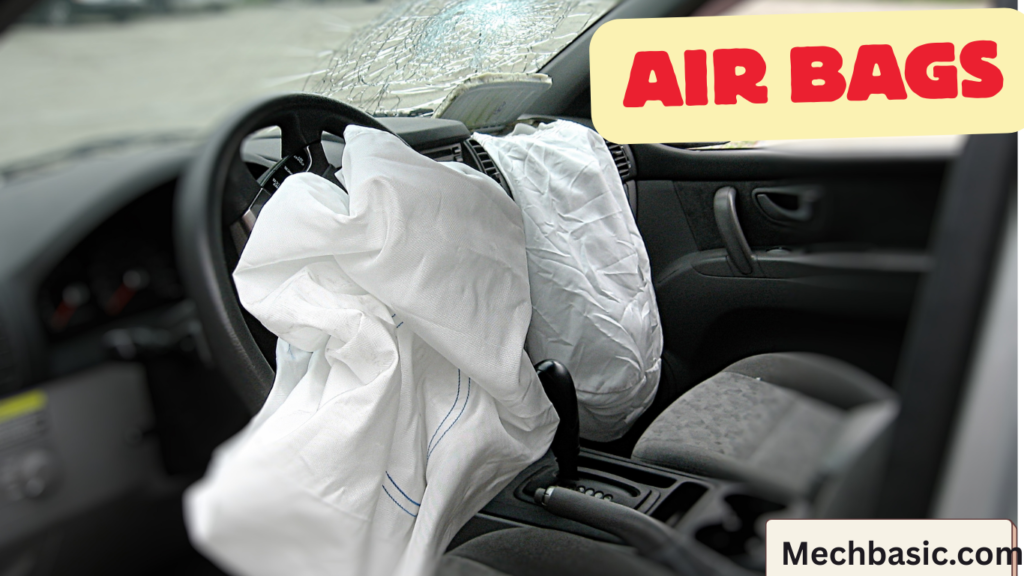
Airbags are safety devices designed to protect passengers during a collision. They work using sensors that detect a sudden impact and trigger the airbag to inflate within milliseconds. The airbag quickly fills with gas and forms a cushion between the passenger and the hard parts of the car. This helps reduce serious injuries to the head and chest during an accident.
In this article:
Airbags – How Do They Work?
Airbags are supplemental restraint systems (SRS) designed to protect occupants during a collision by inflating rapidly and providing a cushion between passengers and hard surfaces inside the vehicle such as the steering wheel, dashboard, or doors. They work together with seat belts to reduce injuries to the head, chest, and upper body.
1. Purpose of Airbags
The main purpose of airbags is to:
- Reduce impact forces during collisions
- Prevent passengers from hitting the steering wheel or dashboard
- Protect head, neck, and chest
- Work with seat belts to improve occupant safety
Airbags inflate in milliseconds and then deflate immediately after cushioning the passenger.
2. Main Components of an Airbag System
1. Crash Sensors
- Detect sudden deceleration or collision impact.
- Usually placed in the front of the vehicle and inside the passenger compartment.
2. Electronic Control Unit (ECU)
- The ECU is the brain of the airbag system.
- It analyzes signals from crash sensors and determines whether the airbags should deploy.
3. Inflator Unit
- Contains chemicals that rapidly produce gas when activated.
- The gas inflates the airbag very quickly.
4. Airbag Cushion
- Made of strong nylon fabric.
- Stored folded inside the steering wheel, dashboard, seat, or door panels.
3. Working Principle of Airbags
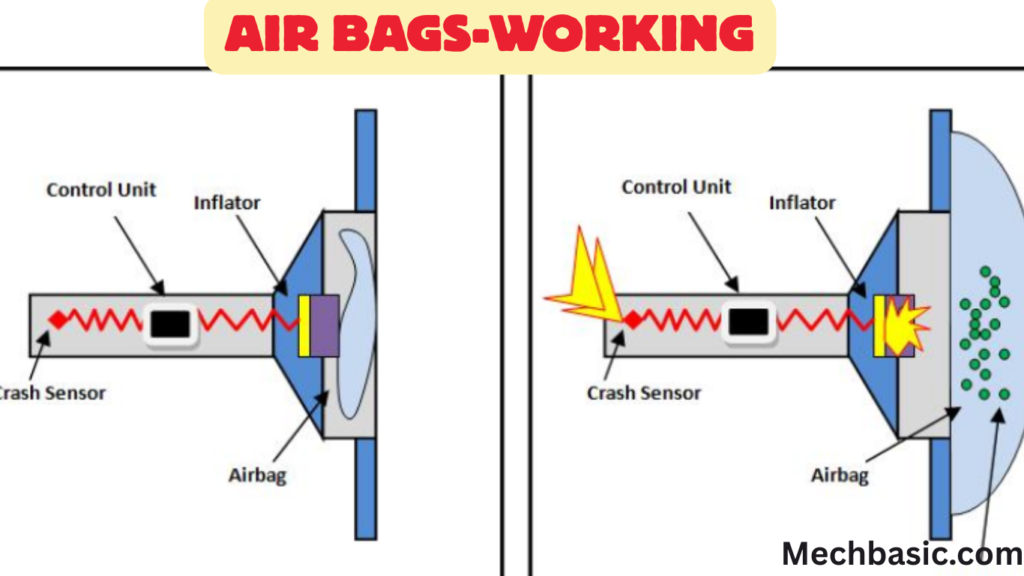
The working of airbags occurs in a few milliseconds during a crash.
Step 1: Collision Detection
When a vehicle crashes, crash sensors detect rapid deceleration.
Step 2: Signal to ECU
The sensor sends an electrical signal to the Electronic Control Unit (ECU).
Step 3: Inflator Activation
The ECU activates the inflator unit, which produces gas through a chemical reaction.
Step 4: Airbag Inflation
The airbag inflates within about 20–40 milliseconds, forming a protective cushion.
Step 5: Cushioning the Passenger
The passenger moves forward and contacts the airbag, which absorbs the impact energy.
Step 6: Airbag Deflation
Small holes in the airbag allow gas to escape so it deflates quickly after impact.
4. Types of Airbags
1. Front Airbags
- Located in the steering wheel and dashboard.
- Protect the driver and front passenger during frontal collisions.
2. Side Airbags
- Installed in the side of seats or doors.
- Protect the chest and torso during side impacts.
3. Curtain Airbags
- Deploy from the roof area above the windows.
- Protect the head in side collisions.
4. Knee Airbags
- Located below the dashboard.
- Protect the knees and lower legs.
5. Advantages of Airbags
- Reduce serious head and chest injuries
- Protect passengers during high-speed crashes
- Work together with seat belts for maximum protection
- Decrease the risk of fatal injuries
6. Limitations of Airbags
- Airbags alone are not enough without seat belts.
- Improper seating position can reduce effectiveness.
- Deployment can cause minor injuries like burns or bruises.
Conclusion
Airbags are one of the most important passive safety systems in modern vehicles. By detecting collisions and inflating instantly, they provide a protective cushion that reduces the force of impact on passengers, thereby saving lives and minimizing injuries during accidents.
Other courses:





