
The basic formula for spot welding is related to heat generation and weld current:
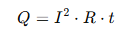
Where:
- (Q) = heat generated (joules)
- (I) = welding current (amperes)
- (R) = electrical resistance at the weld spot (ohms)
- (t) = welding time (seconds)
This formula shows that heat increases with higher current, resistance, or welding time, which is critical for forming a strong spot weld.
In this article:
Formula for Spot welding:
Here’s a detailed explanation of the formula and calculations used in spot welding, including heat generation, weld nugget sizing, and key parameters:
1. Fundamental Principle
Spot welding is based on resistance heating (Joule heating). The heat ( Q ) generated at the contact point depends on:
- Electrical current ( I )
- Resistance ( R ) of the metal at the contact interface
- Time ( t ) the current is applied
The basic formula is:

Where:
- ( Q ) = heat energy generated (Joules)
- ( I ) = welding current (Amperes)
- ( R ) = electrical resistance of the metal at the weld spot (Ohms)
- ( t ) = welding time (seconds)
This formula shows that heat increases with the square of the current, which is why precise control of current is critical in spot welding.
2. Heat Required to Melt the Metal
To create a weld nugget, the generated heat must at least equal the energy required to raise the metal temperature to melting:
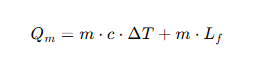
Where:
- ( Q_m ) = heat required to melt the metal (Joules)
- ( m ) = mass of metal at the weld spot (kg)
- ( c ) = specific heat capacity of the metal (J/kg·°C)
- ( \Delta T ) = temperature rise needed to reach melting point (°C)
- ( L_f ) = latent heat of fusion of the metal (J/kg)
The resistance heating formula ( Q = I^2 R t ) must match or exceed ( Q_m ) to create a proper weld nugget.
3. Electrode Force and Contact Resistance
- The electrode force ( F ) affects the contact resistance ( R_c ):
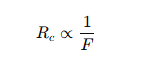
- Higher pressure reduces contact resistance → more current flows through the metal rather than the electrodes → more localized heating.
- Low force → higher resistance at the contact → inconsistent heating or poor nugget formation.
4. Weld Nugget Size Calculation
The weld nugget diameter ( D ) depends on the current, time, and sheet thickness. An empirical formula often used is:
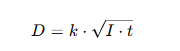
Where:
- ( D ) = nugget diameter (mm)
- ( I ) = welding current (kA)
- ( t ) = weld time (seconds)
- ( k ) = material constant (depends on steel, aluminum, thickness, electrode type)
Example: For low-carbon steel, ( k ) ≈ 3–5 (depends on machine and sheet thickness).
- Larger currents or longer weld times → larger nugget diameter
- Must balance to avoid metal expulsion or electrode damage.
5. Typical Spot Welding Parameters
| Parameter | Typical Values (Mild Steel, 1 mm sheet) |
|---|---|
| Welding current ( I ) | 5–10 kA |
| Weld time ( t ) | 0.1–0.3 s |
| Electrode force ( F ) | 3–6 kN |
| Nugget diameter ( D ) | 4–6 mm |
These parameters change based on material type, thickness, and coating.
6. Summary: Spot Welding Formulas
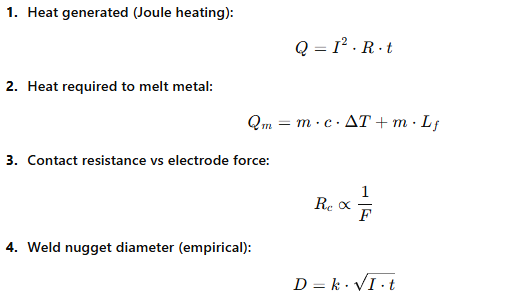
These formulas allow engineers to calculate the necessary current, time, and electrode pressure to produce consistent, strong welds.
Other courses:





