Welding can cause health side effects like respiratory problems from inhaling fumes, eye damage from UV light, and skin burns.
Long-term exposure may lead to metal poisoning, lung diseases, or neurological issues.
Using proper PPE, ventilation, and safe work practices greatly reduces these risks.
In this article:
Health side effects of welding
Welding is an essential industrial process, but it exposes workers to multiple health hazards. These effects can be short-term (acute) or long-term (chronic), depending on the type of welding, duration of exposure, materials used, and safety precautions. Let’s go into detail.
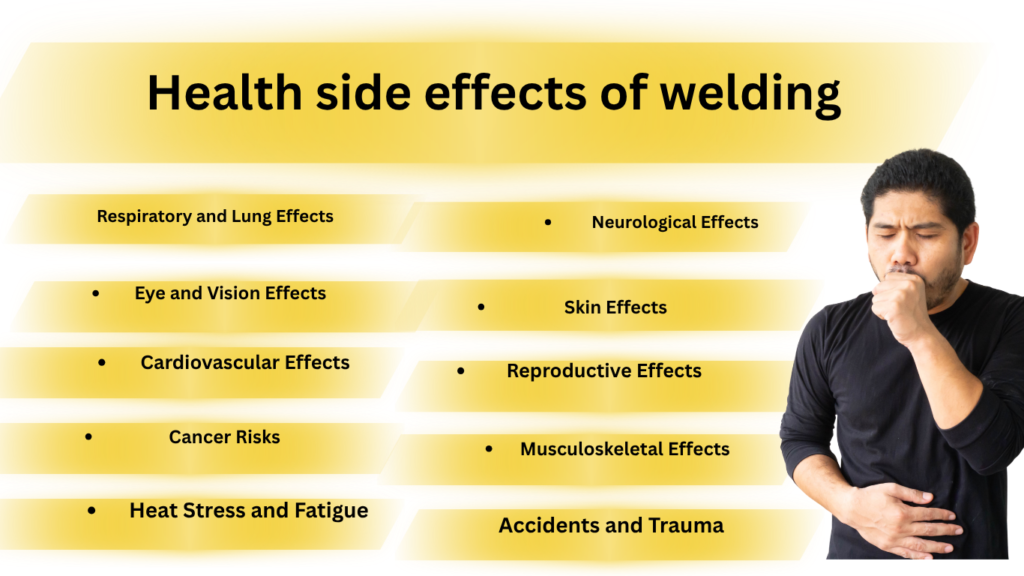
1. Respiratory and Lung Effects
Welding produces fumes, smoke, and gases, which can cause serious respiratory problems:
a) Metal Fume Fever
- Caused by inhalation of zinc, magnesium, or copper fumes.
- Symptoms appear a few hours after exposure:
- Fever, chills, sweating
- Muscle aches, nausea, headache
- Usually resolves within 24–48 hours, but repeated exposure can weaken the immune system.
b) Chronic Respiratory Diseases
- Long-term exposure to metal fumes (iron, manganese, chromium, nickel, cadmium) can lead to:
- Chronic bronchitis
- Pneumoconiosis (lung scarring)
- Decreased lung function
c) Asthma and Allergies
- Some coatings or gases used in welding (nickel, chromium, ozone) can trigger asthma or allergic reactions.
2. Neurological Effects
Exposure to certain metals in welding fumes can affect the nervous system:
- Manganese toxicity (“welder’s Parkinsonism”):
- Tremors, stiffness, slowed movements
- Memory and mood disorders
- Lead and cadmium:
- Cognitive decline, nerve damage, headaches
3. Eye and Vision Effects
Welding arcs produce intense UV, visible, and IR light, leading to:
- Arc eye / welder’s flash: painful inflammation of the cornea
- Cataracts: long-term exposure to UV radiation increases risk
- Retinal burns in severe cases if protective gear is ignored
Protection: Welding helmet with proper filter lens is essential.
4. Skin Effects
- UV burns (“sunburn effect”) on exposed skin
- Skin cancer risk with chronic UV exposure
- Contact with hot metal or molten slag → thermal burns
- Metal dust → dermatitis or allergic reactions
5. Cardiovascular Effects
- Fumes and gases (ozone, nitrogen oxides, carbon monoxide) may increase oxidative stress, affecting the heart and blood vessels.
- Long-term exposure is associated with higher risk of hypertension and heart disease.
6. Reproductive Effects
- Male fertility:
- Heat, radiation, and metal fumes (manganese, cadmium, lead) can reduce sperm count and motility, damage DNA, and alter morphology.
- Female fertility:
- Exposure to toxic fumes and heavy metals may affect menstrual cycles and reproductive health, though research is less extensive.
7. Cancer Risks
Chronic exposure to welding fumes, especially stainless steel or galvanized metals, increases risk of:
- Lung cancer (due to chromium and nickel)
- Skin cancer (due to UV exposure)
- Bladder cancer (linked to exposure to certain solvents or coatings)
8. Musculoskeletal Effects
- Welding is physically demanding: bending, awkward positions, heavy protective gear.
- Can cause:
- Back, neck, and shoulder pain
- Joint stiffness
- Chronic strain injuries
9. Heat Stress and Fatigue
- Welding in hot environments with heavy gear can lead to:
- Dehydration
- Heat exhaustion or heat stroke
- Reduced alertness, increasing risk of accidents
10. Accidents and Trauma
- Burns from molten metal, sparks, or slag
- Electric shock from arc welding
- Eye injuries from flying debris
- Fire and explosion hazards in confined or poorly ventilated spaces
Summary Table of Health Effects
| Body System | Health Effects | Cause |
|---|---|---|
| Respiratory | Metal fume fever, chronic bronchitis, asthma, pneumoconiosis | Metal fumes, gases, smoke |
| Nervous | Tremors, cognitive decline, Parkinsonism | Manganese, lead, cadmium |
| Eyes | Arc eye, cataracts, retinal burns | UV, IR, bright welding arc |
| Skin | Burns, dermatitis, skin cancer | UV radiation, molten metal, chemicals |
| Cardiovascular | Hypertension, oxidative stress | Fumes and gases |
| Reproductive | Reduced sperm count, abnormal morphology, hormonal effects | Heat, heavy metals, radiation |
| Musculoskeletal | Back, neck, joint pain, chronic strain | Poor posture, heavy gear |
| Heat-related | Dehydration, heat stroke | High temperatures, enclosed spaces |
| Accidents | Burns, electric shock, explosions | Sparks, high current, flammable materials |
Conclusion:
Welding health risks are multi-systemic: lungs, skin, eyes, nervous system, reproductive system, and cardiovascular health are all at risk.
Prevention is critical: PPE (helmets, gloves, flame-resistant clothing), proper ventilation, fume extraction, safe ergonomics, and regular health checks can dramatically reduce these hazards.
Other courses: