
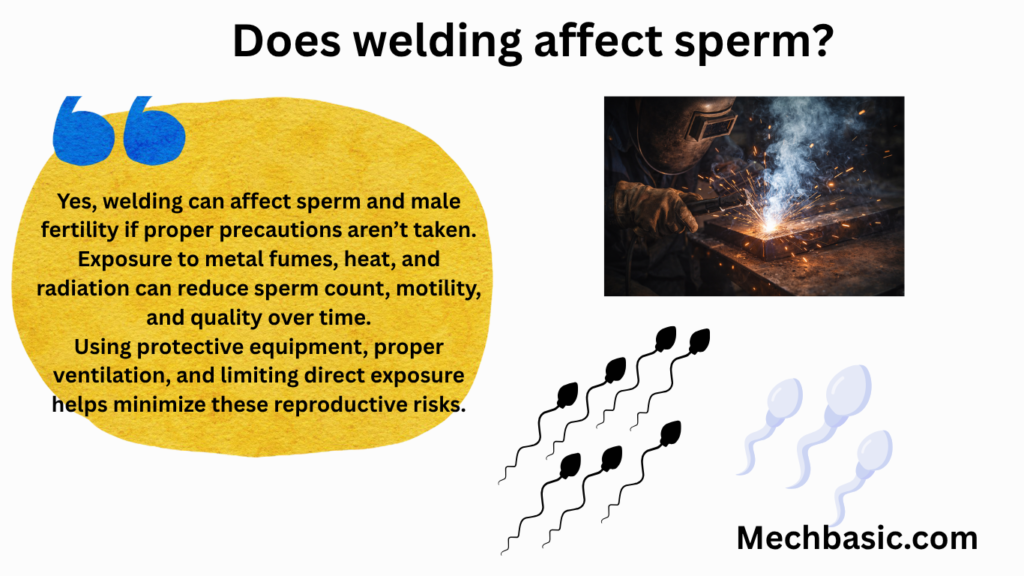
Yes, welding can affect sperm and male fertility if proper precautions aren’t taken.
Exposure to metal fumes, heat, and radiation can reduce sperm count, motility, and quality over time.
Using protective equipment, proper ventilation, and limiting direct exposure helps minimize these reproductive risks.
In this article:
Does welding affect sperm?
Yes, welding can affect male fertility and sperm health if proper precautions are not taken. The impact is mostly due to heat, radiation, and toxic metal fumes that welders are exposed to over time. Let’s go through this in detail.
1. Heat Exposure
- Welding generates intense heat in the work environment.
- Male reproductive organs are extremely sensitive to temperature; spermatogenesis (sperm production) requires the testes to be a few degrees cooler than body temperature.
- Direct or prolonged heat exposure (sitting near hot metals, welding in confined spaces, or wearing heavy protective gear in hot environments) can:
- Reduce sperm count
- Impair sperm motility (ability to swim)
- Cause DNA damage in sperm
2. Metal Fumes and Particulates
Welding produces fumes from metals like:
- Manganese – high exposure is linked to neurological effects and oxidative stress, which can impair sperm function.
- Lead and cadmium – both heavy metals are well-documented reproductive toxins.
- Zinc, chromium, and nickel – in excessive amounts, can generate oxidative stress affecting sperm DNA.
Mechanism:
- Fumes are inhaled and absorbed into the bloodstream.
- Metals accumulate in organs, including the testes.
- Chronic exposure → lower sperm quality, abnormal morphology, and decreased fertility.
3. Radiation Exposure
- UV and IR radiation from the welding arc can indirectly affect reproductive health:
- Causes oxidative stress in tissues.
- High chronic exposure, especially without PPE, may contribute to DNA damage in sperm.
4. Chemical Exposure
- Solvents, coatings, and cleaning agents used in welding may also be reproductive toxins.
- Examples:
- Toluene and xylene – used in degreasing metals, can reduce sperm count.
- Phthalates or heavy-metal-containing paints – linked to hormonal disruption.
5. Lifestyle and Environmental Factors
- Confined workshops, long hours, and insufficient ventilation amplify exposure.
- Smoking and alcohol, common in some industrial settings, worsen reproductive effects.
6. Scientific Evidence
- Studies on welders show:
- Reduced sperm count and motility in men with chronic exposure to welding fumes.
- Increased abnormal sperm morphology (shape defects).
- Oxidative DNA damage in sperm is higher in welders than in non-exposed men.
- Risk increases with:
- Duration of welding career
- Lack of PPE and ventilation
- Exposure to heavy metals (especially cadmium, lead, manganese)
7. Precautionary Measures
To minimize risk to reproductive health:
- Use proper PPE
- Respirators or fume extractors to reduce inhalation of toxic fumes.
- Heat-resistant clothing to reduce testicular heat exposure.
- Improve ventilation
- Local exhaust systems, open-air welding, or fume hoods.
- Hygiene
- Wash hands and exposed skin before eating or touching the groin area.
- Limit chronic exposure
- Rotate welding tasks, avoid prolonged exposure to heavy metals.
- Regular medical check-ups
- Semen analysis and hormone tests if fertility is a concern.
Summary
| Welding Factor | Effect on Sperm/Reproduction |
|---|---|
| Heat | Reduced sperm count and motility |
| Metal fumes (Mn, Cd, Pb, Ni, Cr) | DNA damage, abnormal morphology, lower fertility |
| UV/IR radiation | Oxidative stress affecting sperm |
| Chemical solvents/coatings | Hormonal disruption, sperm abnormalities |
| Poor ventilation & PPE | Amplifies all risks |
Welding can negatively affect male fertility, mainly due to heat, toxic metal fumes, and chemical exposure. With modern safety practices—good ventilation, respirators, protective clothing—the risk can be significantly reduced.
Other courses:





