
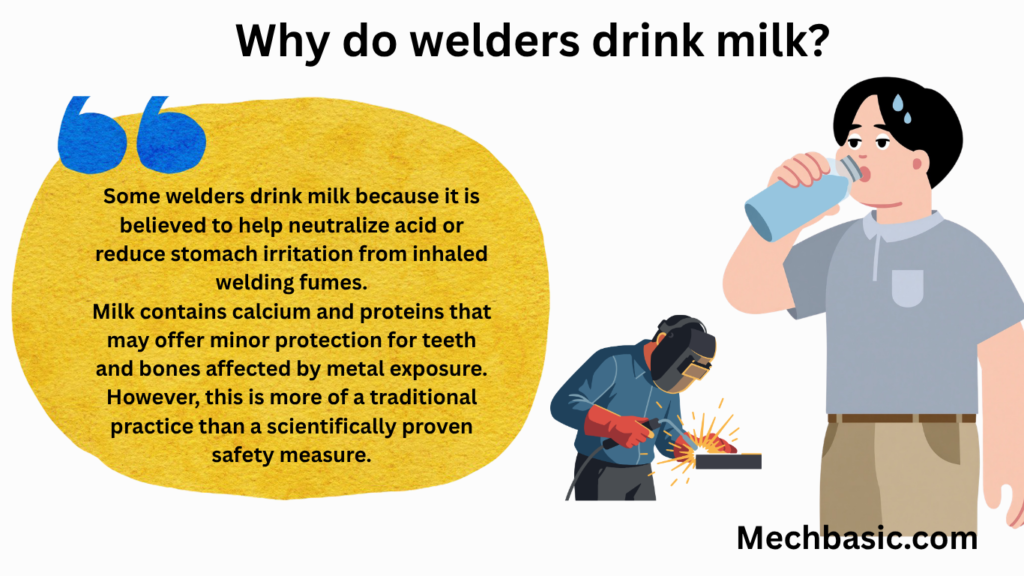
Some welders drink milk because it is believed to help neutralize acid or reduce stomach irritation from inhaled welding fumes.
Milk contains calcium and proteins that may offer minor protection for teeth and bones affected by metal exposure.
However, this is more of a traditional practice than a scientifically proven safety measure.
In this article:
The idea that “welders drink milk” is actually based on both practical and traditional reasons, though it’s a mix of science, habit, and safety culture. Let’s break it down in detail:
1. Milk as a Protective Measure Against Metal Fumes
Welding, especially processes like arc welding (SMAW, TIG, MIG), produces:
- Metal fumes: tiny particles of metals like iron, manganese, zinc, or cadmium.
- Ozone and nitrogen oxides from electrical arcs in the air.
- Hot sparks and slag that can irritate the skin or digestive tract if swallowed.
Some traditional advice suggests drinking milk before or after welding because:
- Coating the stomach lining
- Milk contains casein and fats that form a temporary protective layer on the stomach lining.
- Idea: If a welder accidentally ingests metal fumes or swallows tiny particles, milk may reduce irritation.
- Binding certain toxins
- Milk proteins can bind some heavy metals (like zinc or cadmium) in very small amounts.
- This could, in theory, reduce absorption into the bloodstream.
- Cooling effect
- Milk is soothing and hydrating, which can help if a welder experiences minor throat irritation from smoke or fumes.
2. Calcium and Health Benefits
Welders often work long hours and may be exposed to:
- Sparks and heat → can cause minor burns or skin dryness.
- Metal dust → may deplete trace minerals in the body over time.
Milk provides:
- Calcium and vitamin D → good for bone and teeth health.
- Protein → aids muscle recovery after long or physically demanding welding shifts.
Traditionally, milk was encouraged as a “wellness drink” for labor-intensive trades like welding, blacksmithing, or foundry work.
3. Cultural and Superstitious Factors
In some countries, especially in older industrial contexts:
- Welders were told that milk “protects against sparks and sparks in the stomach.”
- It became a folk habit: even if the scientific evidence is minimal, it stuck in workshop culture.
- Modern safety regulations focus more on proper ventilation, respirators, and protective clothing rather than milk.
4. Scientific Perspective
- There’s no strong evidence that milk can protect against inhaling welding fumes.
- Most protective strategies now are engineering controls: fume extraction, masks, helmets with filters, and proper ventilation.
- Milk is mostly a soothing drink or a cultural habit rather than a real protective measure.
Summary
Welders drink milk mainly because of:
- Tradition and culture – a long-standing “health habit” in welding communities.
- Slight protective effects – coats the stomach, soothes irritation.
- Nutritional benefits – provides calcium, protein, and hydration.
Reality check: Modern safety relies on respirators, fume hoods, and proper ventilation, not milk.
Other courses:





