
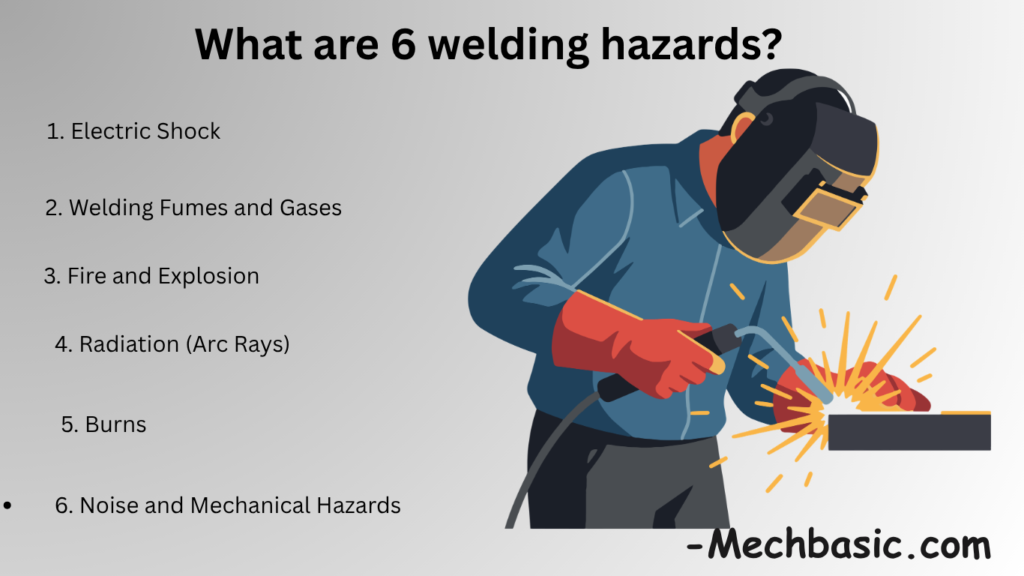
Six common welding hazards include electric shock, harmful fumes and gases, fire and explosions, UV radiation, burns, and eye damage.
These risks arise from high heat, electricity, sparks, and toxic emissions during welding.
Proper safety measures like PPE, ventilation, and training help prevent accidents and injuries.
In this article:
What are 6 welding hazards?
Welding involves high temperature, electricity, and fumes, so it comes with several safety risks. When asked for “6 welding hazards”, you should explain the most important dangers faced by welders.
Here are the six major welding hazards explained in detail:
1. Electric Shock
Description
Occurs when a welder comes into contact with live electrical parts of the welding circuit.
Causes
- Wet working conditions
- Damaged cables
- Improper grounding
Effects
- Severe injury
- Burns
- Can be fatal
Prevention
- Use dry gloves and insulated equipment
- Proper grounding
- Regular inspection of cables
2. Welding Fumes and Gases
Description
Welding produces toxic fumes and gases from melted metal and coatings.
Common Gases
- Carbon monoxide
- Nitrogen oxides
- Ozone
Effects
- Breathing problems
- Lung damage
- Long-term diseases
Prevention
- Proper ventilation
- Use of respirators
- Fume extraction systems
3. Fire and Explosion
Description
Sparks and molten metal can ignite flammable materials.
Causes
- Welding near fuels or gases
- Poor housekeeping
Effects
- Fire accidents
- Explosions
- Property damage
Prevention
- Remove flammable materials
- Keep fire extinguishers nearby
- Follow safety procedures
4. Radiation (Arc Rays)
Description
Welding arc produces ultraviolet (UV) and infrared (IR) radiation.
Effects
- Eye damage (arc eye)
- Skin burns
Prevention
- Use welding helmet with proper filter
- Wear protective clothing
5. Burns
Description
Contact with hot metal, sparks, or molten weld pool.
Effects
- Skin burns
- Serious injuries
Prevention
- Wear gloves, apron, and protective gear
- Handle hot materials carefully
6. Noise and Mechanical Hazards
Description
Welding operations produce loud noise and involve heavy equipment.
Causes
- Grinding, cutting, and welding operations
- Moving machinery
Effects
- Hearing loss
- Physical injuries
Prevention
- Use ear protection
- Follow safe handling procedures
Summary Table
| Hazard | Risk | Prevention |
|---|---|---|
| Electric shock | Injury/death | Insulation, dry conditions |
| Fumes & gases | Lung damage | Ventilation, masks |
| Fire & explosion | Burns/damage | Remove flammables |
| Radiation | Eye/skin damage | Helmet, clothing |
| Burns | Skin injury | Protective gear |
| Noise/mechanical | Hearing/injury | Ear protection, safety |
Summary:
“Shock, Smoke, Fire, Light, Heat, Noise”
Conclusion:
- Welding hazards include:
- Electric shock
- Fumes and gases
- Fire/explosion
- Radiation
- Burns
- Noise/mechanical hazards
- Safety requires:
- PPE (helmet, gloves)
- Ventilation
- Proper training
Other courses:





