
In this article:
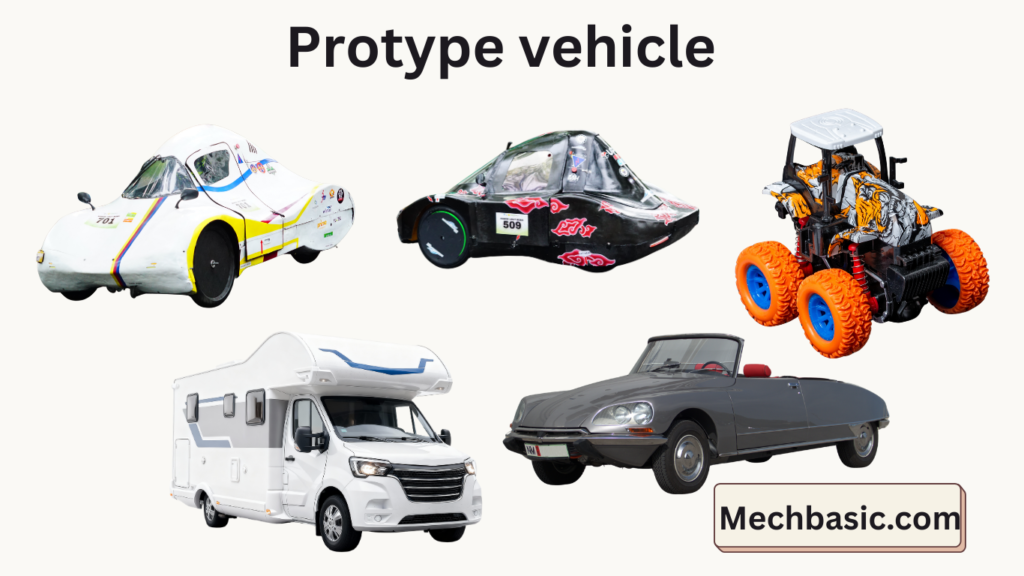
A prototype vehicle is an early model built to test a new design, technology, or concept before mass production.
It helps manufacturers evaluate performance, safety, and functionality under real-world conditions.
Prototypes are often modified and improved based on test results before the final version is released.
What Is a Prototype Vehicle?
A prototype vehicle is an early sample or test version of a new vehicle built by a manufacturer before the final production model is released to the public.
It is used to:
- Test design and engineering concepts
- Identify problems
- Improve safety and performance
- Meet government regulations
- Collect real-world data
Think of it as a “trial version” of a car or bike before mass production begins.
Where Prototype Vehicles Fit in Development
The typical vehicle development process:
- Concept Design
- Clay Model / Digital Model
- Prototype Vehicle
- Pre-Production Model
- Mass Production
The prototype stage is where the vehicle becomes a fully functional, drivable machine for testing.
Types of Prototype Vehicles
1. Concept Prototype
These are:
- Built mainly for exhibitions and auto shows
- Used to showcase future technology or design
- Sometimes not intended for production
Example: Futuristic EV concepts displayed at auto expos.
Purpose:
✔ Test public reaction
✔ Show innovation
✔ Attract investors
2. Engineering Prototype (Functional Prototype)
These are:
- Fully functional
- Driven on roads for testing
- Often covered in camouflage
Purpose:
✔ Test engine performance
✔ Evaluate suspension and braking
✔ Check emissions compliance
✔ Identify mechanical issues
You may see these on highways covered in black-and-white patterns — that’s to hide the design.
3. Pre-Production Prototype
These are:
- Almost identical to the final model
- Built on production assembly lines
- Used for final quality and durability tests
Purpose:
✔ Final safety approval
✔ Certification testing
✔ Production validation
Why Prototype Vehicles Are Important
1. Performance Testing
- Acceleration
- Fuel efficiency
- Handling stability
- Engine durability
2. Safety Testing
- Crash tests
- Airbag deployment
- Structural strength
Safety tests are often conducted by agencies like:
- Global NCAP
- Bharat NCAP
3. Emission & Regulatory Testing
In India, prototypes are tested and certified by:
- Automotive Research Association of India
- International Centre for Automotive Technology
They ensure compliance with:
- BS4
- BS6 emission norms
- Motor Vehicles Act standards
How Prototype Vehicles Are Built
- Often hand-assembled
- Use temporary wiring systems
- May include experimental engines
- Built in small numbers (sometimes fewer than 50 units)
Some parts may be:
- 3D printed
- Custom fabricated
- Not final production quality
Why Prototype Vehicles Are Camouflaged
Manufacturers hide:
- Headlights
- Body shape
- Grille design
- Interior dashboard layout
This prevents competitors from copying the design before launch.
Prototype Vehicles in Electric Cars
For EVs, prototype testing includes:
- Battery thermal testing
- Charging compatibility
- Waterproofing tests
- High-voltage system safety
EV prototypes undergo extensive battery safety checks before approval.
Are Prototype Vehicles Sold?
Usually:
❌ Not sold to the public
❌ Destroyed after testing
❌ Used internally by company
However:
- Some rare concept cars are displayed in museums.
- A few may be auctioned for collectors.
Summary
A prototype vehicle is:
A test version of a new vehicle built before mass production to evaluate design, safety, performance, and legal compliance.
It helps manufacturers:
- Fix problems early
- Improve safety
- Meet government regulations
- Ensure product reliability
Other courses:





