
Seat belts are one of the most important safety features in a vehicle. They keep the driver and passengers securely in their seats during sudden stops or collisions. Wearing a seat belt greatly reduces the risk of serious injury or death in an accident.
In this article:
Seat Belts – Everything You Need to Know
Seat belts are one of the most important safety devices in automobiles. They are designed to secure passengers in their seats during sudden stops, sharp turns, or collisions, preventing serious injuries or death. Seat belts are part of the passive safety system of a vehicle because they protect occupants during an accident.
1. Definition of Seat Belt
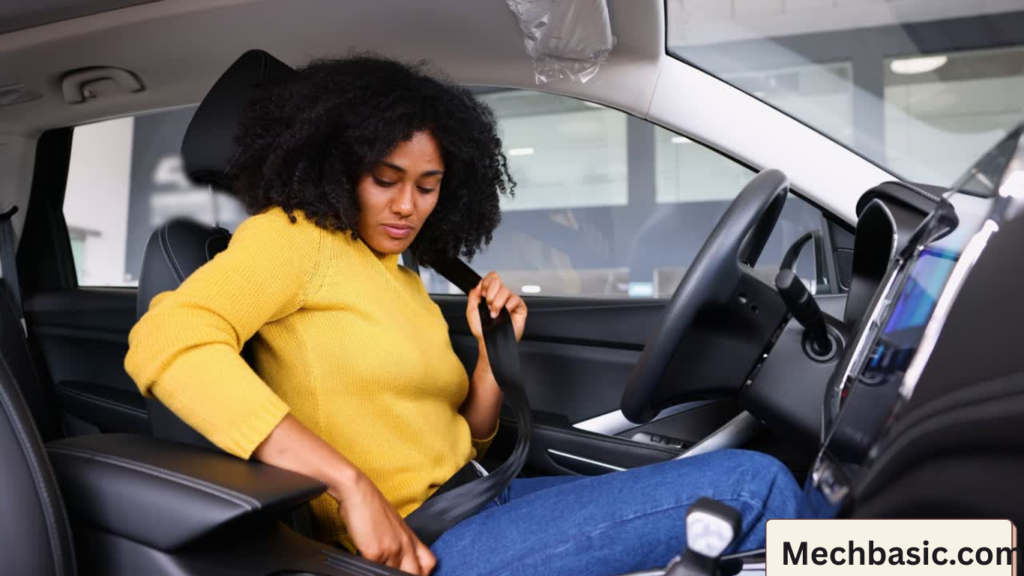
A seat belt is a safety restraint system installed in vehicles to hold occupants securely in their seats during a crash or sudden deceleration.
It prevents:
- Passengers from being thrown forward
- Passengers from hitting the dashboard or steering wheel
- Passengers from being ejected from the vehicle
Modern cars mainly use the three-point seat belt system, developed by Nils Bohlin at Volvo in 1959.
2. Working Principle of Seat Belts
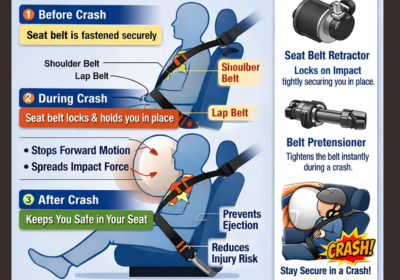
Seat belts work based on Newton’s First Law of Motion (Law of Inertia).
- When a car suddenly stops, the body tends to continue moving forward.
- The seat belt restrains the body and keeps it in position.
- Crash forces are distributed across strong parts of the body such as the chest, pelvis, and shoulders.
This greatly reduces the impact force on vital organs.
3. Main Components of a Seat Belt System
1. Webbing
- The fabric strap of the seat belt.
- Made from high-strength polyester fibers.
- Designed to withstand very large forces.
2. Retractor
- A spring-loaded mechanism that allows the belt to extend and retract.
- Locks automatically during sudden braking or a crash.
3. Buckle
- The locking device that connects the belt ends together.
- Allows easy fastening and release.
4. Pretensioner
- Tightens the seat belt instantly during a crash.
- Removes slack to hold the passenger firmly.
5. Load Limiter
- Slightly releases belt tension during severe crashes.
- Reduces chest injuries caused by excessive force.
4. Types of Seat Belts
1. Two-Point Seat Belt
- Also called lap belt.
- Secures only the waist area.
- Found in older cars and airplanes.
2. Three-Point Seat Belt
- Secures shoulder and lap.
- Most common type used in modern vehicles.
- Provides better protection during crashes.
3. Four-Point Seat Belt
- Used mainly in sports and racing cars.
- Provides additional restraint.
4. Five-Point Seat Belt
- Used in child safety seats and racing vehicles.
- Secures shoulders, waist, and between the legs.
5. Advantages of Seat Belts
Seat belts provide several important safety benefits:
- Prevent passengers from being thrown forward during collisions.
- Reduce the risk of fatal injuries.
- Prevent ejection from the vehicle during accidents.
- Work together with airbags for maximum protection.
- Reduce injuries to head, chest, and spine.
Studies show seat belts can reduce fatal injuries by about 45–50% in car crashes.
6. Importance of Wearing Seat Belts
Seat belts are essential because:
- Most road accidents occur due to sudden braking or collisions.
- They provide the first line of protection in a crash.
- Airbags are designed to work with seat belts, not instead of them.
- Many countries have laws requiring seat belt use.
7. Safety Tips for Using Seat Belts
To use seat belts effectively:
- Always fasten the seat belt before starting the vehicle.
- Ensure the lap belt fits across the hips, not the stomach.
- The shoulder belt should cross the chest and shoulder.
- Avoid twisting the belt.
- Make sure all passengers wear seat belts.
8. Limitations of Seat Belts
Although very effective, seat belts have some limitations:
- They cannot prevent all injuries in high-speed crashes.
- Improper use can reduce effectiveness.
- They must be used together with airbags and other safety systems.
Conclusion
Seat belts are the most fundamental and effective safety feature in automobiles. By restraining passengers and distributing crash forces safely, they significantly reduce injuries and save lives during accidents. Proper use of seat belts, combined with other safety systems such as airbags and ABS, ensures maximum protection for vehicle occupants.
Other courses:





