
Formula 1 cars are engineered to be as light as possible while still meeting strict safety and performance regulations. The FIA sets a minimum weight limit for each season, which includes the car, the driver, and essential fluids.
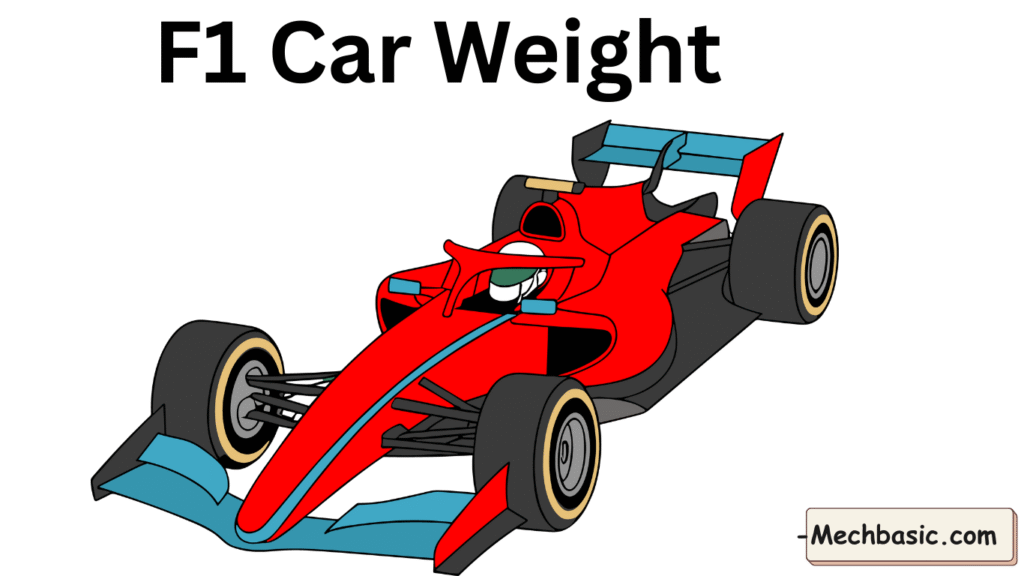
This rule ensures fair competition while allowing teams to focus on innovation in materials and design, as even a few extra kilograms can have a significant impact on speed, handling, and tire wear on track.
In this article:
Here’s a clear, detailed breakdown of Formula 1 car weight, with notes on what’s included and why it matters.
1. Minimum F1 Car Weight (Regulation Limit)
As of the current ground-effect era (2022–2024 regulations):
Minimum total weight
- ≈ 798 kg
- Includes the driver
- Includes tyres
- Excludes fuel
This is the minimum allowed. Cars are weighed after the race with any remaining fuel removed.
⚠️ The exact number can change slightly year to year, but it’s always close to 800 kg in recent seasons.
2. What Is Included in the Minimum Weight?
Included
- Car chassis & bodywork
- Power unit (engine, turbo, MGU-K, MGU-H, battery)
- Gearbox
- Suspension
- Electronics
- Fluids (oil, coolant)
- Tyres
- Driver (minimum driver weight = 80 kg including seat)
❌ Not Included
- Fuel (measured separately)
- Pit lane equipment
- Radio helmet cables, external gear
3. Weight Breakdown (Approximate)
| Component | Approx. Weight |
|---|---|
| Chassis (carbon fiber monocoque) | 45–50 kg |
| Power Unit (entire hybrid system) | ~150 kg |
| Gearbox | ~40 kg |
| Suspension & brakes | ~100 kg |
| Electronics & wiring | ~25 kg |
| Tyres (4 slicks) | ~40 kg |
| Driver + seat | 80 kg (mandatory minimum) |
| Ballast (tungsten blocks) | 5–15 kg |
Teams intentionally add ballast to reach the minimum weight so they can place it low and centrally for better handling.
4. Why Weight Is So Important in F1
- Every extra 10 kg = ~0.3 seconds per lap
- Heavier cars:
- Accelerate slower
- Brake less efficiently
- Stress tyres more
- Teams aim to:
- Build the car below minimum weight
- Add ballast strategically for balance
5. Historical Comparison
| Era | Minimum Weight |
|---|---|
| 2004 (V10 era) | ~605 kg |
| 2010 (V8 era) | ~620 kg |
| 2014 (early hybrid) | ~691 kg |
| 2022–2024 (ground effect) | ~798 kg |
👉 Modern F1 cars are nearly 200 kg heavier than early-2000s cars due to safety and hybrid systems.
6. Common Misconceptions
- ❌ “F1 cars are lightweight” → Not anymore
- ❌ “Fuel is part of the weight check” → It’s removed
- ❌ “Drivers can be lighter for advantage” → Minimum driver weight rule prevents this
Other courses:





