
The most durable coating for a car depends on the term “durable” (scratch resistance, chemical resistance, UV longevity, hydrophobics, or ease of maintenance).
But in general, modern detailing technology places coatings on a performance ladder, with the most durable at the top.
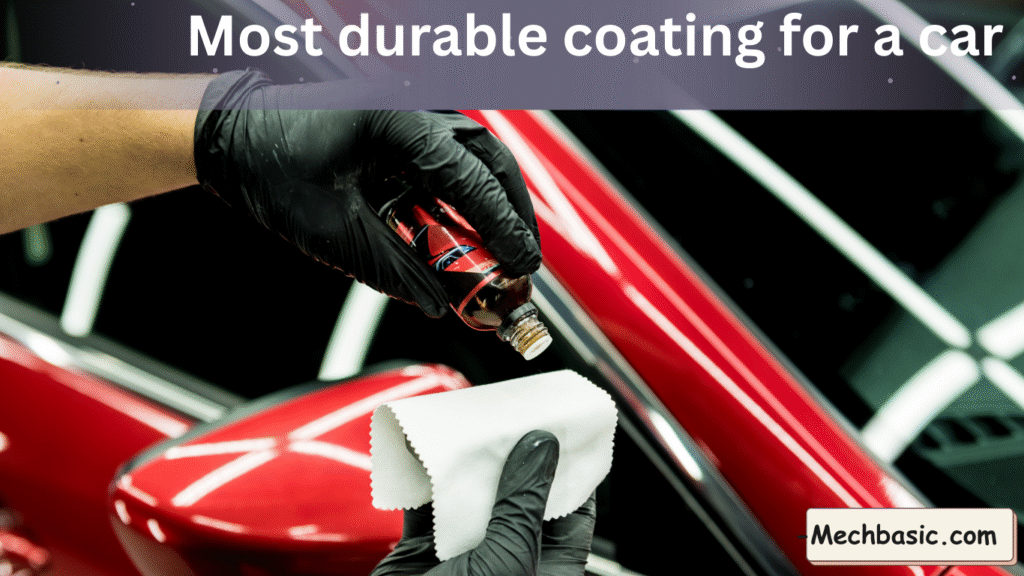
Below is a comprehensive, technically detailed explanation of ALL major automotive coating types and which are truly the most durable.
In this article:
- What is a Durable Coating in an automobile?
- What is the most durable coating for a car?
- ULTIMATE DURABILITY WINNER: Paint Protection Film (PPF – Urethane Wrap)
- Types of Automotive Coatings (From Least to Most Durable)
- 🥇 FINAL RANKING: Most Durable Automotive Coating (Liquid Applied)
- 🥇 Absolute Most Durable Vehicle Protection (Not a Coating): PPF
What is a Durable Coating in an automobile?
A durable coating in an automobile is a protective layer applied to the vehicle’s exterior surfaces.
It is designed to resist wear, environmental damage, and chemical exposure.
Durable coatings include materials like ceramic coatings, clear coats, and specialized sealants.
They enhance scratch resistance and preserve the vehicle’s paint finish.
Such coatings help maintain appearance by repelling dirt, UV rays, and contaminants.
Overall, they extend the lifespan and shine of the car’s exterior surfaces.
What is the most durable coating for a car?
Today, the most durable consumer-available coating types for cars are:
1. Professional-grade ceramic coatings (SiO₂ + SiC hybrids)
- 5–10 year durability
- Strong chemical resistance
- Excellent UV and oxidation protection
2. Professional graphene coatings (reduced graphene oxide + ceramic blend)
- Slightly better chemical resistance than SiO₂
- Better heat dissipation
- Similar durability (5–10 years), but not a miracle product
3. Fully inorganic glass coatings (Si–O–Si network, SiC network)
- Extremely durable
- Scratch- and abrasion-resistant
- Long-term stability (7–10 years+)
4. Self-healing coatings (polymer-urethane, heat-activated)
- More scratch-resistant over time due to self-heal ability
- Durability: 3–5 years
BUT the absolute most durable automotive protection overall is not a coating…
ULTIMATE DURABILITY WINNER: Paint Protection Film (PPF – Urethane Wrap)
- 8–12 years
- Stops stone chips
- Stops scratches
- Some films self-heal with heat
- Much thicker (~150–200 microns) than coatings (~1–3 microns)
However, PPF is not technically a “coating”—it’s a physical film.
Types of Automotive Coatings (From Least to Most Durable)
1. Carnauba Wax (Least Durable)
Durability: 1–3 months
Hardness: Low
Pros:
- Warm, glossy look
- Natural hydrophobicity
Cons:
- Melts/oxidizes quickly
- Minimal chemical resistance
- Weak UV protection
2. Polymer Sealants
Synthetic polymers that bond better than wax.
Durability: 3–6 months
Pros:
- Easy to apply
- More chemical resistant than wax
Cons:
- Still relatively soft
- Limited scratch resistance
3. Consumer Ceramic Coatings (SiO₂-based)
These create a glass-like layer (silicon dioxide) on the paint.
Durability: 1–3 years
Hardness: ~9H pencil hardness (not Mohs)
Thickness: ~1 micron
Pros:
- Very glossy
- Hydrophobic
- Chemical resistant
Cons:
- Requires prep
- Doesn’t stop physical scratches or chips
4. Professional Ceramic Coatings (SiO₂, SiC, Hybrid Ceramics)
These create a dense glass-ceramic layer with stronger bonding:
SiO₂ (Silica) coatings
- Hard, glossy, chemically resistant
- Lifespan: 5–7 years
SiC (Silicon Carbide) coatings
- Even harder
- More thermally stable
- Develop water-spot resistance
- Lifespan: 7–10 years
Hybrid coatings (SiO₂ + SiC + TiO₂ + organosilanes)
- Best of all worlds
- Multi-layer stack increases hardness and chemical resistance
- Lifespan: 8–10 years
Why they’re durable
- They chemically bond to clear coat
- Form a covalent Si–O–Si or Si–C network
- Highly resistant to acids, alkalis, UV, and oxidation
Weaknesses
- Still only 2–3 microns thick → cannot stop rock chips
- Require pro-level prep and curing
5. Graphene Coatings (Reduced Graphene Oxide + Ceramic)
A trend in the coating market. Real graphene coatings are actually graphene-oxide infused ceramics.
Durability: 5–10 years (similar to high-end ceramics)
Pros claimed (when real):
- Better water-spot resistance
- Better thermal conductivity (reduces heat spots)
- Slightly slicker surface
Actual performance: - Not dramatically better than SiC ceramic coatings
- Benefits are incremental, not revolutionary
6. Inorganic Glass Coatings (True Si–O–Si or SiC Networks)
These are not common consumer products but exist in pro-level detailing.
Some use:
- Polysilazane technology
- Pure inorganic silicon-oxygen lattice formation
These coatings chemically convert to a glass-like layer when cured.
Durability: 7–10+ years
Hardness: Extremely high
Chemical stability: Exceptional (pH 1 to pH 14 resistance)
Thickness: Up to 5–10 microns
Strengths:
- Very scratch resistant (relative to other coatings)
- Superb chemical/UV resistance
- Very long life
Weakness:
- Brittle at very low temperatures
- Require perfect paint correction before applying
This is the most durable LIQUID-applied coating available.
🥇 FINAL RANKING: Most Durable Automotive Coating (Liquid Applied)
1. Polysilazane / Silicon Carbide (SiC) + inorganic SiO₂ hybrid coatings
- True 7–10+ year lifespan
- Best chemical resistance
- Most scratch resistance of coatings
- Forms glass-like lattice
→ THE MOST DURABLE ACTUAL COATING TYPE
2. Professional Graphene-Oxide Ceramic Coatings
- Similar lifespan
- Slight advantages in heat dissipation
3. Professional multilayer SiO₂/Silazane Ceramics
- Very durable
- Best hydrophobic durability
4. Consumer Ceramic Coatings
- Good, but less durable
5. Sealants → Wax → etc.
- Least durable
🥇 Absolute Most Durable Vehicle Protection (Not a Coating): PPF
If we include PPF:
- PPF (urethane film) is far more durable than ANY coating for scratches and chips.
- Coatings cannot stop rock chips.
- PPF can be coated with ceramic on top for gloss, hydrophobics, and easier cleaning.
So the REAL strongest combo is:
PPF + Ceramic Coating (top layer)
→ Best overall durability, protection, and appearance.
Other courses:





