
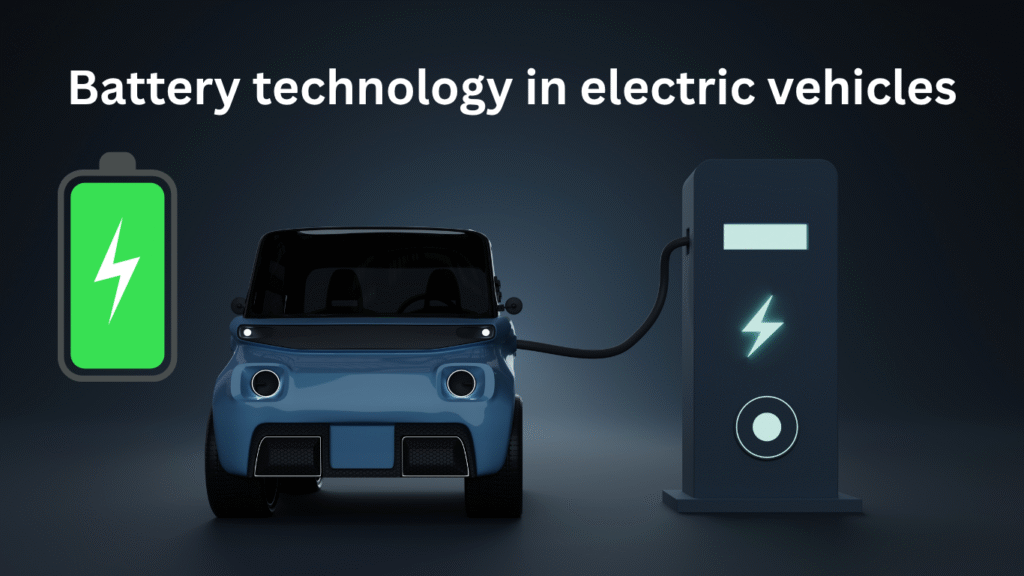
Electric vehicles (EVs) rely heavily on advanced battery technology to store and deliver electrical energy efficiently. Here’s a detailed explanation:
1. Common EV Battery Types
| Battery Type | Chemistry | Advantages | Disadvantages | Typical Use |
|---|---|---|---|---|
| Lithium-ion (Li-ion) | Lithium Cobalt Oxide (LCO), Lithium Manganese Oxide (LMO), Lithium Nickel Manganese Cobalt (NMC), Lithium Iron Phosphate (LFP) | High energy density, long life, relatively lightweight | Expensive, thermal runaway risk, cobalt environmental concerns | Most modern EVs (Tesla, Nissan Leaf, Hyundai Kona) |
| Lithium Polymer (Li-Po) | Lithium-ion with polymer electrolyte | Flexible form factor, lightweight, high energy density | Expensive, sensitive to high temperature | EV prototypes, drones, some electric cars |
| Nickel-Metal Hydride (NiMH) | Nickel oxide hydroxide + hydrogen-absorbing alloy | Long cycle life, safer than Li-ion | Lower energy density, heavier, self-discharge | Early hybrids (Toyota Prius HEV) |
| Lead-Acid (VRLA, AGM) | Lead dioxide + sulfuric acid | Cheap, robust, recyclable | Very heavy, low energy density, short lifespan | Low-speed EVs, golf carts, auxiliary systems |
2. Key Components of EV Batteries
- Cells
- Smallest unit producing electricity; connected in series/parallel to form modules.
- Types: cylindrical (Tesla), prismatic, pouch.
- Modules
- Groups of cells packaged together for safety and thermal management.
- Battery Pack
- Consists of multiple modules.
- Contains Battery Management System (BMS) for monitoring and safety.
- Battery Management System (BMS)
- Monitors cell voltages, temperature, and state of charge (SoC).
- Prevents overcharging, deep discharge, and overheating.
- Balances cells for uniform performance.
3. Key Performance Metrics
| Metric | Typical Values / Importance |
|---|---|
| Energy Density | 150–250 Wh/kg (Li-ion), determines range |
| Power Density | 2500–4000 W/kg, affects acceleration |
| Cycle Life | 1,000–2,000 cycles, 8–15 years typical |
| Charging Rate | 0.5C–3C (C-rate indicates how fast it can charge relative to capacity) |
| Operating Temperature | 0–45°C optimal, extreme heat/cold reduces performance |
4. Advantages of Li-ion Batteries in EVs
- High energy-to-weight ratio → longer driving range.
- Relatively fast charging capability.
- Low self-discharge → retains charge when parked.
- Compatible with regenerative braking → recaptures energy.
5. Challenges of EV Battery Technology
- Thermal Runaway: Risk of fire if overheated or damaged.
- Cost: Lithium, cobalt, and nickel are expensive and supply-limited.
- Degradation: Capacity gradually decreases over years and cycles.
- Recycling: Li-ion recycling is complex and costly.
6. Emerging Battery Technologies
- Solid-State Batteries
- Use solid electrolyte instead of liquid.
- Higher energy density, safer, longer lifespan.
- Lithium-Sulfur (Li-S)
- Extremely high energy density; lighter.
- Limited cycle life; under research.
- Sodium-Ion
- Uses abundant sodium instead of lithium.
- Lower cost, moderate energy density; early-stage EV use.
7. Summary Table
| Feature | Li-ion | Li-Po | NiMH | Lead-Acid |
|---|---|---|---|---|
| Energy Density | High | High | Medium | Low |
| Weight | Light | Light | Heavy | Very Heavy |
| Safety | Moderate | Moderate | High | High |
| Cycle Life | 1,000–2,000 | 1,000–1,500 | 1,500–2,000 | 200–500 |
| Cost | High | High | Medium | Low |
✅ In simple terms:
Modern EVs mostly use Li-ion batteries because they provide the best balance of range, weight, and durability, while new technologies like solid-state and lithium-sulfur promise even safer, lighter, and longer-lasting batteries in the future.
Other courses:





