
Improving a vehicle’s aerodynamics means reducing air resistance (drag), controlling lift, and optimizing airflow to improve fuel efficiency, stability, and performance. Here’s a detailed guide on how to do that:
1. Streamline the Body Shape
- Smooth, Rounded Front End
- Avoid sharp edges on bumpers, hood, and grille.
- Rounded shapes allow air to flow smoothly, reducing pressure drag.
- Tapered Rear (Fastback / Teardrop Shape)
- Gradually narrowing rear reduces wake turbulence, lowering drag.
- Flush Windows and Panels
- Minimize gaps between doors, windows, and body panels to reduce air leakage.
2. Reduce Frontal Area and Protrusions
- Lower Vehicle Height
- Reduces frontal area, decreasing drag force.
- Remove or Aerodynamically Shape External Accessories
- Roof racks, antennas, mirrors, and spoilers can increase drag if poorly designed.
- Replace with slim, aerodynamic mirrors or retractable antennas.
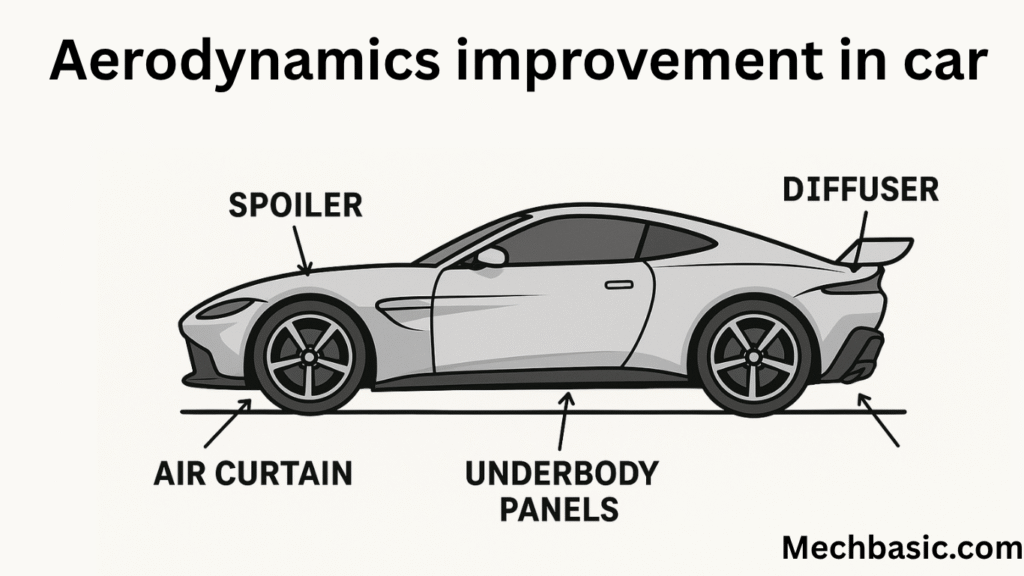
3. Optimize Underbody Airflow
- Install Underbody Panels / Skirts
- Smooth underbody reduces turbulence and drag from components like exhaust and suspension.
- Rear Diffusers
- Accelerate airflow under the vehicle to reduce lift and drag, improving stability.
- Side Skirts
- Prevent air from entering underneath, controlling turbulence and lift.
4. Add Aerodynamic Aids
- Spoilers / Wings
- Manage lift and downforce at high speeds.
- Rear spoilers can also streamline airflow, reducing turbulence.
- Front Splitters / Air Dams
- Direct airflow around the vehicle instead of underneath.
- Reduces lift on the front axle.
- Vortex Generators
- Small fins or ridges that control air separation, reducing drag and improving stability.
5. Optimize Wheels and Tires
- Covered or Aerodynamic Wheels
- Wheel spokes create turbulence; smooth wheels or wheel covers reduce drag.
- Narrow Tires
- Lower rolling resistance and aerodynamic drag.
- Tire Deflectors / Wheel Spats
- Guide airflow around wheels to reduce vortices.
6. Reduce Cooling Drag
- Active Grille Shutters
- Open only when engine cooling is needed; remain closed at cruising speeds to reduce drag.
- Optimized Air Intakes
- Direct airflow efficiently for cooling, avoiding unnecessary turbulence.
7. Maintain a Low Center of Gravity
- While primarily for handling, a lower stance reduces air passing underneath, lowering lift and improving stability.
8. Use Lightweight Materials
- Lighter vehicles allow smaller frontal area and lower ride height, improving aerodynamic efficiency.
- Materials: Aluminum, carbon fiber, composites.
9. Reduce Drag from Mirrors and Antennas
- Replace traditional side mirrors with camera-based systems (on some EVs).
- Use shark-fin antennas instead of protruding designs.
10. Consider Active Aerodynamics
- Adjustable Spoilers – deploy at high speeds to increase downforce.
- Adaptive Ride Height – lower car at highway speeds for reduced drag.
- Air Curtains / Vent Shutters – manage airflow around wheels and brakes.
11. Benefits of Improved Aerodynamics
| Benefit | Impact |
|---|---|
| Reduced Drag | Better fuel efficiency or EV range |
| Lower Lift | Improved high-speed stability |
| Noise Reduction | Quieter cabin and smoother airflow |
| Improved Handling | Better cornering and braking performance |
| Enhanced Performance | Higher top speed and acceleration for sports cars |
✅ In Short
To improve a vehicle’s aerodynamics:
- Streamline body shape (rounded front, tapered rear).
- Smooth underbody and add diffusers.
- Reduce protrusions (mirrors, roof racks).
- Use spoilers, splitters, and vortex generators.
- Optimize wheels and tires.
- Use active aerodynamic systems (adaptive spoilers, grille shutters).
- Lower ride height and reduce lift.
Other courses:





