
Many people confuse tail lights and brake lights, but they serve different purposes even though they’re often part of the same rear light assembly. Here’s a detailed comparison:
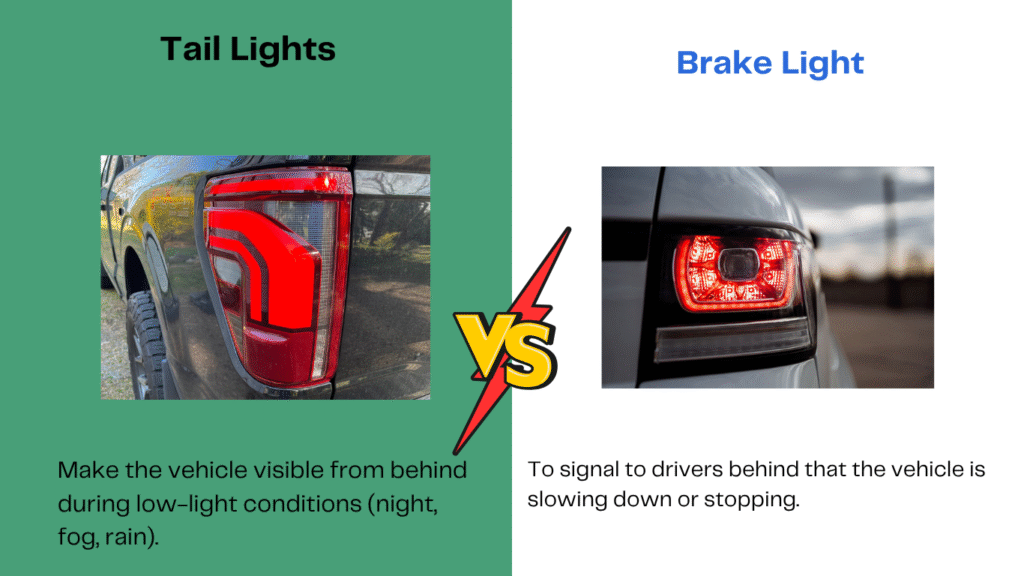
1. Tail Light
Purpose:
- To make the vehicle visible from behind in low-light conditions.
Key Features:
- Always on when headlights or parking lights are turned on.
- Emits a dim red light compared to brake lights.
- Helps prevent rear-end collisions at night.
Function:
- Passive visibility — does not indicate braking.
- Part of the running lights system.
2. Brake Light
Purpose:
- To signal to drivers behind that the vehicle is slowing down or stopping.
Key Features:
- Only illuminates when the brake pedal is pressed.
- Emits a bright red light, much brighter than tail lights, for clear signaling.
- Usually integrated into the tail light assembly or as center high-mount stop lamp (CHMSL).
Function:
- Active signaling — warns other drivers to prevent collisions.
3. Side-by-Side Comparison
| Feature | Tail Light | Brake Light |
|---|---|---|
| Purpose | Make car visible at night | Warn that vehicle is slowing/stopping |
| When It Turns On | When headlights or parking lights are on | Only when brake pedal is pressed |
| Brightness | Dim red | Bright red |
| Function Type | Passive / visibility | Active / signaling |
| Color | Red | Red (brighter) |
| Integration | Usually part of rear light cluster | Part of rear light cluster or CHMSL |
4. Summary
- Tail lights = dim red lights for visibility at night.
- Brake lights = bright red lights for signaling braking.
- Both are often in the same rear light assembly, but function and brightness differ.
💡 Tip:
A tail light can be working even if the brake light is faulty, and vice versa. Always check both for safe night driving.
Other courses:





