
Here’s a comprehensive explanation of the Automotive Charging System:
In this article:
Automotive Charging System
The charging system in an automobile is responsible for supplying electrical power to all vehicle systems and recharging the battery while the engine is running. It ensures that the battery remains charged and that electrical loads (lights, ECU, infotainment, sensors, etc.) receive the correct voltage.
1️⃣ Purpose of the Charging System
- Maintain Battery Charge
- Replenish energy used during engine starting.
- Power Vehicle Electrical Loads
- Supply current to lights, ignition system, infotainment, sensors, relays, and ECUs.
- Stabilize Electrical System Voltage
- Maintain voltage between 13.5V–14.5V in a 12V system.
- Prevent Overcharging or Undercharging
- Extend battery life by proper voltage regulation.
2️⃣ Main Components of a Charging System
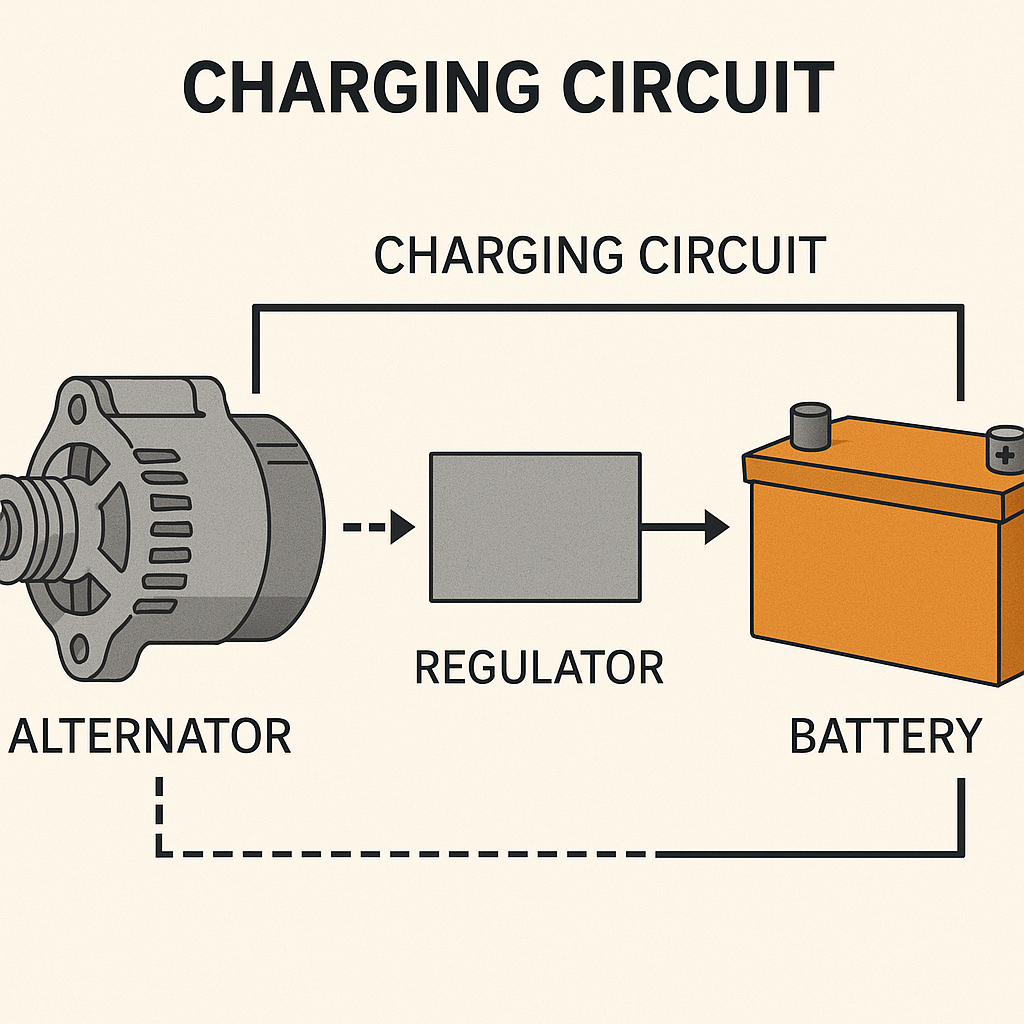
a) Alternator (Generator)
- Converts mechanical energy from the engine (via belt) into electrical energy (AC).
- Components:
- Rotor – Creates rotating magnetic field (electromagnet).
- Stator – Stationary windings where AC voltage is induced.
- Rectifier (Diode Assembly) – Converts AC to DC.
- Slip Rings & Brushes – Transfer current to rotor winding.
- Alternator output depends on engine speed and field current.
b) Voltage Regulator
- Maintains a constant system voltage (typically 14V for 12V systems).
- Types:
- Electromechanical regulators (older vehicles)
- Electronic regulators (modern vehicles, often integrated in alternator)
c) Battery
- Stores energy to power vehicle when engine is off.
- Provides initial current for engine start.
- Acts as a voltage stabilizer during sudden load changes.
d) Drive Belt / Serpentine Belt
- Connects alternator rotor to the engine crankshaft pulley.
- Proper belt tension is critical for efficient alternator operation.
e) Charging Circuit Wiring
- Connects alternator output to battery and electrical loads.
- Includes fuses, fusible links, and connectors for circuit protection.
3️⃣ Working Principle of the Charging System
- Engine Running:
- Crankshaft drives alternator via belt → rotor spins → magnetic field induces AC in stator.
- AC to DC Conversion:
- Rectifier diodes convert AC output to DC current.
- Voltage Regulation:
- Regulator adjusts rotor field current to keep voltage steady (13.5–14.5V).
- Battery Charging:
- DC current flows to the battery, replenishing charge.
- Powering Electrical Loads:
- Alternator simultaneously supplies power to all running electrical loads.
4️⃣ Types of Charging Systems
| Type | Description | Applications |
|---|---|---|
| Alternator Charging System | Uses AC alternator + rectifier + regulator | Most modern vehicles |
| DC Generator System | Older system using dynamo generator | Classic cars, motorcycles |
| Smart Charging System | ECU-controlled alternator adjusts output based on battery SOC, load, and engine conditions | Modern cars with Start-Stop systems |
5️⃣ Symptoms of Charging System Problems
- Battery warning light stays ON.
- Dim headlights or flickering interior lights.
- Battery dies frequently.
- Slow cranking or no crank.
- Electrical accessories malfunctioning.
- Overcharging (voltage > 15V) → battery overheating, electrolyte loss.
6️⃣ Testing and Maintenance
- Battery voltage test: 12.6V (engine off), 13.5–14.5V (engine running).
- Alternator output test: Check current and voltage output under load.
- Belt inspection: Proper tension and no cracks.
- Connections: Clean, tight terminals to avoid voltage drop.
7️⃣ Advantages of a Properly Working Charging System
- Reliable engine starting.
- Stable electrical performance.
- Extended battery life.
- Protection of sensitive ECUs and electronic components.
8️⃣ Summary
The automotive charging system consists of:
- Alternator (AC generator)
- Voltage regulator (maintains constant system voltage)
- Battery (stores energy)
- Drive belt and charging circuit wiring
Its job is to recharge the battery and power all vehicle electrical loads while maintaining safe system voltage.
A healthy charging system is essential for vehicle reliability, battery longevity, and proper operation of all electrical/electronic systems.
Other courses:





