
In this article, we discuss Interlock ignition system in detail.
In this article:
What Is Interlock Ignition System?
The interlock ignition system is a safety and control feature designed to prevent the engine from starting or operating under certain conditions — typically related to driver safety or vehicle regulations.
This system helps reduce accidents, theft, or unlawful vehicle use by requiring a condition to be met before the ignition can be engaged.
Types of Interlock Ignition System:
1. Seat Belt Interlock:
Precludes starting the engine if the driver’s seat belt is not fastened.
2. Brake Pedal Interlock (for Automatic Transmissions):
Requires the driver to press the brake pedal before shifting out of park (P) or starting the engine.
3. Clutch Pedal Interlock (for Manual Transmissions):
Precludes starting the engine unless the clutch pedal is fully depressed — this prevents the vehicle from lurching forward.
4. Alcohol (Breathalyzer) Interlock:
Some vehicles are equipped with a breath alcohol sensor.
If it detects alcohol above a set limit, the engine will remain locked.
Also Read: 10 Best Safety Interlock systems for your vehicle
How It Works :
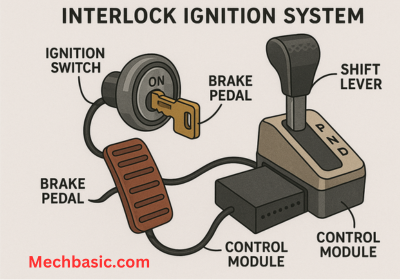
- The ignition key or start button normally signals the starter motor to activate.
- The interlock control unit first checks signals from related sensors (seatbelt, brake, clutch, or alcohol sensor).
- If all conditions are met, the control unit allows the ignition and starting process to proceed.
- If a condition is not met, the ignition is disabled, and a warning light or alarm may activate.
Advantages:
Enhanced Safety:
Precludes vehicle from starting under hazardous conditions (like without seatbelt or with alcohol).
Accident Prevention:
Helps avoid unintended movement or accidents (with automatic or manual transmissions).
Security:
Provides additional protection against theft or unauthorized use.
Applications:
All modern cars with automatic transmissions (shift-lock) or manual transmissions (clutch-interlock)
Commercial and heavy-duty vehicles with additional safety controls
Vehicles mandated by law (such as those with alcohol interlock for convicted DUI offenders)
FAQ Section :
- What is an ignition interlock system?
It’s a breathalyzer device installed in a vehicle that prevents the engine from starting if the driver has alcohol on their breath. - How does an ignition interlock device work?
The driver must blow into the device before starting the car; if their blood alcohol concentration (BAC) is above a preset limit, the car won’t start. - Who is required to install an ignition interlock system?
Typically, individuals convicted of DUI or DWI offenses may be legally required to install it as part of their license reinstatement. - Can someone else start the car for the driver?
No, the device often requires random “rolling retests” while driving to ensure the same person is still operating the vehicle. - How long does a person have to use the interlock system?
Duration varies by jurisdiction and offense severity, typically from 6 months to several years. - Can the device detect substances other than alcohol?
It is primarily designed to detect alcohol, but some units may be sensitive to certain chemicals or substances that mimic alcohol. - What happens if you fail a breath test?
The vehicle won’t start, and the failed attempt is logged and possibly reported to authorities or the monitoring agency. - Is tampering with the device a crime?
Yes, tampering or attempting to bypass the system is illegal and can result in additional penalties or extended use requirements. - How much does an ignition interlock system cost?
Costs vary by location and provider, but typically range from $70–$150 for installation and $60–$100 per month for monitoring. - Does it affect the car’s performance or battery?
Minimal impact; it draws little power and is designed not to interfere with normal vehicle operation beyond starting restrictions.
Other courses:





