
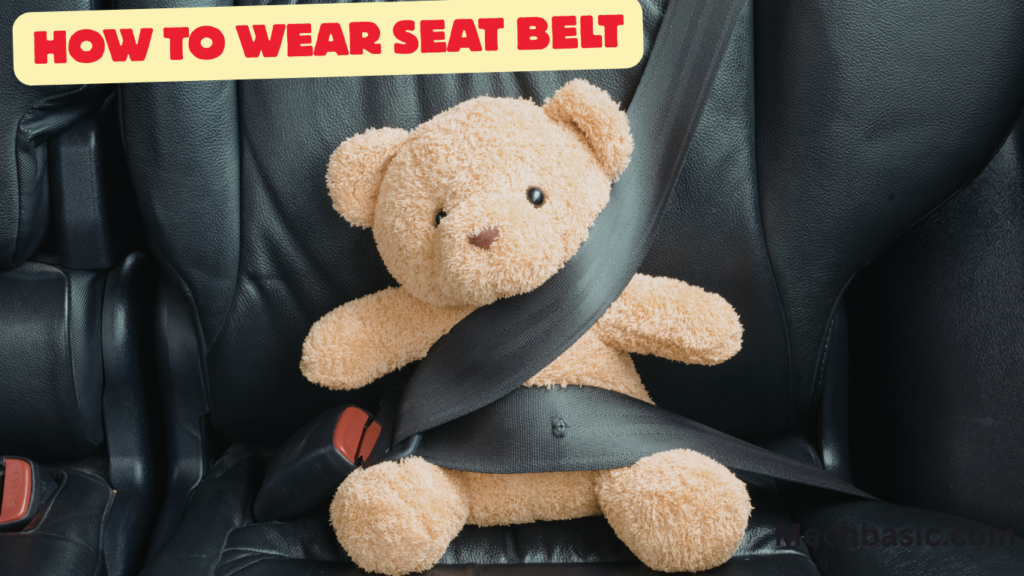
Pull the seat belt across your chest and lap without twisting the strap.
Insert the metal tongue into the buckle until you hear a click.
Make sure the lap belt sits low on your hips and the shoulder belt crosses your chest snugly.
In this article:
Step-by-Step: How to Wear a Seat Belt Correctly
Wearing a seat belt properly is simple, but doing it correctly makes a big difference in how well it protects you. Here’s a clear, step-by-step guide with important details most people miss.
1. Sit properly first
- Sit upright with your back against the seat
- Keep your feet on the floor
- Adjust the seat so you’re comfortable (not too reclined)
👉 A bad sitting position reduces protection even if you wear the belt.
2. Pull the seat belt smoothly
- Grab the belt (webbing) from the side pillar
- Pull it slowly across your body
⚠️ Don’t yank it fast — the retractor may lock.
3. Position the lap belt (very important)
- Place it low across your hips/pelvis, NOT on your stomach
👉 Correct:
- Across hip bones
❌ Wrong:
- Across abdomen (can cause serious internal injuries)
4. Position the shoulder belt
- Place it across:
- Middle of your chest
- Over your shoulder
👉 It should:
- Not touch your neck
- Not slip off your shoulder
5. Insert the tongue into the buckle
- Push until you hear a “click”
- This locks it into the buckle securely
6. Check the fit
- Pull the belt slightly to remove slack
- Ensure:
- It’s snug, not loose
- No twists in the belt
7. Adjust height (if available)
- Use the pillar adjuster so the belt sits properly on your shoulder
Special Situations
Children
- Use:
- Child seat
- Booster seat
- Adult seat belts alone are not safe for small children
Pregnant passengers
- Lap belt: below the belly
- Shoulder belt: between the breasts
Wearing thick clothes
- Avoid bulky jackets
- They create slack → reduce effectiveness
Common mistakes (very dangerous)
- Putting shoulder belt under arm ❌
- Wearing belt too loose ❌
- Twisted belt ❌
- Sitting reclined too far ❌
- Not buckling rear seat ❌
Why correct wearing matters
Seat belts work based on inertia:
- Your body keeps moving forward in a crash
- Proper positioning spreads force across:
- Chest
- Pelvis (strong bones)
Summary
Before driving:
- ✔ Belt clicked
- ✔ Lap belt low on hips
- ✔ Shoulder belt across chest
- ✔ No slack or twists
Conclusion
Wearing a seat belt incorrectly is almost as dangerous as not wearing one.
A properly worn belt:
- Prevents ejection
- Reduces injury
- Works with airbags for maximum safety
Other courses:





